
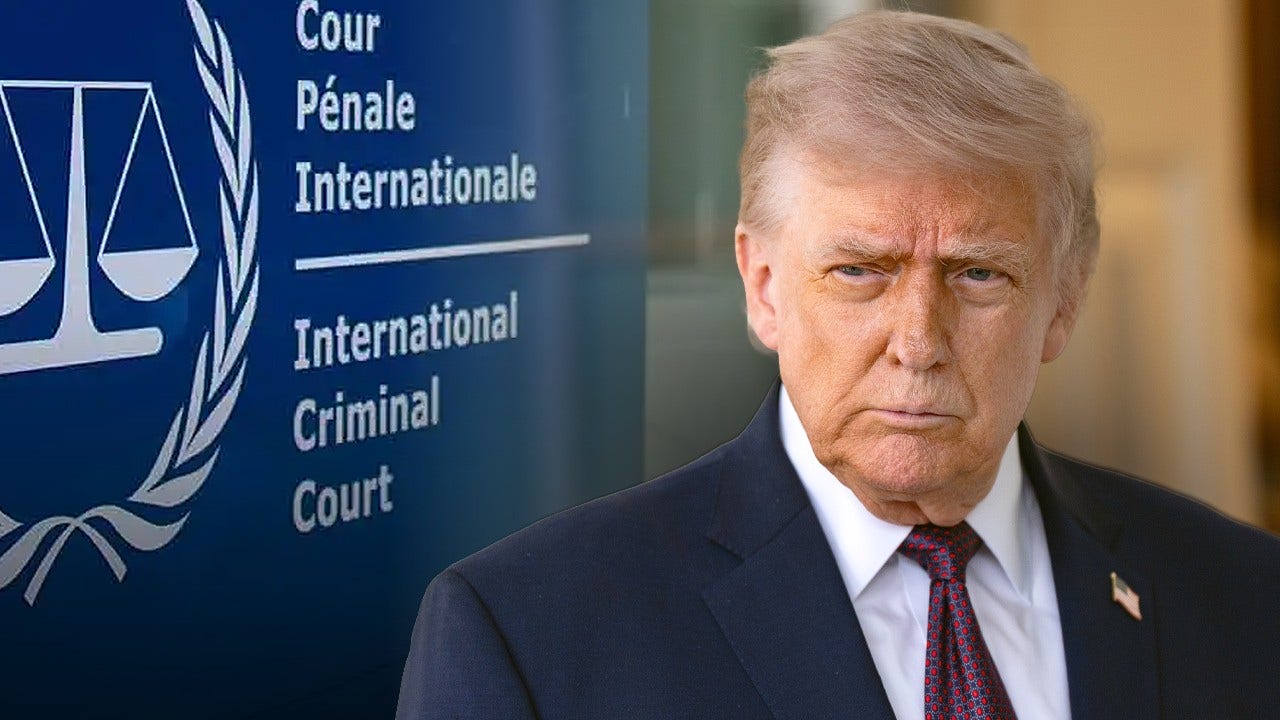
The Trump administration is turning up the heat on the International Criminal Court, accusing the Hague-based tribunal of playing favorites with dangerous regimes while reaching for Americans and U.S. service members. The clash has sharpened as officials argue the court has gone well beyond its mandate, ignored major abuses in places like Iran and North Korea, and still pushed ahead with cases that touch U.S. personnel and allies.
At the center of the fight is a blunt charge from the State Department: the ICC has gone after the United States while looking the other way when authoritarian governments crush their own people. State Department spokesman Tommy Pigott said the court has “violated international law by targeting the United States and American servicemen” while it has “repeatedly turned a blind eye to the abuses of despotic regimes that fund terrorism, brutally suppress and torture their citizens, and carry out crimes against humanity.”
That language fits neatly into a broader Republican argument that international institutions often wander far from their lane. U.S. officials say the court has no business probing Americans at all because the United States never signed on to the Rome Statute, the treaty that created the ICC. From that view, the problem is not just policy disagreement, but a tribunal acting like it can claim power where it simply does not have it.
The administration is not stopping at criticism. Earlier sanctions on ICC officials signaled that Washington wants real pressure on the court, not just tough talk. Pigott also said the U.S. “will continue its diplomatic campaign to systematically dismantle the court,” a line that makes clear this is being treated like a long game, not a one-off protest.
The White House and State Department have also been hammering a separate point: the ICC has been selective for years. Officials say Iran has never even faced a preliminary examination despite decades of accusations involving protest crackdowns, executions of political prisoners, and sponsorship of terrorism. North Korea, too, is cited as a glaring example, with the court closing a preliminary look without moving into a full investigation despite a 2014 U.N. report documenting crimes against humanity.
Syria and ISIS have come under the same criticism. Washington says the tribunal has had plenty of evidence of atrocities but still failed to produce meaningful accountability, even as the Assad regime and the terror group left a trail of devastation across the region. The message from the administration is simple: if the court can find endless energy for Americans, it should not be hiding when the accused are hostile regimes that most of the world already knows are abusive.
Jurisdiction is the key legal wrinkle. The ICC can generally only act where its treaty gives it room to act, or where the U.N. Security Council refers a case, and none of that neatly covers countries like Iran, North Korea, or Syria. Russia and China have also blocked some Security Council efforts on Syria, which has only fueled the sense that the international system is built to stall when the stakes are highest.
But the ICC has argued it can act in some situations involving Americans when alleged crimes happen on the territory of member states. That is why the Afghanistan investigation became such a flashpoint. In 2020, the court authorized a probe into alleged war crimes during the war in Afghanistan, including conduct by Taliban fighters, Afghan forces, U.S. military personnel, and CIA officers.
That investigation included allegations involving torture, cruel treatment, and abuse at CIA black sites in Poland, Romania, and Lithuania, all of which are parties to the Rome Statute. The Trump administration sees that as a stretch too far, especially since the U.S. was not a member of the treaty and should not have been dragged into a court it never joined.
The fight has grown even hotter in recent months after the ICC issued arrest warrants for Israeli Prime Minister Benjamin Netanyahu and former Defense Minister Yoav Gallant over alleged war crimes and crimes against humanity tied to the war in Gaza. Washington rejected the move as illegitimate, and critics across the Republican orbit saw it as another sign that the court is drifting into politics instead of law.
For the administration, this is part of a bigger defense of U.S. sovereignty and allied security. Secretary of State Marco Rubio has described the ICC as a “fatally politicized” institution, and that phrase captures the mood in Washington right now: a court that claims moral authority while ignoring the worst offenders and reaching for countries that never gave it consent. The next round of friction is already baked in, and the Trump team seems ready to keep pushing.

1 Comment
Rigged system