
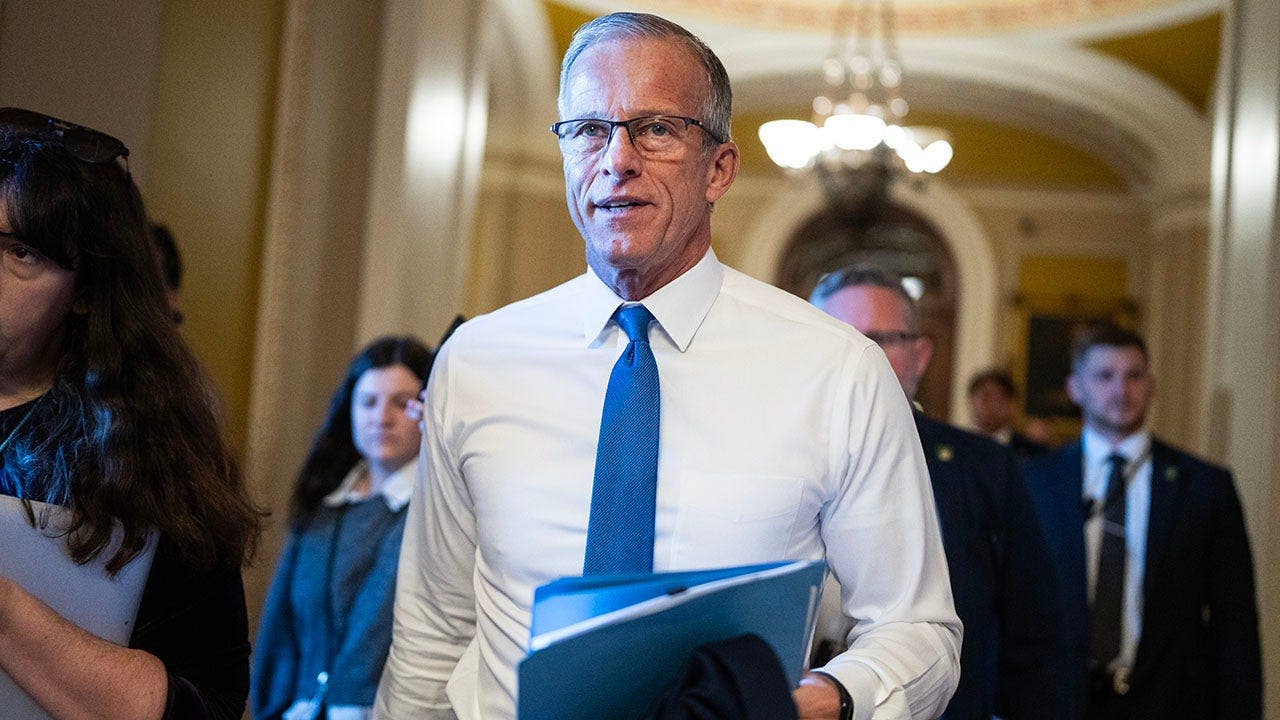
Senate Republicans spent hours behind closed doors sorting through the wreckage of a rough election night, and the mood was part frustration, part reality check. John Thune kept his grip on leadership, but not before a loud internal conversation about what went wrong, who deserved blame, and what comes next for a GOP trying to regroup fast.
The meeting came after Democrats regained the majority, turning what should have been a routine leadership moment into something closer to a blunt postmortem. Republicans were less interested in celebrating their own ranks than in figuring out whether the party had any clear path through the final stretch of the year and into the next fight.
That tension was not exactly new. Senate Republicans have had plenty of sharp exchanges behind closed doors, including past dustups that turned policy debates into full-on shouting matches. But this gathering felt different because the losses were fresh, the stakes were obvious, and nobody in the room could pretend the outcome was anything but a gut punch.
Thune emerged from the meeting still standing, and he did so without a formal challenge landing. Afterward, he made it plain that the job comes with a strange kind of burden, saying, “I got the job because nobody else wants it,” a line that landed like a shrug and a warning at the same time.
His leadership team stayed intact by acclamation, with no senator stepping up to object. That quiet result masked a pretty tense discussion, as some Republicans wanted a pause, a deeper reckoning, or at least a chance to ask whether the party was rushing past the most important questions too quickly.
For some members, the whole thing felt like a needed airing of grievances. The comparison to a “Festivus” style meeting fit because there was plenty of raw complaining, but there was also a real sense that the loss had forced Republicans to stop dodging the obvious and start talking honestly about strategy.
Thune argued that the conference needed to defend what it had done while also asking the harder question of what would have been different in his place. That framing matters because blame can be easy, but answers are harder, especially when the party is dealing with a bruising result and a nervous base looking for someone to pin it on.
Not everyone in the room was calm about the process. Sen. Ron Johnson pressed hard for delay and was in the middle of the sharpest exchanges, while Thune pushed back in a way that made clear he was not interested in handing out easy scapegoats or letting the meeting turn into pure theater.
Johnson later admitted he can be disruptive, but he also insisted there was no personal bitterness. He argued that the party’s real problem was bigger than one meeting, pointing out that Republicans do themselves no favors when internal fights become the main show for supporters watching at home.
Other lawmakers saw the confrontation as a sign of maturity rather than breakdown. Sen. Thom Tillis said the lack of total meltdown was actually telling, since the scale of the defeat should have produced even more emotion, and he framed the whole thing as a sober response to a situation that demanded one.
Thune also made the case that the conference had to stop staring at the scoreboard and start looking at history. Senators like Steve Daines pointed to past presidential midterms that produced similar losses, suggesting the Republican slide was bad, but not some political apocalypse outside the normal swing of Washington.
That perspective matters because the next phase is not about reliving the defeat, but about whether Republicans can turn the frustration into something sharper and more useful. The conference left the room with the same leadership, the same headaches, and a lot less room for pretending that the next round of fights can be handled with slogans alone.

1 Comment
for the DC Estd swamp