
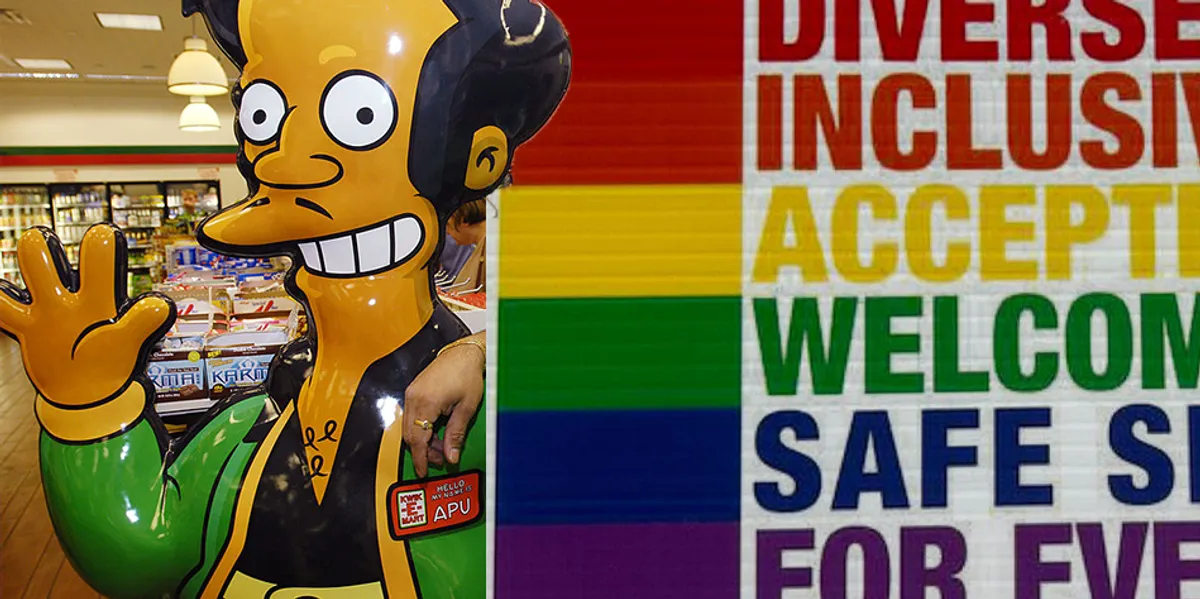
The Simpsons has a long history of pushing buttons, but one of its most talked-about characters has been Apu, whose return stirred up fresh chatter around the show’s approach to comedy, race, and sensitivity. The character’s comeback arrives after years of tension over whether the series had bowed too far to political pressure, and it puts an old controversy right back in the spotlight. For fans and critics alike, the moment hits a nerve because it touches the bigger fight over what modern entertainment is allowed to say, and what it is expected to avoid.
For years, Apu stood as one of the show’s most recognizable side characters, with a voice, manner, and presence that made him instantly memorable. Then came the backlash, the debates, and the sense that the character had become too risky for a show that once delighted in mocking everyone equally. That pause did not erase the character from memory, though, and his return naturally revives the argument over whether comedy should bend to public outrage or keep swinging without apology.
The controversy around Apu was never just about one cartoon figure. It became a proxy battle over representation, intent, and the growing influence of ideology in entertainment, where creators are often expected to anticipate offense before a joke even lands. That pressure has only intensified in recent years, with studios, writers, and performers constantly navigating a maze of expectations that can turn a single character into a symbol for much larger cultural fights.
In that environment, The Simpsons stands out because it has always lived on the edge of offense. The show built its reputation on satire that poked holes in families, institutions, and social pretensions, and it never survived by being timid. When one of its most famous characters disappears for years due to cultural anxiety, the absence says as much about the state of entertainment as the return does about the show itself.
Hank Azaria has been part of that conversation from the start, since his voice work helped make Apu one of the franchise’s most distinct personalities. His involvement also became part of the broader debate, especially as public criticism of the character shifted from laughter to discomfort. That change reflects a larger trend in pop culture, where roles once treated as harmless now get reexamined through a different lens, and where actors can find themselves caught in disputes they never imagined would outlive the joke.
The return of Apu also lands at a moment when many viewers are tired of watching entertainment kneel to the loudest voices in the room. There is a real appetite for stories that feel free again, where writers can take risks instead of carefully sanding off every rough edge. That does not mean every joke lands or every old bit should be resurrected unchanged, but it does mean audiences are noticing when fear starts to outrun creativity.
Part of why this matters is that comedy depends on tension. If a show spends too much time worrying about every possible objection, the result can feel flat, cautious, and strangely lifeless, even when it is trying to be current. The best satire has always worked by making people uncomfortable just long enough to see something more clearly, and that is a harder trick to pull when the guardrails keep multiplying.
The Apu discussion also taps into a much bigger cultural mood, one shaped by the rise of DEI language, shifting corporate norms, and constant pressure to appear socially enlightened. In theory, those trends are about fairness and awareness, but in practice they often create a narrow lane for what mainstream entertainment can risk saying. That is why even a cartoon character can become a flashpoint, because he represents the uneasy line between making people laugh and making people brace for backlash.
What makes the return especially interesting is that it forces viewers to confront a simple question: should a classic show be frozen by today’s standards, or should it be allowed to be what it has always been, messy and sharp-edged? The Simpsons has never been a polished moral lecture, and its survival has depended on understanding the difference between comedy and caution. Apu’s reappearance does not settle the argument, but it does make sure the argument is far from over.
