
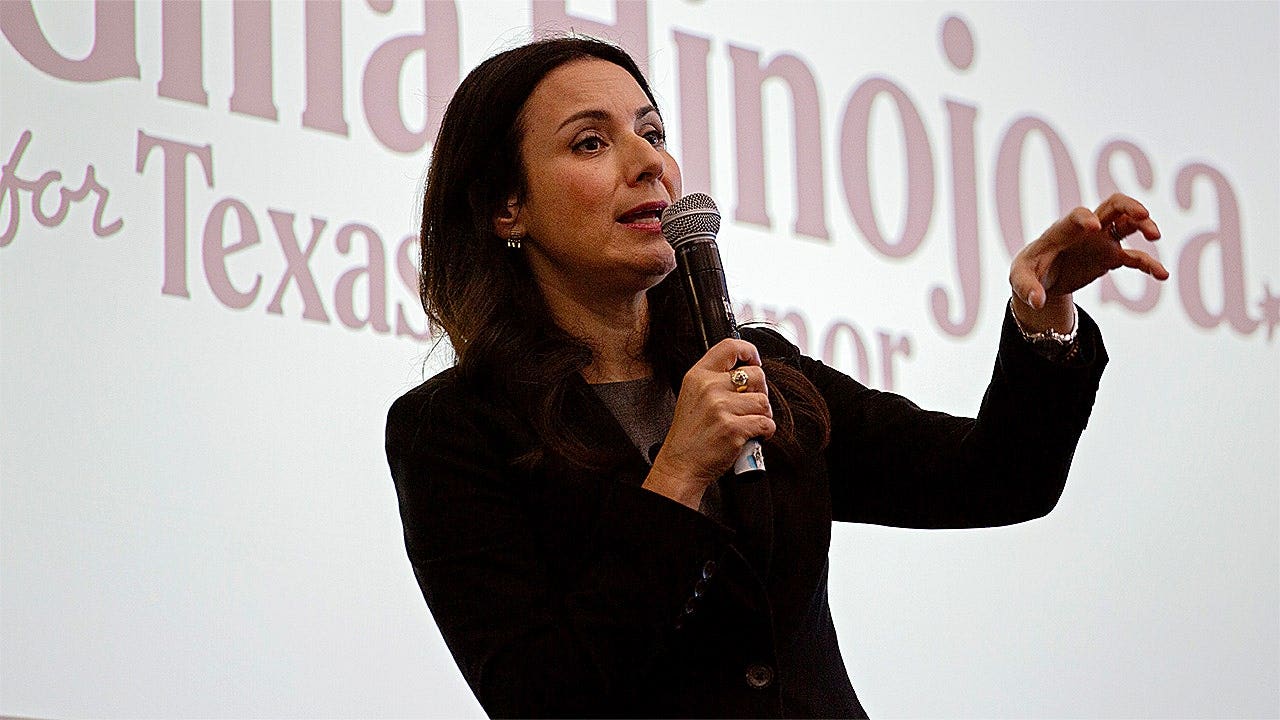
The political aftershock in Texas is already rolling, and Republicans are moving fast to narrow the powers the incoming governor could inherit. Brian Harrison is pressing for action before the transition window closes, arguing that the state should not hand over broad emergency authority without a fight. The debate has quickly turned into a bigger clash over executive power, legislative control, and what the next chapter of Texas politics should look like.
Republican state Rep. Brian Harrison is urging outgoing Gov. Greg Abbott to call a special session and put limits on the emergency powers he says Governor-elect Gina Hinojosa should not get to use unchecked. In his view, the state still has a narrow window to act, and Republicans should not wait around while Democrats prepare to take over in Austin.
Harrison laid out that argument in a lengthy post on X, saying Republicans had lost the election but had not yet lost power. He argued that the next ten weeks should be used to restore separation of powers and cut back on emergency authority before Hinojosa is sworn in.
He also said the issue is bigger than party labels. According to Harrison, governors should never have sweeping emergency powers that can be abused whenever a crisis is declared, and he insists the rules should be tightened no matter who sits in the governor’s mansion.
The push comes after Hinojosa defeated Abbott in Texas’ 2026 gubernatorial race, becoming the state’s first Latina governor. Her win marked a major shift in a state where Republicans had held the governorship for decades, and it immediately set off a round of political finger-pointing.
Harrison told Fox News Digital that Texas should have curbed these powers years ago, and he warned that Hinojosa could use them aggressively if nothing changes. He said many people do not realize how much authority a Texas governor can wield during an emergency, including the power to alter regulations and shape state policy in a hurry.
https://x.com/brianeharrison/status/2118030133567357108?s=46
Under state law, the governor can issue emergency directives and revise them during a declared disaster, though those declarations come with limits and must be renewed. The Texas Disaster Act also gives the Legislature room to end a declaration, which is why the current fight is really about how much leverage one office should have when pressure is high.
Harrison said the Legislature should move quickly on measures like HB911, a bill he filed in 2022 to rein in what he calls never-ending emergency power. In a Thursday X , he also took a swipe at critics who mocked the effort, framing the backlash as proof that the argument hit a nerve.
Hinojosa had already signaled she would use executive authority aggressively if elected. During the campaign, she pledged to declare a high-cost emergency and issue orders aimed at freezing certain energy costs and taxes, drawing extra attention to how much power could be in play once she takes office.
Abbott’s office did not comment, and Hinojosa’s campaign also stayed quiet. But the Republican response kept building, with some GOP lawmakers warning that they would try to hold the line against the incoming administration’s agenda.
Hinojosa wrote in a Wednesday X that her administration would “lead with a politics of courage, not convenience.” That message fit neatly into the broader Democratic mood after a strong election night in Texas, where the party picked up another major win and turned a lot of old assumptions upside down.
The shift also sparked a fresh round of national commentary. President Donald Trump blasted Abbott on Truth Social, calling him a “RINO” and blaming the loss on what he described as a drift away from core Republican principles.
After conceding, Abbott told supporters he had already let Hinojosa know he would help with the transition, but the political tension has not eased. Ted Cruz added his own warning in a Wednesday X , saying he had been sounding the alarm for weeks and that far too few people believed Texas could actually flip.
“Now we’ll have both.”
Hinojosa is set to take office in January 2027, and the scramble between now and then is exposing just how much power still sits in the hands of the outgoing majority. For Republicans, the next few weeks are not just about political damage control, but about deciding whether Texas wants to leave one last giant lever within reach before the handoff happens.
