
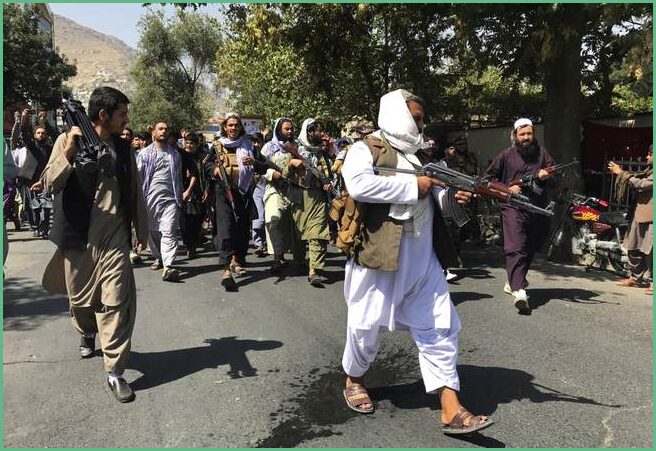
I’ll be blunt: this is what real authoritarian behavior looks like, not the political theater some on the left keep waving around at home. The Taliban has pulled the plug on the country’s communications and left millions cut off, and that’s not a culture war, it’s pure suppression. From a conservative view, defending individual freedom means condemning regimes that erase basic rights and shut out the world.
Imagine waking up and finding your phone useless, your business frozen, and airport screens reading “unknown” while you try to call a relative. That is the reality Afghans faced when a massive fiber-optic network was disabled and services collapsed. It’s a reminder that freedom of speech and free flow of information are not abstract luxuries, they are the scaffolding of human dignity.
The blackout is said to have come after Afghanistan’s 9,350-kilometer fiber optic network was disabled, leaving flights grounded, banks frozen, and millions of citizens and businesses cut off.
Kabul International Airport has seen all commercial flights canceled or marked as “unknown,” leaving the country’s main air hub virtually deserted, per Reuters.
Monitoring group NetBlocks also confirmed to Reuters that traffic levels had dropped to around one percent of normal, underscoring the unprecedented scale of the disruption.
So where is the outrage we see for some causes but not for others? In America we have loud, vigorous debate about rights, and that’s healthy, but worldwide abuses deserve the same moral clarity. Conservatives should point out hypocrisy and stand up for those being silenced, regardless of where the politics lead.
The Taliban defends the blackout as a way to curb what they call “immorality” online, a phrase that thinly disguises a determination to control thought and behavior. This is theocratic censorship dressed up as public virtue, but it is ultimately about power, not piety. From a Republican angle, the modern order is supposed to protect liberties, not ration them by decree.
What’s the difference between Boko Haram and the Taliban?
One kidnapped girls in Nigeria, and the world launched #BringBackOurGirls.
The other has erased girls’ education in Afghanistan banning schools, banning the internet, yet there is no global outcry. Do Afghan women not deserve the same movement?
Let’s be clear about motives: cutting communications is a blunt instrument to stop people from seeing alternative ideas or organizing opposition. If information is the enemy, you are dealing with a regime that fears its own people more than it fears foreign armies. That woke-versus-conservative framing at home matters far less when real people overseas are stripped of education and connection.
NetBlocks also confirmed connectivity was cut in phases starting on Monday, with the final stage also affecting telephone services, which share infrastructure with the internet.
The nationwide blackout appears to be part of a phased campaign led by Taliban leader Hibatullah Akhundzada in Kabul. Earlier in September, he directed the dismantling of fiber optic networks in many provinces.
Officials have defended the move as a way to curb “immorality” online, echoing earlier statements from provincial governors.
Some will shrug and treat this as another foreign mess, but conservatives who care about liberty should call it out and demand consistent standards. When tyrants silence girls, bankrupt businesses, and strand travelers, it’s not a local problem — it’s a human one that should make us all uncomfortable. The right response is principled and public: expose, condemn, and refuse to normalize cruelty in the name of culture or religion.
History shows how life narrows when communication is cut: families lose contact, markets seize up, and the smallest freedoms begin to vanish. We can point fingers at Western elites who stayed silent, but the bigger task is to push for policies that protect free information flows and support those oppressed by theocrats. Conservatives know that liberty requires vigilance and willingness to use influence to defend the voiceless.
Next time someone claims America is slipping into dystopia under our own leaders, put that conversation next to Afghanistan’s reality. The struggle for women’s education and basic access to the outside world is not partisan theater, it is survival. If we care about freedom, we must be loud for Afghan women and for any people barred from the internet and the rights it makes possible.
