
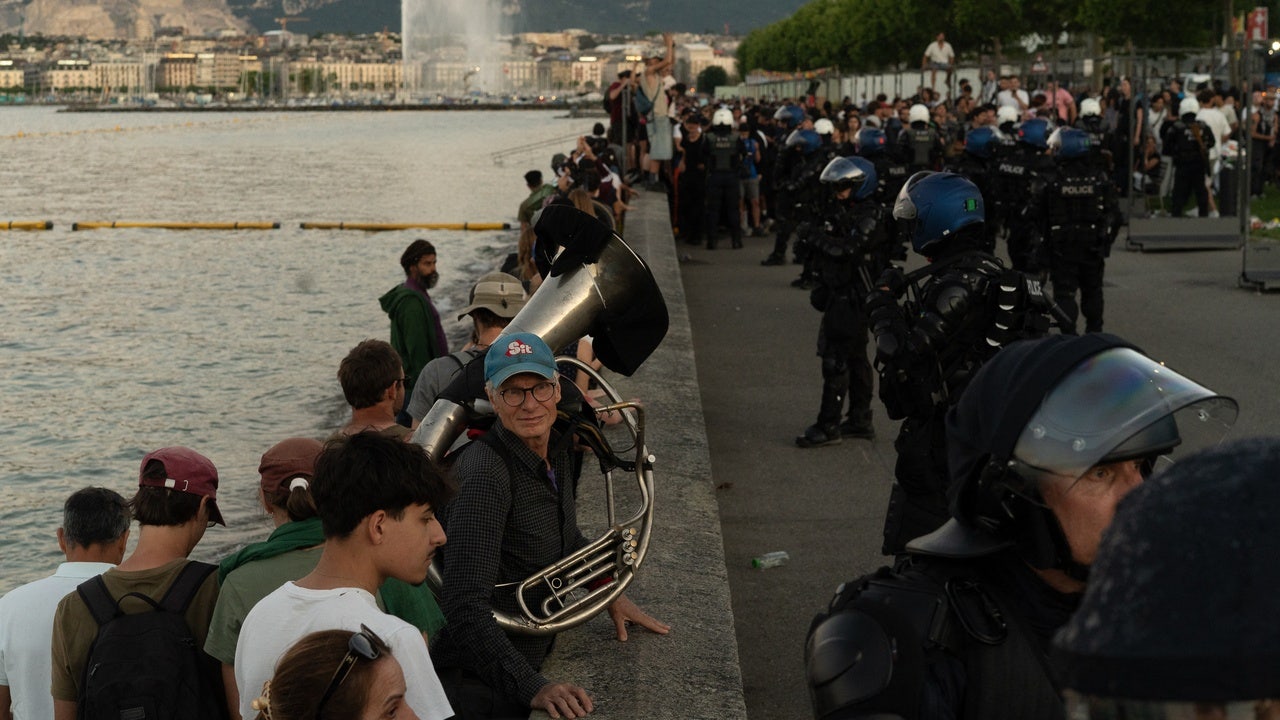
Switzerland just said no to a hard population cap, and the vote exposes a clash between a proud, self-reliant national identity and global pressures that prize open borders and cheap labor. This piece traces the referendum, the country’s unique history of multilingual federalism and civilian readiness, the way modern migration is changing daily life, and the political fault lines between national sovereignty and globalist economics. I look at how Switzerland defends itself in body and policy, why migration is the central driver of its growth, and who lined up against limits on population increases.
The proposal on the ballot would have set a strict ceiling of 10 million people, a measure pushed by the conservative Swiss People’s Party to slow population growth driven almost entirely by immigration. Voters rejected that cap, and the outcome highlights the tension between preserving a way of life and accepting the market-driven case for more workers and consumers. The result matters because it’s not just about a number, it’s about control of borders and cultural continuity.
Switzerland is rare in how it holds together German, Italian, French, and Romansh speakers under one federal roof, a system born in medieval and early modern conflicts when smaller regions banded together for mutual defense. That history of cooperation across language lines shaped a nation that values local control and civic participation. The federal model kept the cantons powerful while giving the whole country the muscle to stand independent of larger monarchies and, later, powerful neighbors.
The country’s geography helped, but so did a culture of preparedness. Mountains provide natural chokepoints and protection, and Swiss military readiness turned those features into real defenses. This reputation for toughness also led to the Swiss Guard protecting the Pope since 1506, an odd but telling sign of how Swiss military service has been woven into international institutions.
Swiss neutrality in the world wars rested on more than words; it relied on universal service and a citizen army kept ready at home. Men complete mandatory service, face periodic retraining, and historically kept rifles and ammunition at home as part of deterrence. With just nine million residents, Switzerland’s ability to mobilize quickly—hundreds of thousands if needed—has been a consistent part of its national security strategy.
The defensive posture extends beyond troops and training to a vast civil-defense network. Switzerland invested in tunnels, bunkers, hidden gun emplacements, and an extensive system of shelters that can protect the whole population. That level of civic investment in resilience is rare globally and is often compared only to countries with similar security challenges.
But the current challenge is less about armies and more about people moving across borders. Since 2002 the population climbed almost a quarter, a jump traced almost entirely to immigration because native fertility sits around 1.29. Migrants come from nearby European countries and from far beyond, altering the social mix and raising questions about integration and public services.
The consequences are practical and political: more demand for housing, more strain on schools and hospitals, and more competition in the labor market, which can pressure wages and change job dynamics. Those pressures then discourage native families from having children, which fuels a feedback loop where politicians and businesses argue for yet more immigration to fill gaps. Critics warn this becomes a path toward replacement migration, a concern voiced by conservatives watching places from Sweden to certain American states for similar patterns.
Opposition to the population cap came from predictable quarters: multinational firms, much of the mainstream media, the European Union, the United Nations, NGOs, many academics, and organizations that favor open migration. NPR’s headline summed one reaction exactly as “Swiss reject right-wing’s bid to cap population…” and that framing shows how the debate is often painted as ideological rather than practical. For those interests, borders are a hindrance to commerce and international talent flows.
Economic arguments from globalist outlets follow a familiar script: the country is a hub for international business and needs open access to “foreign brains” to stay prosperous. One outlet wrote on X that “Switzerland is rich partly because it is a hub for international business. It will struggle to remain so if it is closed to foreign brains.” For proponents of that view, restricting immigration looks short-sighted and even immoral; for nationalists, it looks like surrendering control over who shapes the future of a country.
‘SEND THEM BACK’ CHANTS ROCK EUROPEAN PARLIAMENT AFTER LANDSLIDE VOTE TO SPEED UP DEPORTATIONS
POPE LEO HITS BEACHES OF POPULAR EUROPEAN MIGRANT ENTRY POINT AFTER CRITICIZING GLOBAL IMMIGRATION POLICIES
