
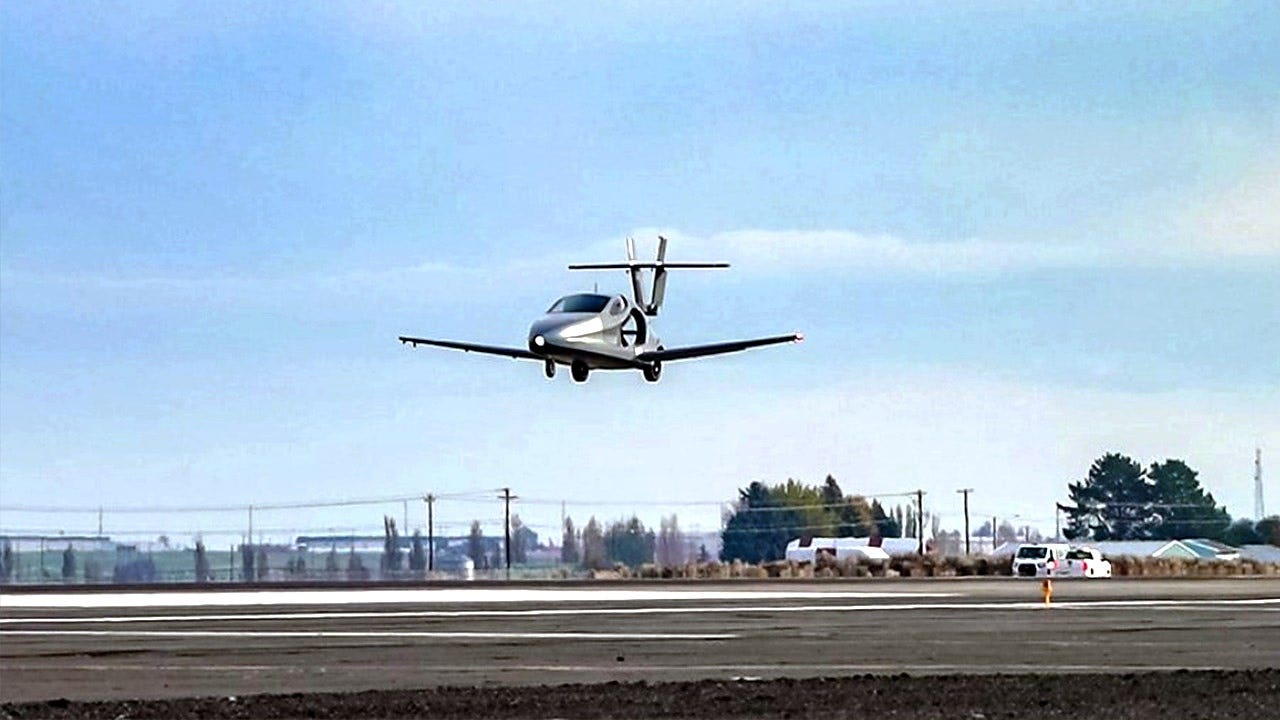
Samson Sky’s Switchblade is inching closer to reality, and the latest version packs a neat trick: the wings, tail, and propeller tuck completely inside the body when it’s driving. Backed by new funding and a production plan aimed at the U.S., the flying sports car is moving from a long-shot concept toward something much more concrete.
For years, the Switchblade has lived in that rare space between dream and machine. It can roll out of a garage, drive to an airport, transform into an aircraft, and then fold itself back into road mode after landing. That kind of seamless switch between car and plane is what keeps the project in the spotlight, even as the company continues chasing the money and testing needed to bring it to customers.
The latest boost comes from an $80 million investment from Dubai-based Matin Group, which Samson says will help push the project toward U.S. production. Even with that support, the company says another $20 million still has to be raised to fully fund the current plan. The added cash gives the Switchblade real momentum, but it also shows how expensive it is to turn a wild idea into a buildable product.
The version under development is not the same one that first flew in November 2023. Samson says the design has been updated, including a larger engine, and the company expects to build three production prototypes for more testing near the end of 2026 or the start of 2027. That makes the next stage especially important, because the earlier flight proved the concept while the new one has to prove the production path.
Samson is still aiming for numbers that sound straight out of a sci-fi pitch. The company lists a maximum airspeed of 190 mph, a flying range of 450 miles, a road speed of 100 mph, and a cruising speed of 160 mph, though that last figure still needs verification through testing. The Switchblade uses a hybrid-electric setup with a gasoline engine that drives a generator, which then powers the motors for both road and flight use.
That setup is part of what makes the vehicle stand out. Samson says the Switchblade runs on 91-octane automotive gasoline and carries 44 gallons of fuel. The goal is not just novelty, but a machine that can work as a real travel tool, combining ground transport and flight in one package.
Production plans are starting to take shape too. Samson says the new funding will support its first 180,000-square-foot production facility in the U.S., and the company has already formed a Joint Investment Agreement with Matin Group. The exact location has not been announced, but CEO and founder Sam Bousfield says the search has narrowed to three possible sites in different parts of the country.
The timeline points to summer 2027 for the Builder Assist assembly line to be ready. That first production year would focus mainly on earlier customers with reservations or deposits, with later buyers following after that. Samson currently estimates pricing at $200,000 for the VFR kit and $235,000 for the IFR version, though those figures could still move before deliveries begin.
There is a catch, of course, because this is not a normal car-buying experience. Samson says owners will need to help build their aircraft under FAA Experimental Amateur-Built rules, which means more than half of the fabrication and assembly must be completed by the builder. The company says its Builder Assist program is meant to guide that process, and it estimates the required work could take as little as one week.
Flying one will take more than money and enthusiasm. Samson says a private pilot certificate is required for the air side of the vehicle, while ground licensing depends on local rules. That separates the Switchblade from electric air taxis, which are built around vertical takeoff and landing, while this machine relies on conventional runways and keeps going after it lands.
That difference may be the whole point. Instead of landing, waiting for a ride, and swapping vehicles to finish the trip, the Switchblade is designed to stay with you from highway to runway and back again. If the latest design can match the promise, the appeal is not just the flying part, but the idea that one machine can carry the whole trip without making you switch gears along the way.

1 Comment
Producer for
Rental
Sales
SAR
Rescue
Tourism
Markets alone add VSTOL