
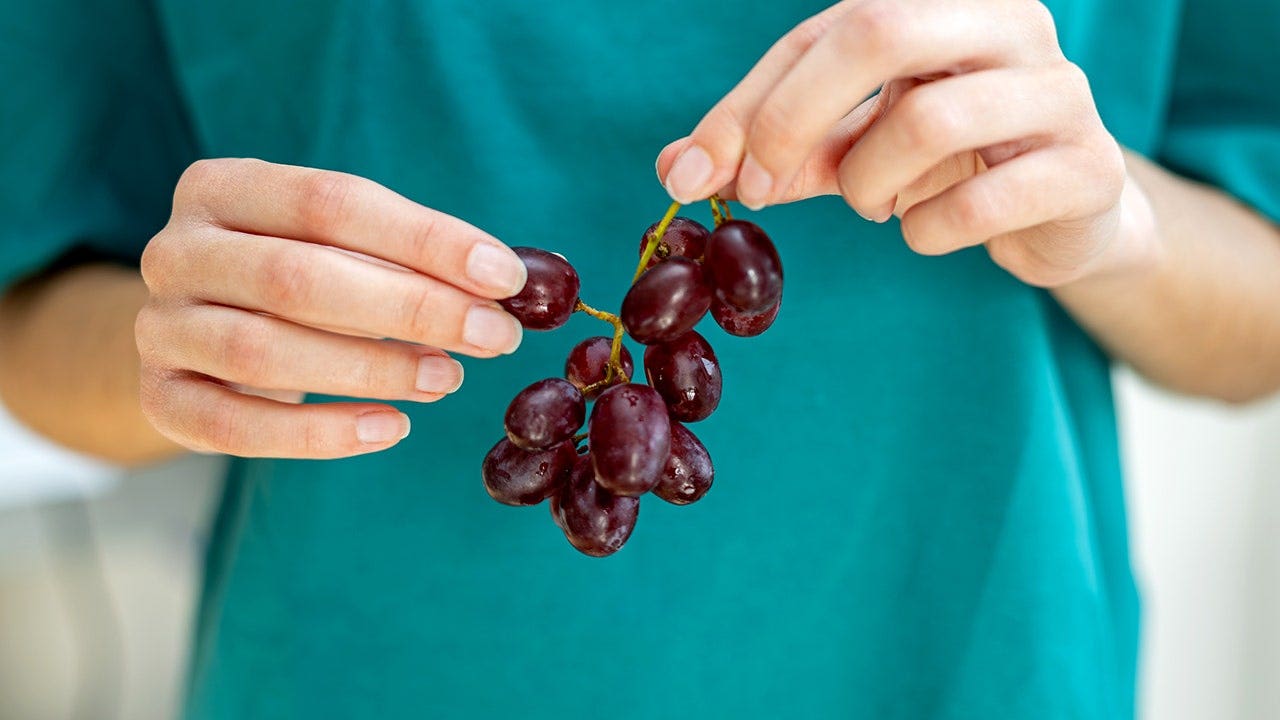
Researchers found that eating concentrated grapes may nudge skin genes into a more protective state against sun damage, showing fewer markers of cellular injury after ultraviolet exposure, though the study is tiny and used a powdered grape concentrate rather than casual snacking.
A team at Western New England University ran a short, tightly controlled experiment to see whether grapes can do more than fill a bowl; they wanted to know if grapes actually change the way genes behave in human skin. Participants cleared their diets, then consumed the equivalent of three servings of whole grapes each day in a freeze-dried powder form for two weeks. Small skin samples were taken before and after the grape period to look for shifts in gene activity under normal conditions and after low-dose UV exposure.
Across individuals, everyone started with their own unique gene activity fingerprint, but the grape phase produced consistent shifts in expression that were detectable across participants. The changes were measured both in baseline tissue and after skin was exposed to UV light, implying grapes may influence how skin responds to sunlight at a molecular level. One clear signal was a drop in malondialdehyde, a chemical tied to cellular damage, after the grape regimen.
EATING A COMMON VITAMIN-C PACKED FRUIT MIGHT TOTALLY TRANSFORM SKIN, STUDY FINDS The researchers emphasize that this work probes the biology of response rather than offering a ready-made cure for sunburn or skin aging. The study relied on concentrated grape powder, so popping a handful of table grapes now and then is not the same as what volunteers consumed. The team also tested gene activity changes after UV exposure alone, and the grape-plus-UV condition produced distinct patterns compared with UV by itself.
“We are now certain that grapes act as a superfood and mediate a nutrigenomic response in humans,” John Pezzuto, PhD, professor and dean of the College of Pharmacy and Health Sciences at Western New England University, said in the press release. The investigators saw measurable shifts in how genes turned on or off within the skin, suggesting dietary compounds in grapes can influence molecular pathways tied to damage and repair. Those shifts correlated with biochemical indicators that point toward reduced oxidative stress after UV challenge.
“We observed this with the largest organ of the body, the skin. The changes in gene expression indicated improvements in skin health.” Beyond those skin findings, the team speculated that grape intake may affect other somatic tissues. “Beyond skin, it is nearly certain that grape consumption affects gene expression in other somatic tissues of the body, such as the liver, muscles, kidney and even brain,” he said.
Important caveats temper the excitement: usable RNA sequencing data came from only four female participants, and those women had similar skin types and backgrounds. That tiny, homogeneous sample makes it impossible to generalize the findings to diverse populations with confidence. The study is promising as a proof of concept, but it cannot stand alone as evidence that grapes will deliver the same effects in men, people with different skin tones, or larger, more varied groups.
The investigators were careful to say that grape consumption should not be seen as a replacement for sunscreen or sun-safe behavior; the protective signals observed were biological markers, not clinical proof of immunity to UV harm. The concentrated format used in the trial also matters because the dose and bioavailability of compounds in freeze-dried powder differ from fresh fruit. For anyone curious about diet and skin health, the study suggests a route worth following but not a shortcut to sun protection.
Future work needs bigger, more diverse cohorts and a range of grape preparations to map who benefits and how much is required for an effect. Scientists will also want to test whether similar genomic shifts show up in liver, muscle, kidney, or brain tissue, and whether those changes translate to measurable health benefits over time. Until then, grapes look like an intriguing dietary nudge for skin biology, but proven sun-safe measures remain essential.
