
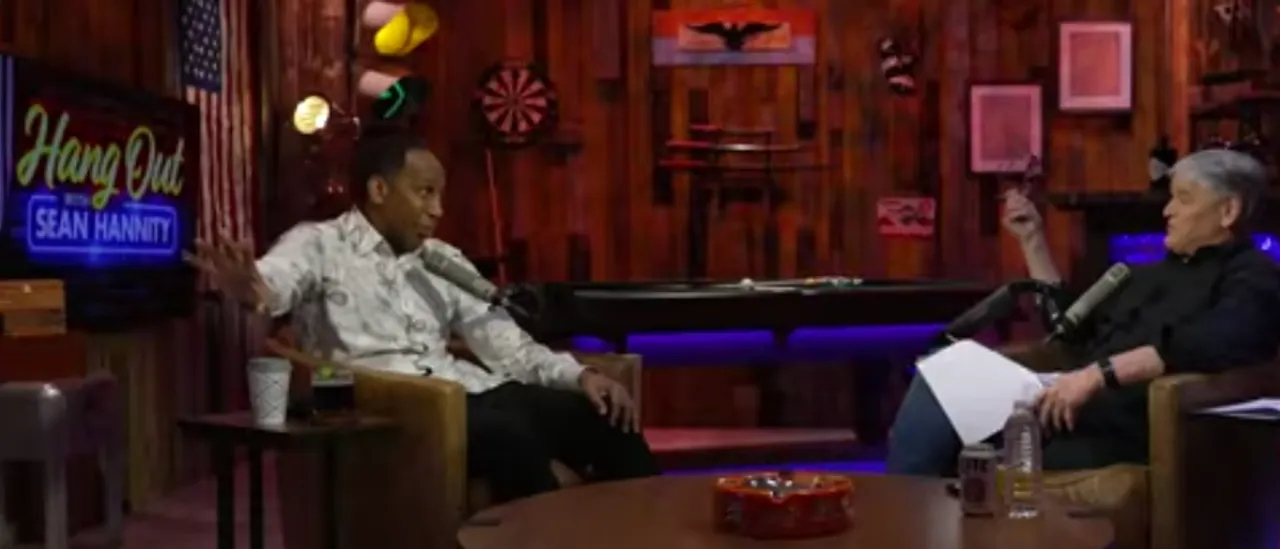
Stephen A. Smith pushed back hard on the idea that voters shouldn’t show ID, calling it absurd during a recent interview with Sean Hannity after pointing out that New York City required identification to sign up people to shovel snow. He used the contrast to ask a simple question: if the city demands documents for a temporary gig, why not for America’s most basic civic duty? The exchange touched on larger Republican calls for national voter ID standards and a proposed SAVE America Act that would tighten registration rules.
Smith’s reaction was blunt and framed as common sense. He highlighted a real-world example where New York officials asked for multiple forms of identification for work clearing snow, and he couldn’t square that with lax polling procedures. The tone was frank, aimed at exposing what he and many conservatives see as an inconsistency in civic administration.
On the Hannity show, Smith delivered a line that cut through the usual talking points. “If the mayor of New York City is requiring two IDs to shovel snow, to shovel snow, to shovel snow — really? To shovel snow? How the hell do you not need ID to vote?” he said, pointing to an obvious mismatch between city policy and election rules. He added, “I mean, it’s just ridiculous.”
Hannity called the situation “stupid,” and Smith piled on with another succinct verdict, calling the lack of a universal voter ID requirement “absolutely dumb.” That language fits a Republican argument that securing elections is not partisan theater but practical governance. Conservatives argue that asking for ID is a minimal, commonsense safeguard that protects every citizen’s ballot.
Republicans have rallied around federal measures like the SAVE America Act as a way to standardize basic protections. The proposed law aims to require documentary proof of citizenship for registration and photo ID for federal elections, plus steps to verify and clean voter rolls. That approach is sold as restoring public confidence that every counted vote belongs to a legitimate, eligible voter.
Critics on the left have tried to paint voter ID efforts as suppressive, sometimes using charged labels. Smith warned against that kind of rhetoric when it comes from Senate Democrats, urging restraint and factual debate. He told Senate Minority Leader Chuck Schumer not to classify the SAVE Act as “Jim Crow 2.0,” arguing that such comparisons are overblown and counterproductive.
Smith’s exact warning was pointed and direct, aimed at cooling the temperature of the debate. “Don’t engage in that kind of hyperbole. Because we’re living in the year 2026. And when you start bringing up Jim Crow 2.0, you’re trying to hearken back to a time that most people recognize — no, we’re not living in those times right now,” Smith said. “Of course we’ve got our troubles … Don’t do that because that’s playing right into Trump’s hands.”
The Republican perspective sees two things at once: the need to protect the vote and the need to avoid exaggerated, culture-war claims that alienate the middle. Voter ID is framed as a neutral administrative measure that any functioning democracy should expect of its citizens. The messaging challenge for conservatives is to present security as commonsense, not partisan advantage.
Stephen A. also addressed his own political prospects, keeping the tone candid and practical. “Let me put the presidential aspirations to bed,” he said during the same conversation, signaling he has no plans to shift into electoral politics anytime soon. He followed up with a straightforward line about priorities: “If I have to give up my money, it’s not happening.”
That aside, the exchange highlighted how mainstream commentary can sway public opinion toward simple, enforceable rules. For many voters, the image of someone needing two IDs to shovel snow but not to vote is a clear mismatch that demands fixable solutions. Republicans push a pragmatic fix: require identification and proper verification so elections are beyond reproach.
Debate over voter ID will keep boiling as Congress and states weigh reforms, and voices like Smith’s bring attention to the inconsistencies ordinary people notice. His blunt style and practical examples make the argument accessible to a wide audience that wants elections both fair and secure. WATCH:
