
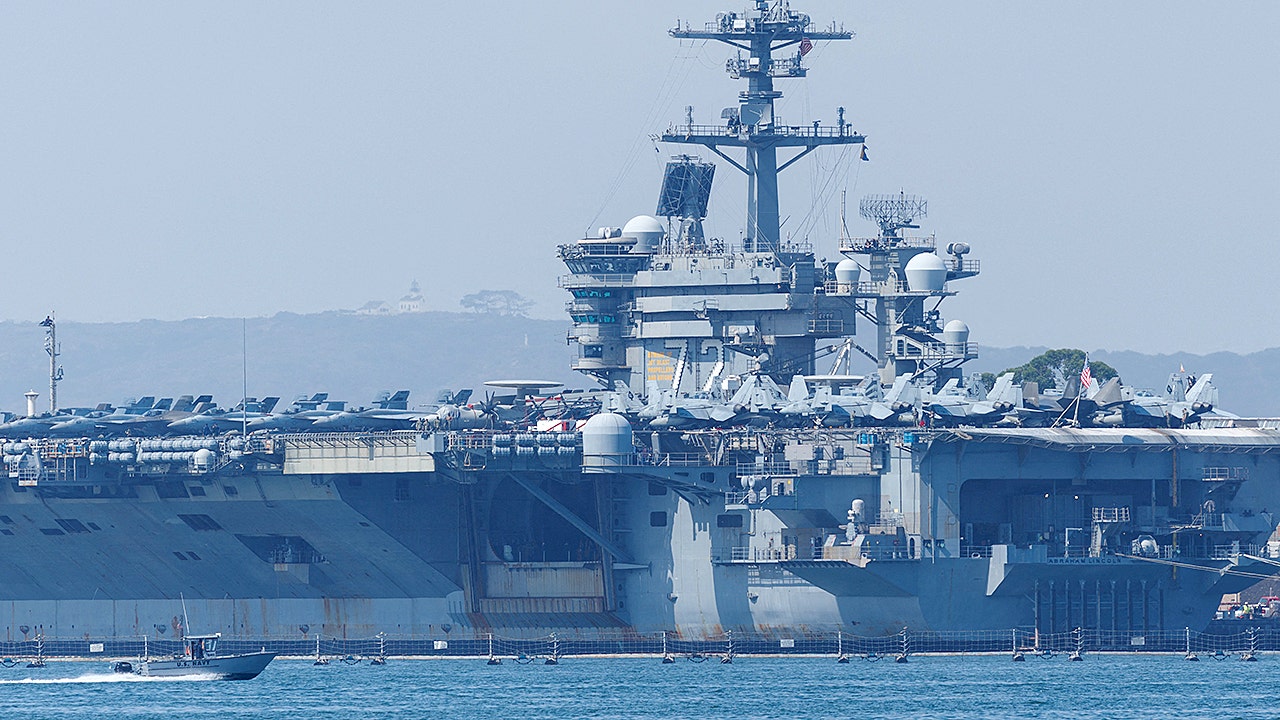
America’s carrier fleet is still one of the sharpest tools in the U.S. arsenal, but the next fight is going to punish hesitation. Four upgrades stand out as the difference between staying ahead of China and slowly giving that edge away. The debate is not about nostalgia or shipboard comfort, it is about keeping floating airbases fast, lethal, and hard to beat.
Carrier strike groups have already proven their value in the Middle East, where they can hit hard without asking any foreign government for permission. That kind of reach matters even more as rivals push deeper into long-range missiles, drones, and anti-ship weapons. A carrier that can keep launching and recovering aircraft under pressure is not just a symbol of power, it is the power.
One major step is building carrier air wings around drones, not treating them like a side project. Refueling drones such as the MQ-25 can stretch the range of manned aircraft, while smaller unmanned wingmen can bring extra sensing, jamming, and strike options into the fight. That mix gives commanders more choices, fewer limits, and a better shot at surviving inside a contested battlespace.
Another fight is over catapults, and it is a bigger deal than it sounds. The newer electromagnetic launch system has already racked up thousands of launches and shown it can speed sortie generation when tempo matters most. Going backward to older steam gear would not just slow the fleet, it would waste time and money while China keeps building for the future.
That matters because the industrial base behind carrier construction is massive, spread across thousands of companies and many states. Once a major design path is chosen, changing course can create years of churn, delays, and bottlenecks that ripple through the whole Navy. The result is fewer ships ready when the next crisis hits, and that is the kind of weakness adversaries watch closely.
Faster weapons elevators are another upgrade that sounds small until combat starts. Modern elevators can haul heavier ordnance and move it quicker from magazines to the flight deck, which means aircraft get rearmed sooner and can get back into the fight. In a high-end war, those minutes are precious, and every delay can turn into a lost opportunity.
That issue connects directly to the size and weight of newer weapons. As missiles grow larger and more capable, carriers need the gear to handle them without dragging down the launch cycle. A fleet built for yesterday’s munitions will struggle when tomorrow’s loadouts get heavier and more complex.
The fourth piece is a new stealth fighter for the deck, and it may be the most important one of all. The Navy’s future F/A-XX is meant to push the strike envelope farther out, giving carriers more reach and more survivability in a fight against a stronger peer competitor. That matters because the old workhorse jets are aging out, and the gap cannot be left open.
China is not standing still, either. Beijing is already fielding advanced prototypes and building toward a larger carrier force, which raises the stakes for every decision made in Washington. If the U.S. slows down on next-generation aircraft, catapults, elevators, and drones, the carrier force could stay big but lose the edge that makes it dangerous in the first place.
Carriers still offer something no land base can match, a mobile runway that can sail where it is needed and launch power fast. That freedom of action is exactly why they remain so valuable in the Pacific and beyond. The catch is simple: a carrier only stays dominant if the Navy keeps modernizing it before the next crisis arrives.

1 Comment
Work 24/7 on carriers then