
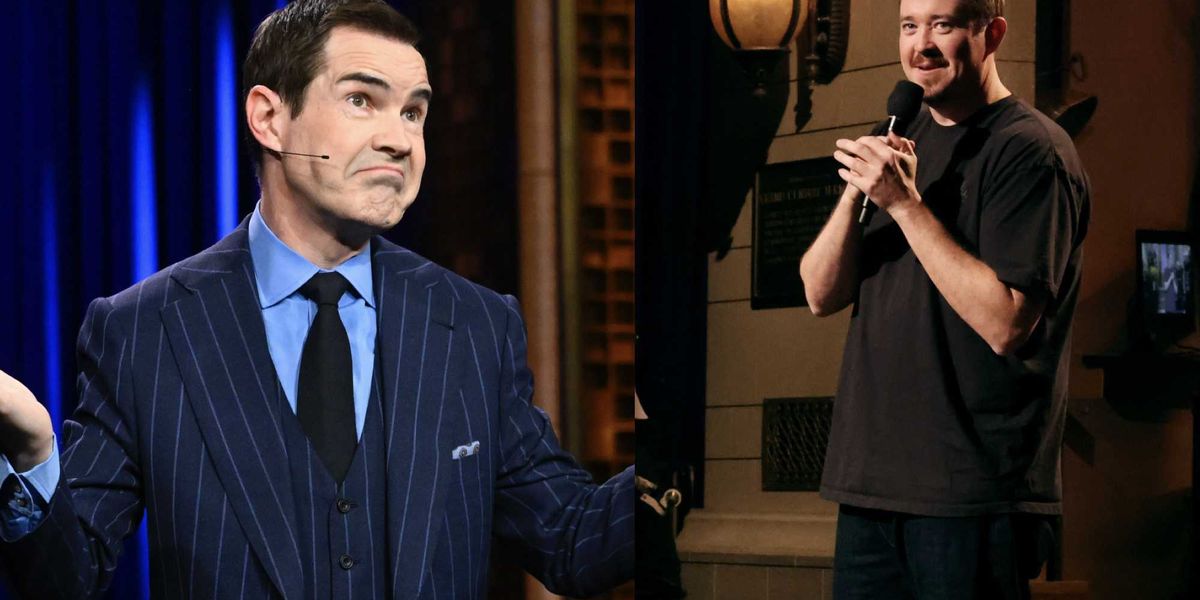
Jimmy Carr stepped into the middle of a fresh comedy dust-up and did it with the kind of brutal, fast-talking confidence that made the whole thing land harder. When the conversation turned to Shane Gillis and the usual outrage machine kicked in, Carr answered with a defense that was sharp, rude, and very much in his lane.
There was no long windup and no careful hedging. Carr leaned into the idea that comedians say outrageous things for a living, then doubled down with the kind of line that turns a tense moment into a punchline. The joke hit because it sounded less like a public relations move and more like a comic refusing to apologize for being a comic.
The exchange matters because Gillis has become one of the most argued-over names in modern stand-up. Every time his name comes up, the same old battle starts again, with critics treating the act like a moral courtroom and fans treating it like a free-speech stress test. Carr’s defense cut through that noise by treating the whole controversy like what it often is: a clash between comedy and people who want comedy to behave like a staff memo.
That is where Carr’s style fits so neatly. He has built a career on saying what polite people would never put in writing, then somehow making it feel like the joke is aimed at everyone in the room, including himself. In this case, the defense landed as both a jab and a shrug, the kind of response that says the crowd can gasp if it wants, but the comic is still keeping the microphone.
Shane Gillis has never been a neat, easy-to-package performer, and that has been part of the appeal. His rise has been fueled by an audience that likes its comedy rough around the edges and its comedians willing to take hits without flinching. That makes him exactly the sort of figure who keeps showing up in conversations about where the line is, who gets to draw it, and whether the line matters as much as the joke itself.
Jimmy Carr’s response also tapped into a bigger truth about today’s comedy scene. The pressure on comedians to explain themselves has gotten constant, and the result is a culture where a single clip can trigger days of moral panic. Carr’s defense worked because it rejected the idea that every offensive punchline needs a committee hearing, and that kind of refusal always gets attention.
Joe Rogan’s name hovers around this whole ecosystem too, because he has become a kind of gravitational center for comics who prefer open conversation over polished caution. Around that orbit, jokes are usually treated as jokes first and statements second, which drives critics crazy and keeps fans locked in. The fight is not really about one comic or one comment, but about whether comedy can still breathe without asking permission.
What makes Carr’s remark so effective is that it did not try to clean anything up. It was nasty, funny, and blunt enough to remind people that stand-up is often less about being agreeable than about being uncomfortably honest in public. That is exactly why moments like this travel so fast, because they are not polished, and they certainly are not built to make everyone feel safe.
