
This piece links the early republic’s fight against Barbary piracy to today’s standoff over the Strait of Hormuz, arguing that America’s founders faced the same choice between paying tribute or building strength, and that a firm military posture—backed by a credible navy—protected American commerce then and should guide policy now.
George Washington told Lafayette it was “the highest disgrace” that Americans were “tributary to such banditti who might for half the sum that is paid them be exterminated from the Earth.” He was writing about the Barbary pirates off North Africa who boarded merchant ships, enslaved crews, and shredded American trade in the Mediterranean, and his outrage echoed a fundamental question about national honor and security.
With no blue-water navy to protect its commerce, the young United States paid tribute to avoid attacks, and that choice exposed a deep split among leaders. John Adams urged paying off the pirates to spare the nation the cost of endless conflict, while Thomas Jefferson insisted America should “raise ships and men to fight the pirates into reason [rather] than money to bribe them.” Those two positions framed a debate about whether liberty is secured by cash or by force.
The argument matters again now with Iranian moves around the Strait of Hormuz. An extremist regime seeks leverage over global shipping the way Barbary tried to dominate the Mediterranean, and the question is the same: do we bow and buy safety, or do we build capacity and defend free passage? The comparison is stark and useful because it shows what happens when a nation tolerates weakness in the face of predation.
Tripoli’s ambassador told Jefferson and Adams bluntly that his state claimed sovereignty over the Mediterranean and expected tribute from any ship that passed through. He said “that all nations who should not have acknowledged their authority were sinners, that it was their [the Muslims’] right and duty to make war upon them wherever they could be found, and to make slaves of all they could take as Prisoners.” He even assured the Americans that anyone killed in battle “was sure to go to Paradise.”
Adams concluded that the United States could not afford a permanent, grinding war with the Barbary powers and favored paying tribute as the lesser evil. “We ought not to fight them at all, unless We determine to fight them forever,” he warned, arguing that the costs to commerce, insurance, and the national debt could swamp the young republic, and that “one Gift of two hundred Thousand Pounds” might be cheaper than a “Million [in trade] annually.”
Jefferson took a tougher tack, saying “An angel sent on this business… could have done nothing” to placate the corsairs and rejecting monetary appeasement. He believed peace could come only “through the medium of war,” and that combat would “procure us respect…and respect is a safeguard to interest.” For Jefferson, dignity and deterrence were practical tools to protect commerce and avoid future blackmail.
The practical problem Jefferson noted was that the United States lacked a navy that could project power into shallow coastal waters where the pirates hid. The debate over how to fix that shortcoming helped shape the fight for a Constitution, because only a unified federal government could raise the taxes needed to build and man frigates. James Madison put it plainly: “Weakness will invite insults,” and “The best way to avoid danger is to be in [a] capacity to withstand it.”
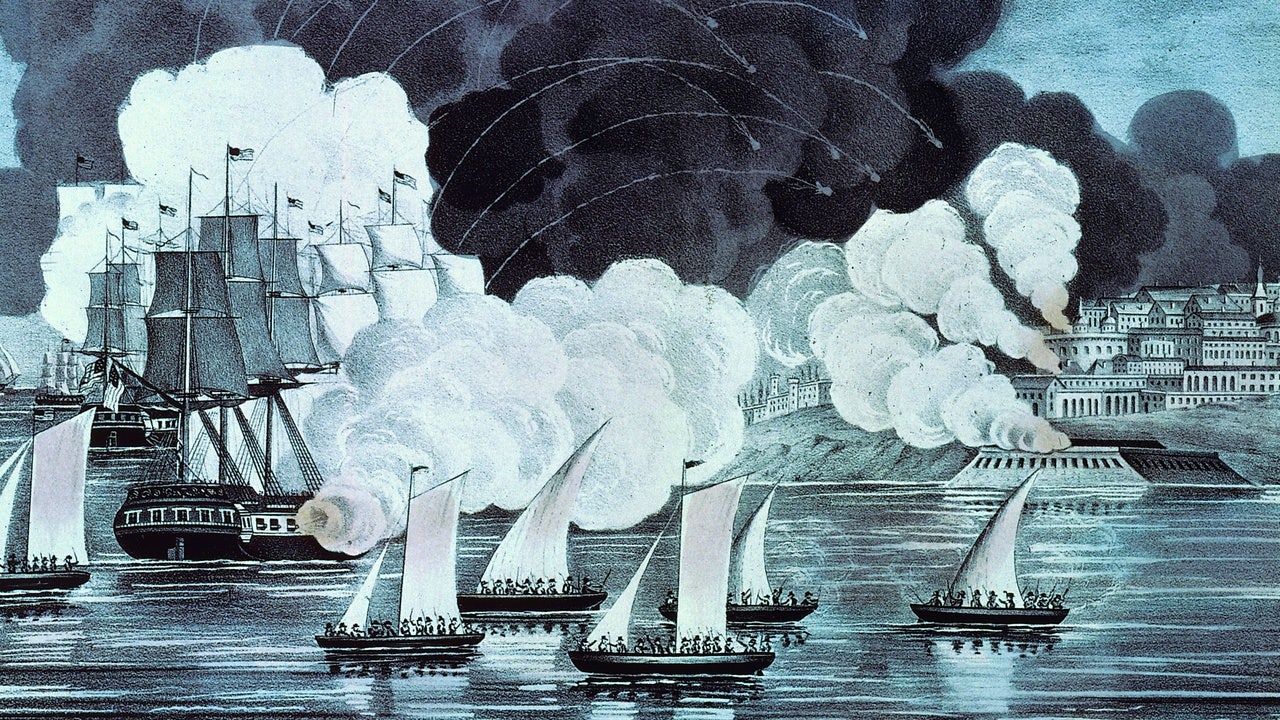
Once the federal government gained authority, the United States commissioned frigates designed to challenge the Barbary corsairs and sent them to the Mediterranean. The result was the country’s first foreign war, a long campaign that lasted until 1815 and ended with safe passage for American merchantmen. That victory produced monuments, city names, and songs, and it made clear that force coupled with principle could secure national interests.
Those outcomes are relevant as America confronts Iran today. The founders’ lesson is blunt: if a regime threatens free navigation, backing down or buying temporary quiet invites more coercion. Recent administrations have mixed pressure with negotiation, and the question remains whether payments or concessions will buy a lasting peace or simply fund future aggression. The historical record suggests a clear preference for strength backed by capability rather than ceded influence purchased with cash.
