
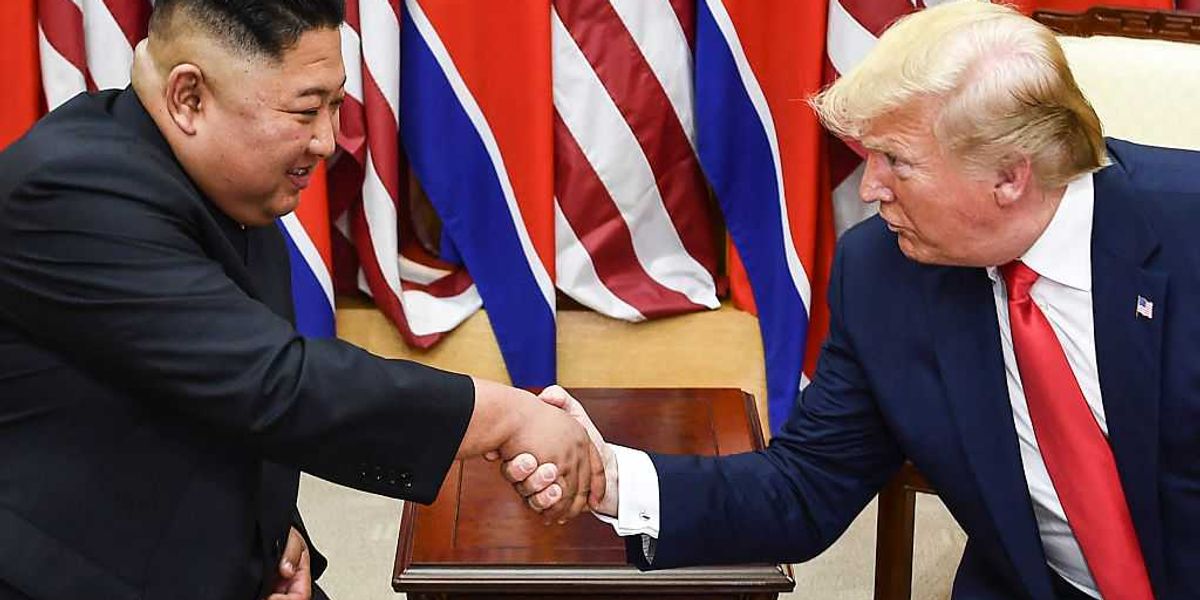
Washington’s long struggle with North Korea is still a cautionary tale, and the biggest mistake has been pretending pressure, patience, and polite diplomacy alone can solve a regime built on threats. North Korea keeps its nuclear arsenal, keeps tightening its grip at home, and keeps daring the United States to accept a bad deal. The lesson is blunt: when America signals weakness, Kim Jong Un gets bolder.
That pattern did not appear overnight. Across multiple administrations, from Bill Clinton to George W. Bush to Barack Obama and beyond, the same cycle kept repeating, with negotiations starting high and ending in disappointment. The regime would promise restraint, pocket concessions, and then move the goalposts the moment the spotlight shifted.
Donald Trump at least broke with the old habit of treating North Korea like a normal negotiating partner. His approach was direct, and it forced the world to pay attention to how dangerous the situation really was. The moment American leverage gets replaced by wishful thinking, Pyongyang starts believing it can outlast Washington.
Joe Biden’s team has leaned hard on diplomacy, but North Korea has never shown serious interest in giving up the weapons that keep the regime alive. That is not a mystery. Nuclear weapons are not a side issue for Kim Jong Un, they are the backbone of his rule, his shield against foreign pressure, and his ticket to being taken seriously on the world stage.
The real problem is that too many in Washington still act surprised by this. They speak as if a few meetings, a few carefully worded statements, and a few sanctions tweaks can change the math inside the regime. North Korea has spent decades proving that it understands one thing better than any American talking point, and that is strength.
Frederick Fleitz, in a new warning about the policy drift, argues that Washington still has not absorbed the hard lesson from years of failure. That critique lands because it speaks to something bigger than one negotiation or one president. The broader foreign policy culture keeps rewarding process over results, and North Korea has taken full advantage.
China’s role makes the situation even messier, because Beijing gives the regime room to breathe whenever it suits its own interests. That leaves Washington trying to solve a security problem while one of North Korea’s biggest enablers keeps the pressure uneven. Sanctions matter, but only when the United States is willing to enforce them with real staying power and stop pretending symbolism is enough.
The danger is not just another missile launch or another round of nuclear bluster. The danger is slow normalization, where North Korea’s arsenal becomes treated like an unfortunate fact of life instead of a direct threat to American security and regional stability. Once that happens, the regime wins without firing a shot.
Republican foreign policy has increasingly pushed back against the idea that endless engagement automatically produces progress. That skepticism is not about avoiding diplomacy for its own sake. It is about recognizing that diplomacy without leverage, consequences, and clarity becomes a stage show, and North Korea has already seen that performance many times.
The United States still has choices, but none of them are magical. It can rebuild deterrence, tighten enforcement, stand firm with allies, and stop rewarding empty promises. The North Korea lesson was written in plain English years ago, and Washington keeps acting like it needs one more expensive reminder before it finally takes it seriously.
