
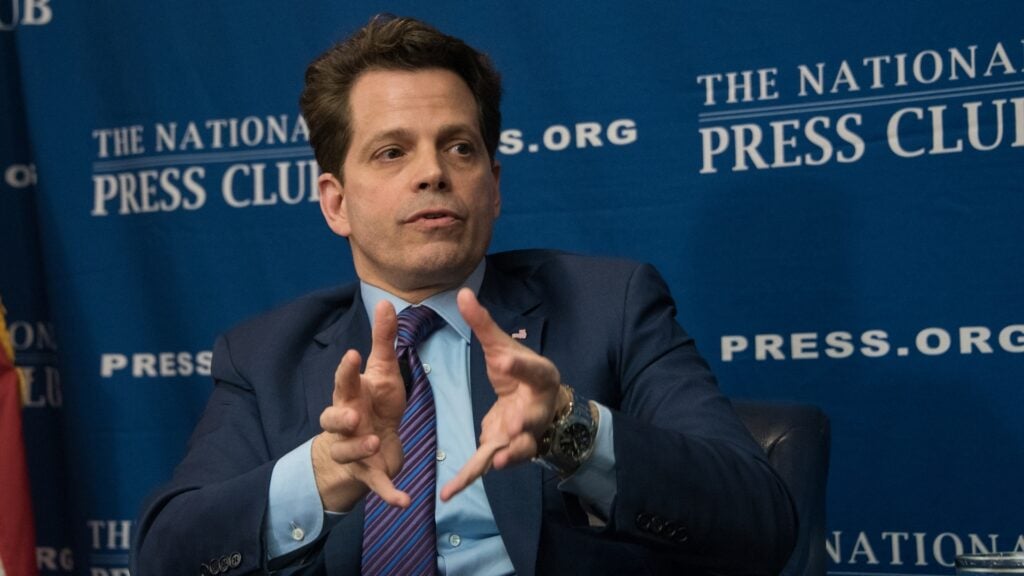
Anthony Scaramucci says he owns SpaceX shares and plans to participate in its public debut, even as he warns Elon Musk’s personal brand adds an outsized valuation premium. He argues that Starlink and other technology bets underneath SpaceX could justify a high price, while also admitting that the cult-like loyalty to Musk pushes numbers beyond standard metrics. This piece looks at why Scaramucci is willing to pay that premium, what the market thinks, and how investors are parsing indirect ways to gain exposure before a potential listing.
Scaramucci confirms he took part in a private funding round for SpaceX and that he previously invested in xAI, so he speaks with an insider’s conviction. He concedes that Musk’s personality inflates market expectations in a way that often breaks conventional valuation logic. Still, Scaramucci says he does not want to be left on the sidelines if the company follows a breakout public market trajectory.
He makes the familiar comparison to early-stage Amazon to underline the opportunity cost of not participating in a major tech listing. Scaramucci notes that missing Amazon’s IPO turned into a huge lost gain for many investors, and he views the SpaceX situation as potentially similar. That fear of missing out plays into his decision to hold and add, despite headline valuations that seem extreme.
At the heart of his thesis is Starlink, the satellite internet arm of SpaceX, which Scaramucci describes as the single-most compelling business inside the broader enterprise. He believes the recurring revenue from global broadband and future data products could change how investors value space-based services. For him, Starlink’s scale and network effects make the case for a significant portion of the company’s worth.
Beyond connectivity, Scaramucci mentions a more speculative but intriguing possibility: orbital data centers powered by solar arrays in space. He calls that idea fascinating and hints that what sounds like science fiction may be realizable with the right technology and capital. In his view, Musk and SpaceX are better positioned than any rival to attempt those kinds of bold engineering feats.
Still, Scaramucci is careful to separate admiration for engineering capability from a blind endorsement of market pricing. He explicitly warns that the “cult of personality” surrounding Musk produces an excessive premium that can push valuations off the charts. That kind of premium makes disciplined investors uneasy, yet the threat of missing a generational winner tempers that caution.
I own SpaceX. I participated in a private round.
I was also an investor in xAI.Now here’s my honest read:
The cult of personality around Elon Musk gives his companies an excessive premium that is off the charts.
Tesla is suffering and still carries a valuation that defies… pic.twitter.com/SdMCEjK4Uw
— Anthony Scaramucci (@Scaramucci)
Public markets have already started to imagine what SpaceX could look like as a listed company, and those scenarios range wildly. Confidential filings suggest a fundraising target and valuation assumptions that would dwarf most public debuts in history. That kind of potential scale explains why private buyers and high-profile investors are lining up despite the questions around price.
Prediction markets are trying to quantify the odds of a timely listing and a sky-high first-day valuation, and their numbers reflect real uncertainty. Traders put a decent chance on a near-term IPO and assign nontrivial probabilities to valuations in the trillion-dollar range. Those market-implied odds feed both the narrative of inevitability and the case for caution.
For most individual investors who didn’t join a private round, direct ownership of SpaceX isn’t an option—at least not yet. That reality pushes people to look for proxies or partial exposure through companies that hold stakes in SpaceX or that operate adjacent businesses. Investors weigh alternatives carefully because exposure can come with different risk and liquidity profiles than direct share ownership.
EchoStar is one example frequently cited as an indirect way to play Starlink’s upside, given its minority stake in the satellite business. Other public names, and even Tesla for a broad Musk connection, serve as imperfect proxies for sentiment toward Musk’s ventures. Each proxy carries its own business fundamentals, which can diverge significantly from the fortunes of SpaceX itself.
Scaramucci’s position underscores a recurring investor dilemma: how to reconcile belief in transformational tech with the discipline of valuation. He leans into the transformational argument while acknowledging the market’s emotional drivers. That blend of pragmatic optimism is part of why his stance attracts attention.
If SpaceX does proceed with a blockbuster IPO, it will almost certainly force a rethinking of how space and satellite businesses are valued in public markets. A proven public market performance could validate the lofty private valuations, while a softer debut would raise fresh questions about the premium attached to charismatic founders. Either outcome will reshape investor strategy toward space tech for years to come.
Until then, investors must balance the fear of missing out with the reality of frothy pricing and limited liquidity for private shares. Scaramucci has made his choice and explained his rationale: he sees unique assets inside SpaceX that could produce exceptional returns, and he is willing to accept a premium to be part of that potential. Others will decide based on risk tolerance, liquidity needs, and appetite for speculative, high-conviction bets in emerging infrastructure markets.
