
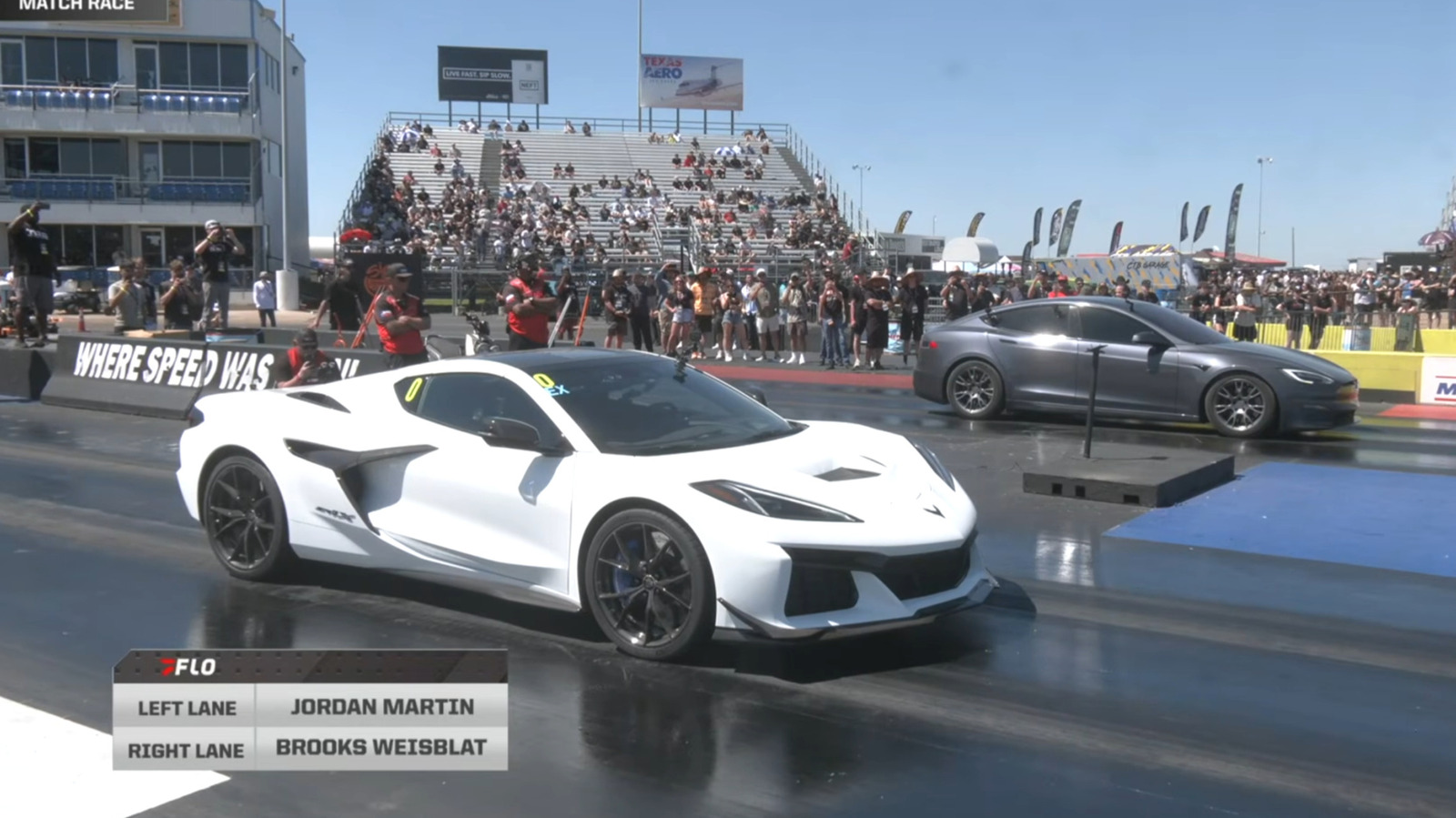
The short version: a Tesla Model Plaid rolled onto a local racetrack looking for a friendly one-on-one with a Corvette and came away thoroughly outgunned. This piece breaks down the run, what went wrong for the Plaid, and why raw straight-line numbers don’t always translate to victory on real asphalt. Read on for a clear take on traction, heat, and the little details racers know that change outcomes fast.
The Plaid arrived with big shoes to fill and an even bigger reputation for insane acceleration. On paper, its triple-motor setup and astronomical 0-60 claims make it a monster in traffic lights and metric sheets. But the racetrack is a different animal, demanding grip, heat control, and consistent power delivery over flashy sprint numbers.
The opponent that day was a Corvette that looked plain until it moved, and then it did exactly what it needed to do. Corvettes, especially mid-engine models, are light, well-balanced, and built with handling and durability in mind. In short bursts and turn transitions they stay composed, and that steadiness proved decisive when the green flag dropped.
One big issue for the Plaid was traction. Electric cars can dump enormous torque instantly, and without perfect traction that power becomes smoke and noise instead of forward motion. The Plaid’s weight and tire choice made its initial launches messy, giving the Corvette precious tenths that add up fast over a short race.
Heat also played a role, even in a single match-up session. Batteries and motors need thermal management, and repeated hard runs raise temperatures quickly. As systems throttle back to protect components, the car’s peak output can soften, leaving the driver with less bite than the spec sheet promises.
Driver experience matters too. Launching an EV with three motors requires different techniques than revving a combustion engine and slipping a clutch. A mismatch between driver inputs and what the car needs can cost momentum, and at the track every small mistake amplifies. The Corvette driver’s clean, consistent launches contrasted with the Plaid’s uneven bursts.
Tires and setup are where theory meets reality. Corvettes often run track-focused rubber and suspension that channel power into forward motion reliably. The Plaid, despite its speed, was working against a heavier curb weight and a setup tuned more for street performance than repeated track duels. That combo blunted its hands-on race potential.
Another factor was predictability. A car that behaves the same lap after lap lets the driver push the envelope safely. The Plaid’s behavior shifts as systems adjust for heat and traction, making precise throttle work harder to execute. The Corvette’s predictable responses let its driver exploit strengths without chasing surprises.
In the end it wasn’t a simple story of electric versus gas or horsepower bragging rights. The Corvette won because its complete package matched the task: balanced weight, grip-focused tires, repeatable launches, and a driver who knew how to extract those qualities. The Plaid’s headline numbers still impress in many settings, but at that racetrack they didn’t add up to victory.
