
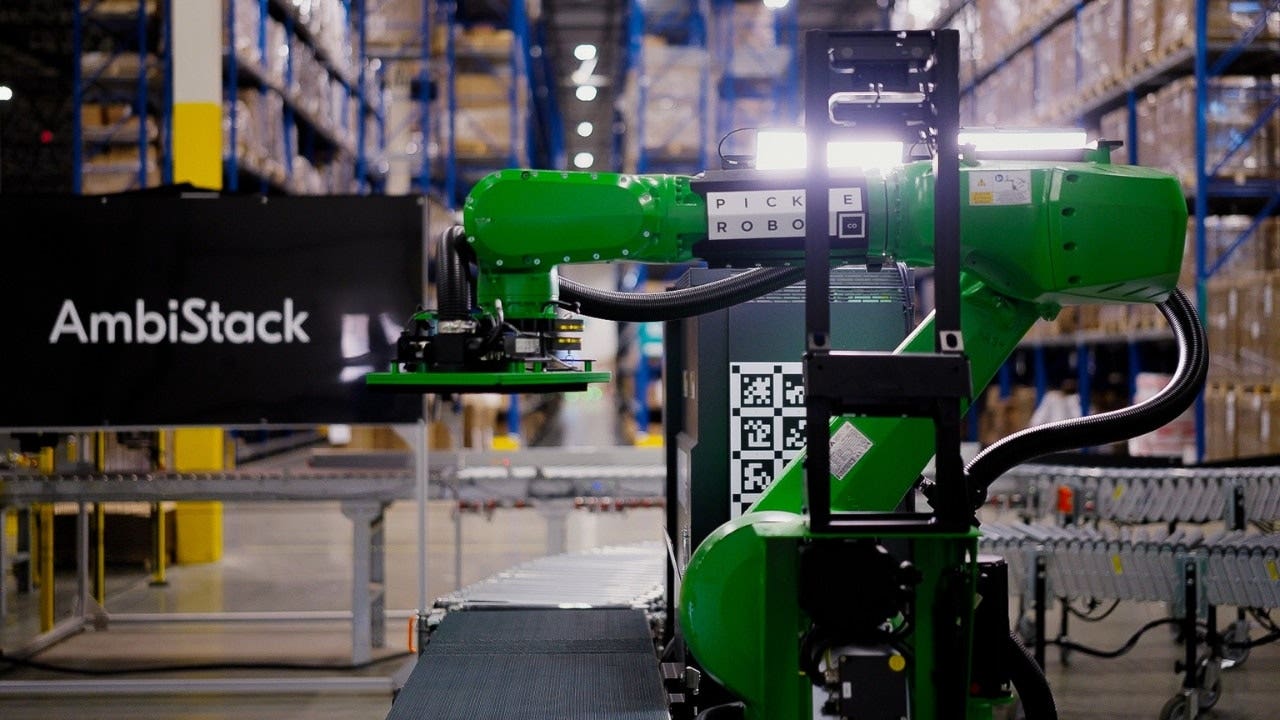
Robots are closing the gap between the truck and the warehouse floor as two companies link unloading and pallet building into a single, smoother workflow that could cut delays and save labor on busy docks.
Loading docks are chaotic places by design: trailers arrive full of mixed freight, cases vary by size, labels hide, and timing is tight. That makes the dock one of the toughest spots to automate reliably, because any hiccup in one step stops the whole chain. The new integration pairs trailer-unloading robots with a downstream stacking system so machines can actually hand work off to each other without a human in the middle.
Pickle Robot’s trailer-unloading gear is built to pick cases out of messy trailers and feed them onto conveyors instead of asking people to bend and lift for hours. Ambi Robotics’ AmbiStack then reads each box and assembles stable pallets for the next stage, using vision and planning to decide where each case should sit. Together they form a continuous flow: unload, convey, scan, stack, and move on to receiving.
What matters here is the handshake between systems, not just the individual tools. Warehouses often already have pockets of automation, but those islands need custom engineering and human intervention to talk to each other. This partnership aims to reduce that friction so facilities can bolt in automation without tearing everything apart and redesigning lanes.
Physical AI drives this solution, because it isn’t enough for a robot to “think” — it has to deal with dents, shifting loads, crooked labels, and a conveyor that moves at real-world rhythm. Unlike software that writes text, warehouse robots face unpredictable objects and timing, so they need sensing and adaptability. When a case arrives damaged or a barcode points the wrong way, the system must reroute or adjust on the fly to avoid a jam.
That adaptability is what allows these robots to work in existing operations instead of forcing a complete rebuild. The companies say the combo can slot into current infrastructure, keeping conveyors and logistics layouts largely intact. That promise of less disruptive deployment is a big deal for operators who cannot afford multiweek shutdowns to install new equipment.
“Warehouse operators shouldn’t have to choose between best-in-class technologies and seamless integration,” said Jim Liefer, CEO of Ambi Robotics. His point is simple: you want top-performing tools that also play nicely together. This integration tries to deliver both, so warehouses can improve throughput without sacrificing flexibility.
AJ Meyer, founder and CEO of Pickle Robot Company, put the customer demand more directly: “Customers want automation that improves real-world throughput while fitting into existing operations.” That blunt request captures why interoperability, not flashy standalone systems, will win in large distribution centers and third-party logistics hubs.
Beyond efficiency, there’s a human angle. Automating brutal, repetitive dock work can reduce injuries and make jobs less backbreaking, but it also changes the skill mix inside a warehouse. Companies that help staff transition to supervisory and maintenance roles will ease that shift and keep operations running smoothly as robots take on heavier lifting.
If the combo works at scale, it points to a broader trend where specialized robots link into end-to-end workflows instead of operating alone. The next step may be adding sorting, quality checks, or robotic case opening further downstream, but the immediate win is removing the bottleneck between trailer and floor. Faster handoffs mean fewer delays, fewer manual moves, and a clearer path for facilities that want to modernize without rebuilding.
