
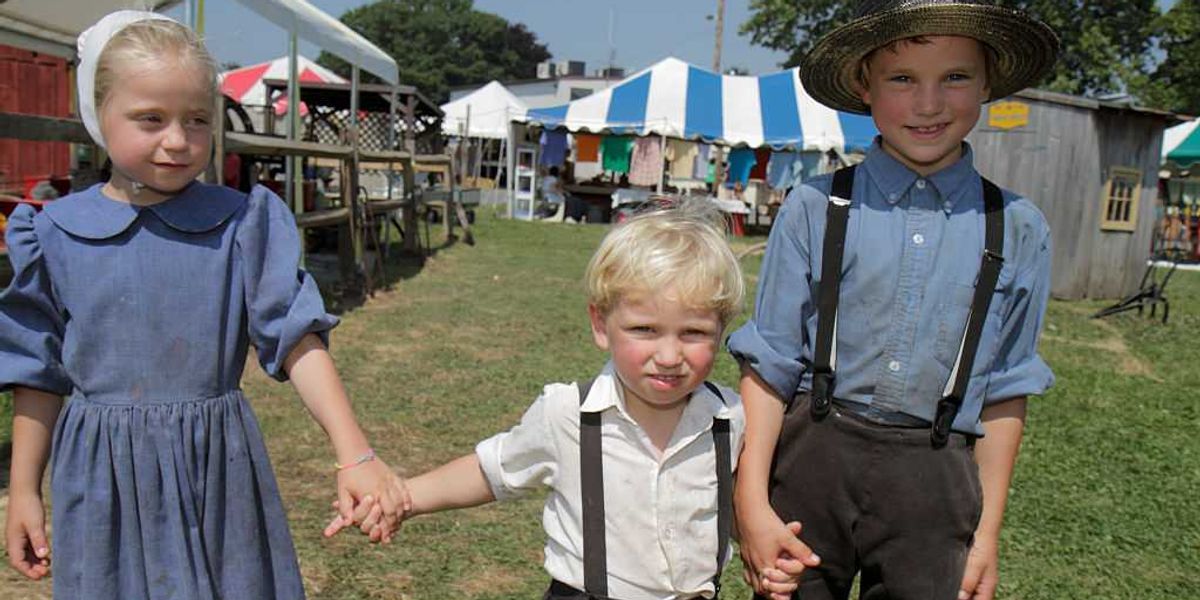
The buzz around the Amish and vaccination data has turned into more than a simple numbers debate. It has become a test of how much people trust institutions, how loosely claims get tossed around, and how quickly a narrative can outrun the facts. Add in questions about religious liberty, public health pressure, and the Supreme Court, and the whole thing gets a lot sharper than a typical policy spat.
The Amish are often dragged into these discussions because they sit outside the national mainstream in obvious ways. Their communities are seen as a kind of living contrast to modern life, so people love using them as proof for whatever point they already wanted to make. That is exactly where the trouble starts, because once a group becomes a symbol, the actual people get pushed out of the frame.
Vaccination rates are the first flashpoint, and they are rarely handled with much care. Numbers get repeated with confidence, but confidence is not the same thing as accuracy, and rough estimates can get inflated into talking points before anyone bothers to check them. When data is used to score points instead of to understand reality, the public ends up with noise dressed up as certainty.
That matters even more when the conversation shifts to autism, ADHD, and broader questions about child health. These issues stir up strong emotions because families want clear answers and governments want simple rules, but the real world is messier than both sides pretend. When people start cherry-picking examples to prove a theory, it can make serious debate look like a circus act.
Religious liberty is another reason this debate refuses to stay neatly boxed in. The Amish are not just a data point, they are a faith community with long-standing convictions about how to live, raise children, and interact with government power. That makes any attempt to use them as a cudgel especially clumsy, because it turns a protected way of life into a prop for somebody else’s argument.
The Supreme Court angle only raises the temperature. Once public health rules brush up against religious freedom, the fight becomes about much more than shots or school paperwork, and suddenly constitutional limits are on the table. That is where a lot of people get nervous, because once bureaucrats believe they can bulldoze conscience, the line between safety and control starts getting blurry fast.
RFK Jr. has helped keep all of this in the spotlight, and not everyone likes the questions he keeps forcing into view. Supporters see someone willing to challenge entrenched thinking, while critics see a troublemaker who gives too much oxygen to doubts. Either way, his presence exposes how fragile the public conversation has become, especially when official voices act as if skepticism itself is the real threat.
What makes the Amish argument so sticky is that it reaches into science without staying confined to science. People want tidy proof, but communities are not laboratory specimens, and human behavior never lines up perfectly with ideological needs. The minute a claim about one group gets inflated into a universal rule, the whole discussion starts drifting away from careful reasoning and toward convenience.
There is also a deeper cultural issue here that keeps humming in the background. A lot of Americans are tired of being told that every question is settled, every concern is backward, and every hesitation is some moral failure. That kind of smug certainty does not build trust, and it certainly does not help when the subject touches children, faith, and the authority of the state.
So the fight over Amish data is really a fight over who gets to define reality. Is it the institutions that demand obedience, the communities that live by their own code, or the plain facts that refuse to fit into anyone’s slogan? That tension is still there, and every time someone tries to flatten it into a neat headline, the argument gets even louder.
