
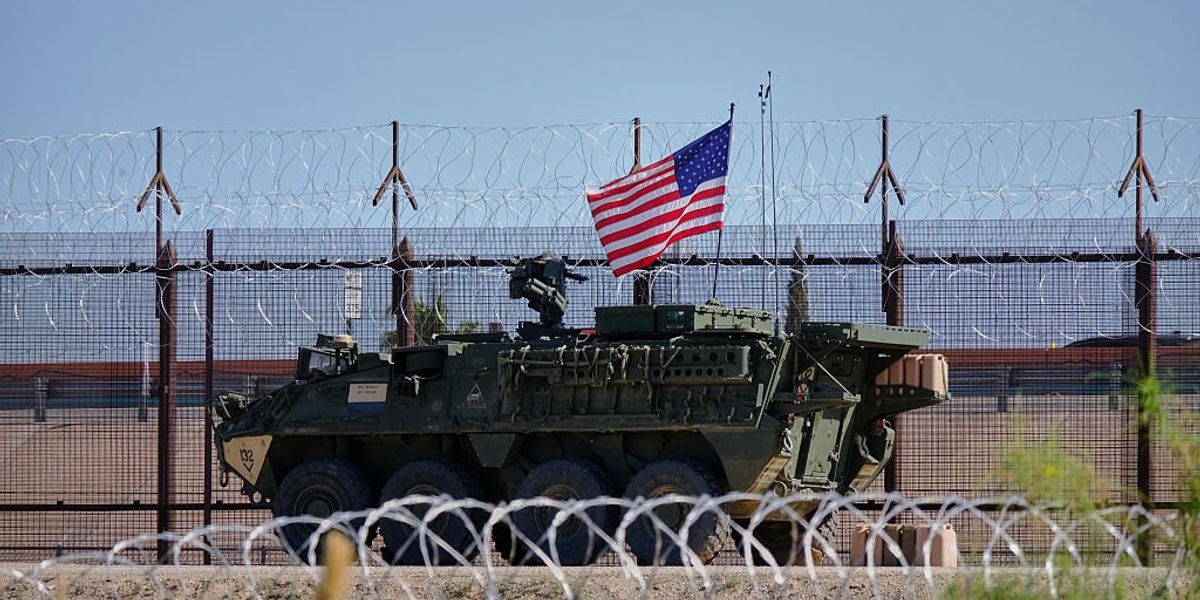
President Donald Trump has recently taken a bold step by signing a directive aimed at increasing the U.S. military’s involvement in combating drug cartels in Latin America. This move could allow military force to be used against groups labeled as foreign terrorist organizations, including several based in Mexico and others in Latin America and Haiti. Notably, the Venezuelan Cartel de los Soles, also known as the Cartel of the Suns, was added to this list just a couple of weeks ago.
Mexican President Claudia Sheinbaum has already expressed her concerns to Trump, stating she does not want U.S. military personnel operating on Mexican soil. The Times highlighted that this directive “provides an official basis for the possibility of direct military operations at sea and on foreign soil against cartels.” As a result, U.S. military officials have begun to consider various strategies for targeting these groups.
The White House, when contacted for a comment on the report’s validity, provided Blaze News with a statement identical to the one given to the Times. According to White House deputy press secretary Anna Kelly, “President Trump’s top priority is protecting the homeland, which is why he took the bold step to designate several cartels and gangs as foreign terrorist organizations.” This sentiment underscores the administration’s commitment to national security.
Back in April, Trump hinted at the possibility of using the U.S. military in this fight during a conversation with Blaze Media co-founder Glenn Beck. With a smile, he remarked, “That would be breaking news, wouldn’t it?” This comment suggests that the President is seriously considering military intervention as a viable option.
The decision to label these cartels as foreign terrorist organizations is expected to have significant implications. It could pave the way for more aggressive military tactics aimed at dismantling these dangerous networks. Some conservative commentators praise this move as a necessary step to curb the drug-related violence and trafficking that have plagued the region.
Fox News has reported that this directive aligns with Trump’s broader strategy to secure the southern border and protect American communities from the ravages of illegal drugs. By targeting the cartels directly, the administration hopes to cut off the supply of narcotics and reduce crime rates at home.
Critics, however, worry about the potential diplomatic fallout from such actions, especially in Mexico, where the presence of U.S. troops could be seen as a violation of sovereignty. Despite these concerns, proponents argue that the threat posed by these cartels justifies taking decisive action.
The New York Post highlights that drug cartels have long been a source of instability in Latin America, contributing to widespread corruption and violence. By designating these groups as terrorists, the U.S. can employ a wider range of tools to combat their influence. This includes increased collaboration with other nations facing similar threats.
Newsmax points out that the inclusion of the Venezuelan Cartel de los Soles on this list signals a broader focus on the region’s complex network of criminal organizations. It also reflects ongoing tensions between the U.S. and Venezuela, particularly concerning its leadership’s alleged involvement in drug trafficking activities.
Some experts believe that this directive could lead to heightened military cooperation with regional partners. Such alliances could amplify efforts to dismantle these criminal networks and restore stability in affected areas. However, the success of these initiatives will largely depend on the willingness of other governments to collaborate.
The directive also raises questions about the role of the U.S. military in foreign interventions. While some view it as a necessary extension of national defense, others caution against overextending military resources in international conflicts. Balancing these concerns will be crucial in implementing the directive effectively.
At its core, this move underscores the administration’s commitment to safeguarding the nation from external threats. By targeting drug cartels with the full force of military capabilities, the U.S. aims to disrupt their operations and protect American citizens. This approach reflects a broader strategy of prioritizing national security.
While the directive has sparked debate, it remains to be seen how it will be executed on the ground. Military planners will need to carefully consider the potential risks and benefits of various tactical options. Ultimately, the goal is to dismantle these dangerous organizations and reduce the flow of illicit drugs into the U.S.
As the situation develops, it’s clear that the fight against drug cartels will remain a central focus of U.S. foreign policy. The administration’s commitment to this cause demonstrates a willingness to take bold actions in defense of the nation. By leveraging military resources, the U.S. hopes to achieve lasting security and stability in the region.
