
Pope Leo XIV is showing encouraging signs after lung surgery, and the Vatican’s latest update has given the public a first real look at how his recovery is unfolding. The pope has been resting at Gemelli Hospital in Rome after doctors removed the lower lobe of his right lung and confirmed lung adenocarcinoma in the tissue that was taken out.
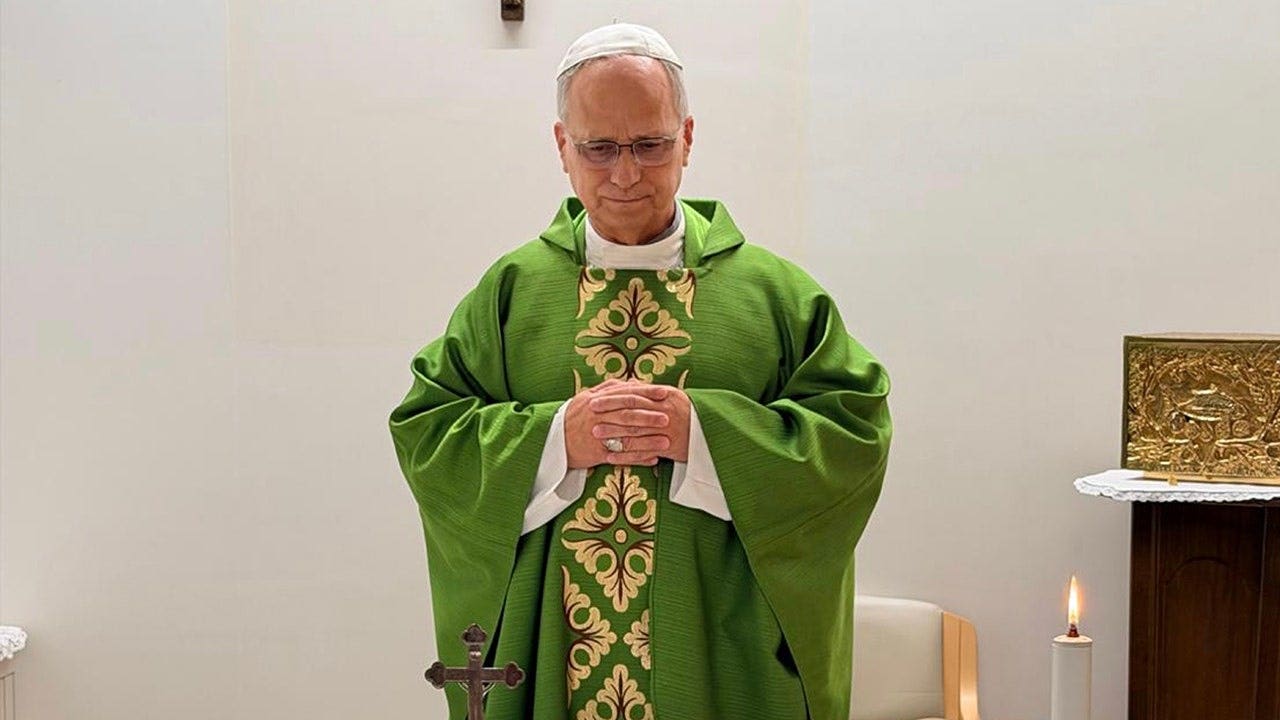
The first images released after the procedure showed the 71-year-old pontiff upright and active at a makeshift chapel inside the hospital. He was seen celebrating Mass and distributing communion, a striking sign that he is not only recovering, but staying engaged in the rhythm of his ministry.
According to the Vatican, several members of Gemelli’s medical and nursing staff, along with Vatican City State Gendarmerie Corps members, attended the service. In his homily, the pope thanked the people caring for him, calling out doctors, nurses, and orderlies for the work they do each day with patients in fragile condition.
That moment mattered for more than symbolic reasons. It suggested a patient whose body is healing and whose energy is returning, even after thoracic surgery that usually demands a careful, measured recovery. The Vatican also said his condition has shown steady improvement, backed by new blood tests and a chest X-ray.
Doctors Luigi Carbone and Stefano Margaritora said his post-operative recovery has been strong enough to allow him to handle ordinary daily activity on his own. That kind of progress stands out, especially after a surgery involving part of a lung, which can be a big deal even for someone otherwise in good shape.
Medical experts also pointed to the kind of operation he had. Fox News senior medical analyst Dr. Marc Siegel noted that the procedure used a small incision with video-assisted thoracoscopy, a less invasive approach that typically means less pain and a faster bounce back.
Siegel also stressed that the pope’s overall health before surgery likely helped. Because he was active and not a smoker, his baseline lung function was probably strong, and that makes a real difference when a portion of the right lung has to be removed.
Lary Robinson, an oncologist at Moffitt Cancer Center in Tampa, said the diagnosis surprised him, but it also fits a medical reality that is often overlooked. Most lung cancers do happen in people who smoke or once smoked, yet the disease can still strike never-smokers, including a meaningful share of men and women.
Robinson said the fact that surgery was performed right away suggests the cancer may have been localized. In his view, that usually points to a situation where the disease has not obviously spread, which is the kind of detail doctors want to see when they are trying to measure how serious the case really is.
If the pathology confirms an early-stage cancer, the outlook can be very good. Robinson said a Stage 1 diagnosis can come with a high chance of cure, though the exact picture depends on tumor size and what the lab results show after surgery.
That is why the next stretch matters just as much as the operation itself. The medical team still has to sort through the pathology and decide whether any additional treatment will be needed, even as the pope continues moving forward day by day.
For now, the pace of recovery appears steady, and that has kept plans in motion for a possible public appearance at Sunday’s Angelus. The pope’s expected trip to South America in November is still on the calendar too, though the final call will hinge on how well his recovery keeps tracking in the weeks ahead.
