
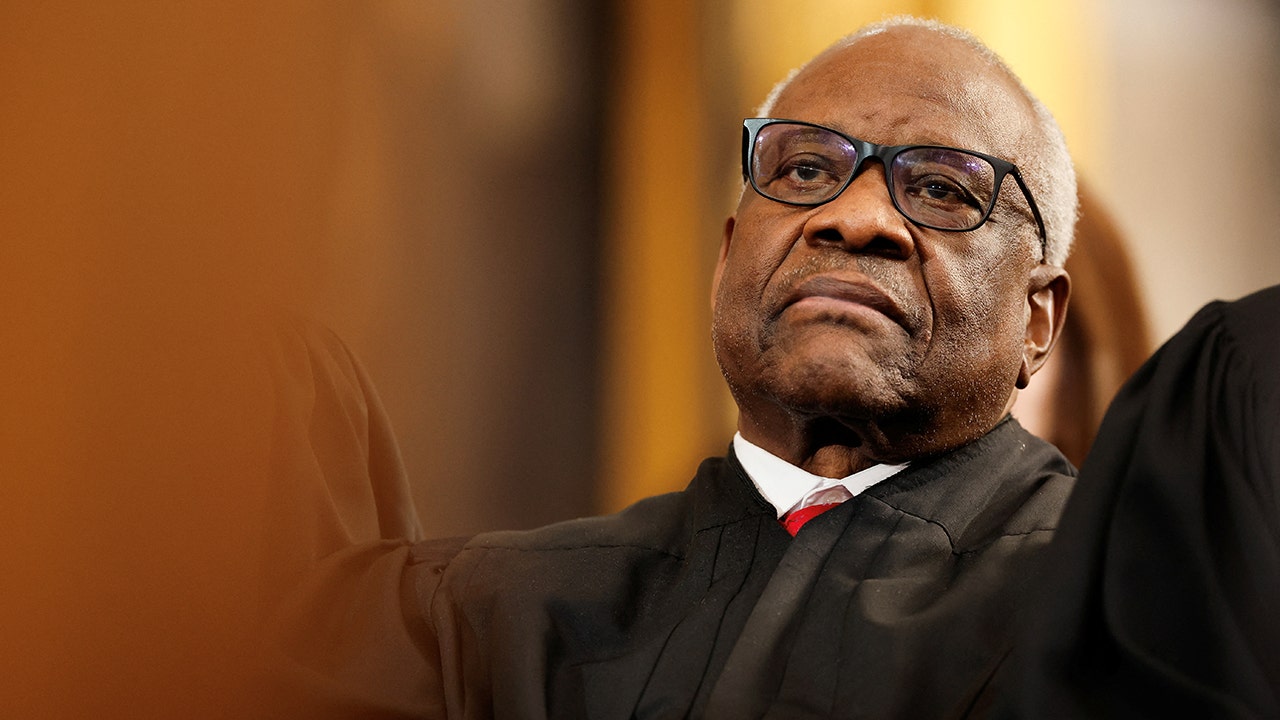
Justice Clarence Thomas has put California’s mandatory physician training law squarely in the crosshairs, warning that the Supreme Court’s refusal to hear the case leaves too much room for states to force private speakers to carry government-approved ideas. The dispute centers on whether California can require doctors to sit through continuing education that includes implicit bias material without running into the First Amendment.
At the center of the fight is a California physician who says the state crossed a line by making her deliver or absorb a message she does not agree with. Thomas, joined by Justice Samuel Alito in dissent, said the issue is bigger than one course or one profession, because once the government can dictate the content of private speech, the pressure spreads fast.
California requires licensed physicians to complete 50 hours of approved continuing education every two years, and the state says those courses must include instruction on implicit bias. That material can show up as examples of how bias may affect medical judgment or as strategies for reducing unequal health outcomes, which is exactly where the First Amendment fight kicks in.
Thomas wrote that when the government uses private speakers to present its viewpoint instead of speaking for itself, constitutional scrutiny applies. In his view, a state does not get a free pass just because it wraps its message in licensing rules, and he warned against letting government speech doctrine become a shield for censorship or compelled speech.
The physician challenging the law, Dr. Azadeh Khatibi, brought the case alongside the nonprofit Do No Harm. Their argument is straightforward: California is not just regulating a profession, it is pushing instructors to repeat a favored message, even when that message has nothing to do with the subject they want to teach.
Her lawyers said she does not want to discuss implicit bias in her courses because it is not relevant to her material and takes away time from topics she considers important. They also said she rejects the claim that implicit bias is the main cause of disparities in healthcare, which makes the state’s requirement feel less like regulation and more like a forced lecture.
California responded that instructors are not required to personally believe the theory or endorse it. In the state’s telling, teachers can include the required discussion and still say they disagree with it, which officials argue keeps the rule safely on the right side of the Constitution.
The Ninth Circuit had already sided with California, saying the continuing education courses count as government speech because the state heavily regulates the medical field. That ruling gave the state broad protection from First Amendment challenges, but Thomas said that logic goes too far and could let nearly any regulated industry be pulled into the same net.
That concern is what makes the dissent so pointed. Thomas argued that if California can force this kind of messaging in medicine, other professions could be next, from law to any field where the state has licensing power and wants to shape the conversation.
He pressed that point with a blunt example, asking whether California could demand a keynote speaker at a legal conference oppose racial preferences in hiring. His warning was simple enough: if enough regulation can turn a private message into government speech, then free expression starts to shrink in places where Americans assume it still has room to breathe.
Justice Neil Gorsuch also disagreed with the court’s decision not to take the case, though he did not sign onto the Thomas-Alito reasoning. The Supreme Court’s move leaves the Ninth Circuit ruling standing for now, but the bigger constitutional question is still hanging out there, waiting for a future case to force a clearer answer.
