
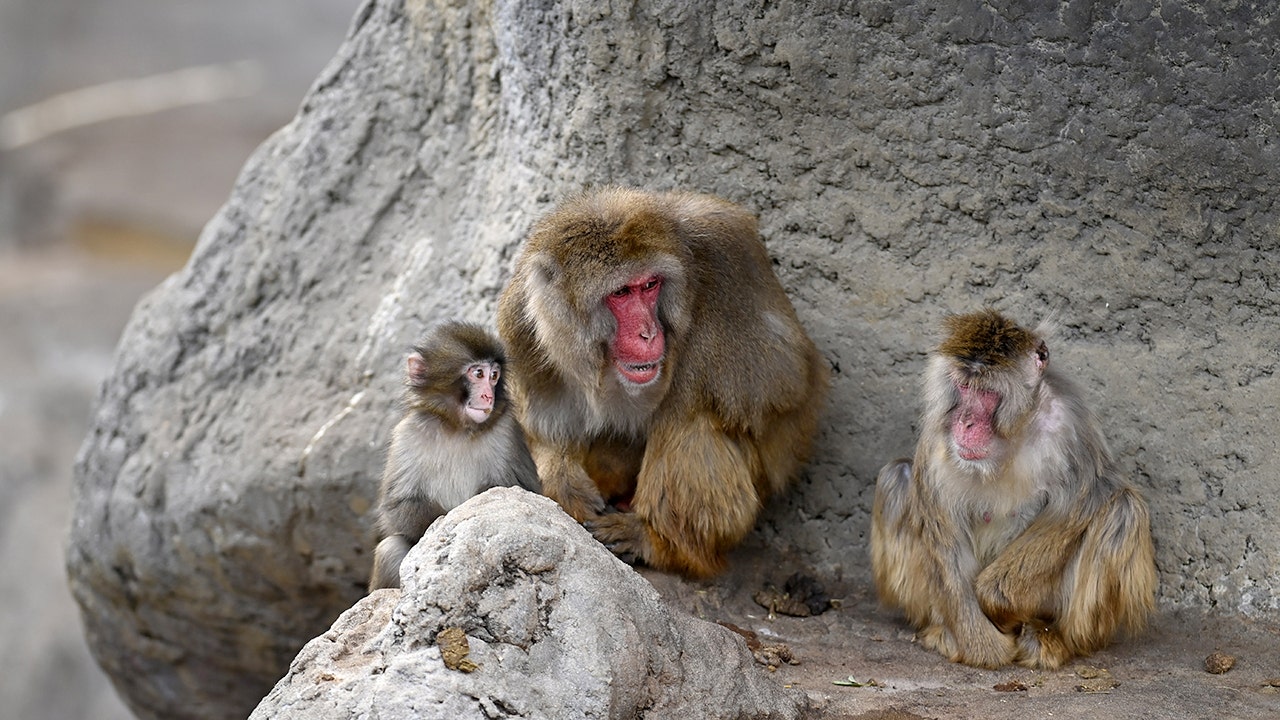
Punch, a young macaque at the Ichikawa Zoological and Botanical Garden, has begun moving from solitary comfort with a stuffed orangutan to real monkey companionship. After being hand-reared following abandonment at birth, the troop reintegration effort has shown promising signs as Punch now seeks contact with his peers. This article follows his gradual social progress and the zoo’s careful strategy to help him belong.
Punch was left by his mother soon after he was born in July 2025, and staff stepped in to hand-rear the tiny primate to keep him alive. In those early weeks he clung to an orange stuffed orangutan for warmth and security, a constant companion that drew crowds and attention. The toy became a symbol of his vulnerability and the unusual relationship between humans, animals, and comfort objects.
On Jan. 19, 2026, the zoo began a formal program to reintroduce Punch into the monkey mountain enclosure with other macaques. The process was deliberate: keep him inside the troop’s space, let the animals observe him, and give him gentle, guided interactions before fully releasing him. Early attempts were tense, with Punch often ignored or pushed away by established members of the group.
Hand-reared primates face real social hurdles because they miss out on early learning that comes from a mother and group. Punch’s pattern of staying beside his plush toy was both a coping mechanism and a barrier to normal social play. Zookeepers watched closely for signs that he would transfer attachment from the toy to the troop, a critical step for his long-term welfare and social development.
The Ichikawa Zoological and Botanical Garden explained their approach plainly: “From an animal welfare perspective, our primary goal is to reintegrate Punch with the troop,” and their team built the reintegration around calm, repeatable exposures. They paired Punch with a gentle young female macaque to help him practice basic social skills and to boost his confidence. Those controlled pairings were intended to make the group see him not as an outsider but as one of their own.
Recent footage captured by X user @tate_gf shows a milestone moment in Punch’s journey, where he reaches for contact with another macaque rather than relying solely on his toy. The clip ends with a classic juvenile behavior: Punch climbing onto the back of a peer for a piggyback ride, a simple act loaded with social meaning. That behavior signals acceptance, learning, and a shift from solitary comfort to shared life.
Punch still clutches his orange plush during sudden disturbances, but the balance is changing and the zoo is optimistic. The staff point to past successes, like Otome from 2009, who was hand-reared, eventually moved on from a stuffed companion, and integrated well enough to raise four offspring. Those cases offer a blueprint and a hopeful precedent for what can happen when patient care meets careful social engineering.
The story has drawn visitors eager to see Punch in person, and the zoo has reported long lines of people who want to watch the shy youngster interact. Online reactions mixed simple affection with curiosity about animal behavior and welfare, summed up by comments such as “I’m hoping Punch has a good life like everybody else does, and think he’s a cute little guy,” and “Such a precious baby.” Those reactions reflect both empathy for animals and a fascination with how social bonds form.
Punch’s progress is a reminder that raising animals in human care requires more than feeding and shelter; it takes intentional social rehabilitation. The slow wins — a touch, a shared ride, a moment of play — matter more than dramatic breakthroughs because they indicate lasting adjustment. For Punch, every piggyback and gentle grooming are steps toward a life that looks more like what a macaque should have with its troop.
