
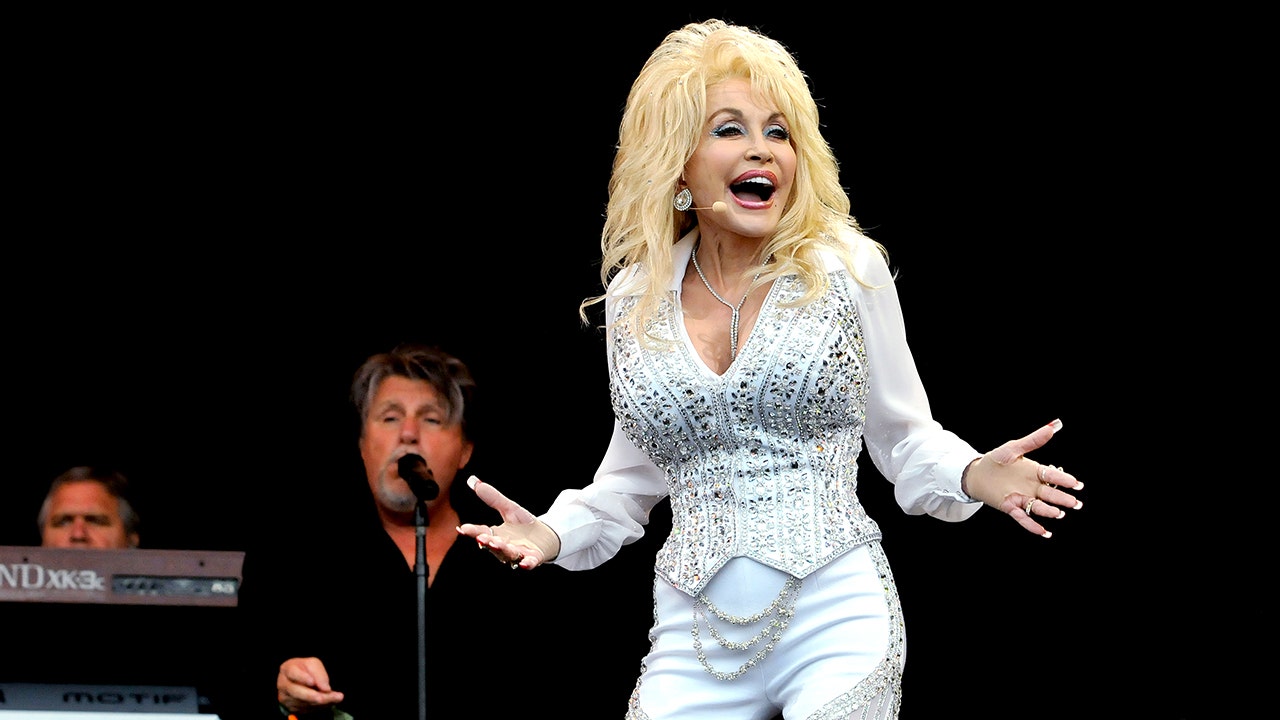
Dolly Parton spent a lifetime turning honesty, humor, and heart into something bigger than country music, and one of her most consistent choices was to stay out of partisan brawls. Even as presidents changed, interviews piled up, and other celebrities rushed into the spotlight of political debate, she kept drawing a line and refusing to let politics swallow the rest of her life.
She was blunt about it too. In a 2020 interview, Parton said, “I am not political, and I refuse to get caught up in political things,” and she stuck to that attitude for years. That stance became part of her public identity, not as a dodge, but as a deliberate choice to keep the focus on her music, her fans, and the kind of optimism she liked to put out into the world.
Parton understood the downside of taking sides in a country as divided as this one. She said she had as many Republican fans as Democratic fans and did not want to alienate either group, which made sense for an artist whose appeal stretched across age, class, and politics. Her view was simple and old-fashioned: speak carefully, treat people well, and do not turn every platform into a political weapon.
That restraint was tested plenty of times. Reporters pressed her on Donald Trump, other public figures tried to pull her into the culture wars, and conversations around awards and honors added more pressure. Still, she kept steering the same way, even when people expected a more dramatic answer.
One of the clearest examples came when the Trump administration twice offered her the Presidential Medal of Freedom. She declined once because her husband, Carl Dean, was ill and again because she would not travel during the COVID-19 pandemic, and later said the Biden administration had also reached out about the honor.
That put her in a tight spot, because accepting the award could have been read as a political gesture whether she wanted it to be or not. “Now I feel like if I take it, it’ll be doing politics, so I’m not so sure,” she told NBC’s “Today.” For Parton, even a high honor could become messy if the message got twisted.
Her resistance also showed up in interviews where the questions were clearly designed to bait her into picking a side. When one interviewer tried to compare Trump to the abusive boss in “9 to 5,” she shut it down fast and made it clear she was not going there. “I’m not addressing that,” Parton said. “I learned a long time ago, keep your damn mouth shut if you want to stay in show business. … I’m not in politics, I’m an entertainer.”
That line stuck because it sounded like Dolly Parton, funny but sharp, warm but firm. She knew her job was to connect with people, not lecture them, and she never seemed interested in pretending otherwise.
She could still be thoughtful about values without endorsing a party platform. Parton said people were entitled to their own beliefs and faith, but that those things did not need to be used like a club, and she often framed kindness as the better instinct. Her faith mattered to her, and so did forgiveness, which is probably why she treated disagreement like something to manage instead of dramatize.
Even her jokes carried that same instinct. “My daddy was a Republican, my mama was a Democrat, and I’m a hypocrite!” she once quipped, turning a political tension into a laugh without landing in anyone’s camp. It was classic Parton, using wit to lower the temperature instead of raising it.
That approach held up when she worked with Kid Rock on her 2023 album “Rockstar,” despite criticism around him. She defended the collaboration by saying she had recorded the song before the controversy and added, “Hey, just because I love you don’t mean I don’t love Kid Rock. Just because I love Kid Rock don’t mean I don’t love you,” which fit neatly with her habit of refusing to turn people into permanent enemies.
She also made clear that she was not interested in presidential politics for herself. Asked about the idea of running, she brushed it off with her usual mix of humor and realism, saying she did not think anyone could do a great job at it and that she was not built for that kind of work. Her lane was music, storytelling, and speaking to people in a way that felt direct, human, and unforced.
Through all of that, Parton kept returning to the same idea: influence should be used carefully. She believed people came to see parts of themselves in her, not a politician in a glittery outfit, and that seemed to be exactly how she wanted it.

1 Comment
Super Dolly,
To Honor DP
Hwy TN
Dollywood parks nationwide
Dolly Parton cafe nationwide
USO Center in TN
Farm, Ranch
B&B Inn
Ag school
HS SHS
Library Center