
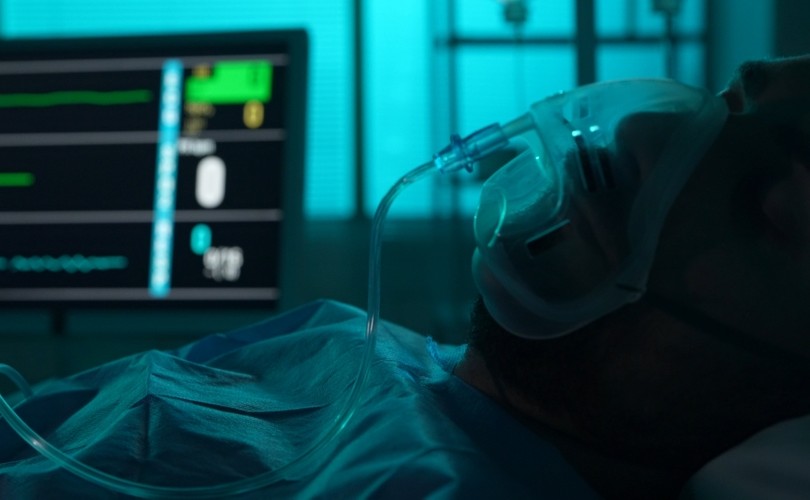
Some of the most unsettling questions in medicine are not about machines or drugs, but about what we think a human being is worth once the brain is badly damaged. This story digs into the claims around “brain dead” patients, the use of their bodies in research, and the ethical line that gets crossed when living people are treated like disposable material.
The controversy centers on the idea of “neomorts,” a term used to describe people with catastrophic neurological injury whose bodies are kept on life support after legal declarations of death. The argument is that this creates a strange middle ground, where a person is biologically active enough to breathe with support, circulate blood, and respond physiologically, yet is treated as if they no longer matter as persons.
Arthur Caplan’s comments about using these patients in what he calls “bioemporia” have stirred deep anger because they suggest that research value can outweigh human dignity. He presents the concept as a practical extension of earlier bioethical discussions, but critics see something much darker: a system that normalizes experimentation on the most vulnerable people in the hospital.
The roots of the debate go back decades, to Willard Gaylin’s 1974 essay “Harvesting the Dead,” which used satire to warn about the dangers of brain death language. Gaylin imagined a world where neurologically injured bodies could be stockpiled, tested on, and used for procedures that would be unthinkable on conscious patients, and his point was to expose how cold that logic could become.
What makes the modern version of the idea so jarring is that Caplan says Gaylin’s warning did not stop the concept from inspiring real-world practice. In the account presented here, he describes a growing number of research settings where brain-dead patients are kept on support so scientists can study drugs, organs, and other interventions before the bodies are eventually sent for further analysis.
That leads to the ugliest part of the debate, which is consent. Families are often already in shock, already grieving, and already hearing language that sounds technical and final, and critics argue they are not being told the full truth about what “brain death” means in practice or about how long life support may be extended for experiments.
Caplan’s own remarks suggest a pitch built around helping others, especially in transplant-related research, where families are told their loved one wanted to donate and might still be able to contribute to science. But if the person cannot actually donate organs, the idea shifts toward using the body for tests over a set period of time, and that is where the moral ground starts to crack.
There is also a sharp contradiction in how these cases are treated depending on who is speaking and what outcome is desired. In the well-known Jahi McMath case, Caplan once argued that keeping a patient on a ventilator was “the desecration of a body,” yet in other settings he defends keeping similarly injured people on support for research purposes, which makes his stance look less principled and more opportunistic.
The article also points to long-standing use of brain-injured patients as test hosts for xenograft experiments, including genetically modified pig organs. Because these patients can be maintained for weeks or months, researchers can observe how the body responds, but once the experiment is done, the person dies and the remains are studied again in pathology, a process critics say strips away every last shred of respect.
Then there is the newer nightmare on the horizon, the talk of “bodyoids,” artificial human clones grown for spare parts and research. That proposal was already widely criticized, but opponents of the neomort approach argue the real scandal is that something similarly cold is not waiting for the future, because it is already happening in hospitals right now.
At the heart of all of this is a basic question that refuses to go away: if a body is alive, responsive, and supported by technology, does that make it fair game for experimentation just because a diagnosis says the brain is beyond repair? The people challenging this practice say no, and they insist that calling someone “socially dead” is not a medical fact but a convenient way to blur a line that should never have been blurred in the first place.
The language may sound clinical, but the stakes are brutally human. Once society accepts that a living person can be reclassified into a research asset, the door opens wide to abuses dressed up as progress, and that is exactly the kind of pressure point this debate keeps exposing.
