
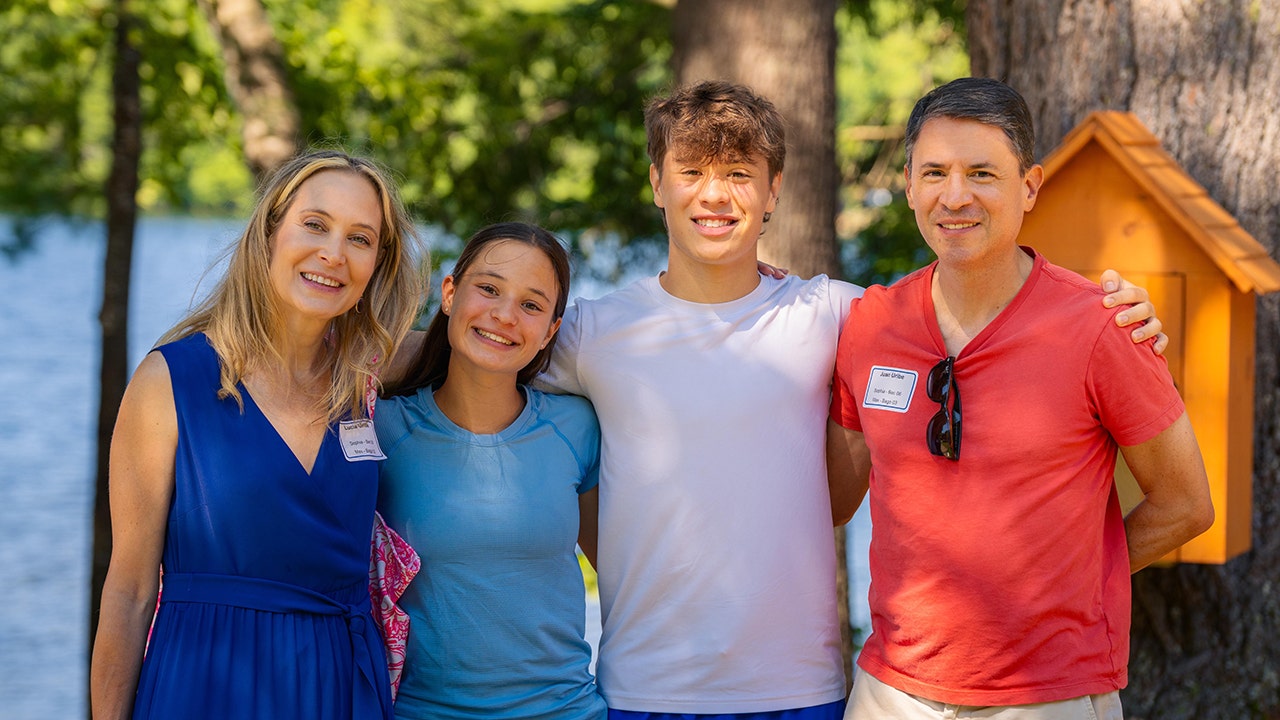
A New York City father is racing the calendar to find a stem cell donor for his 15-year-old son, whose rare blood disorder is rapidly worsening and could require a transplant within weeks to prevent progression to blood cancer.
Max Uribe is a high-school freshman who has been living with abnormal blood counts since childhood, and his condition has deteriorated to the point that a transplant is now urgent. Doctors diagnosed him with clonal cytopenia after tests in late 2024 and later found signs pointing toward bone marrow failure. The clock is against the family as they search for a donor with compatible HLA markers to give Max a fighting chance.
“Max was just 6 when we first noticed there was something wrong with his blood counts,” his father, Juan Uribe, told Fox News Digital. At the time, the family thought a viral infection was to blame, but the counts never returned to normal and the problem quietly worsened over years. By August 2025, a biopsy made it clear Max is on a path that could end in full marrow failure without intervention.
“All three of his blood counts are low — red, white and platelets,” Uribe said. Low levels across the board mean Max’s body cannot carry oxygen efficiently, fight infections, or properly clot, which makes everyday life risky and limits the treatments doctors can safely use. As counts decline further, the need for a marrow or stem cell transplant becomes more pressing to restore healthy blood production.
“The disease has continued to progress, as his blood counts continue to drop, and therefore, we have to take him to transplant in May of this year,” Uribe said. That timetable gives the family just weeks to identify a donor whose human leukocyte antigen profile is close enough to Max’s. Without a close match the medical team would consider a partial match, but that comes with measurable downsides for survival and long-term health.
If left untreated, Max’s condition could lead to MDS (myelodysplastic syndrome), a form of blood cancer that can evolve into acute myeloid leukemia, AML. These conditions arise when the bone marrow cannot form healthy blood cells and abnormal cells crowd out the marrow’s normal function. A successful stem cell transplant replaces the damaged system with healthy donor cells, but finding the right donor is a complex science tied to immune system markers.
HLA markers determine whether a transplant is likely to take hold without severe complications, and they tend to cluster by ancestry. The chances of finding a perfect match vary widely: non-Hispanic White patients have far higher odds compared with Hispanic, Black, or mixed-ancestry patients. Those statistics make the search far tougher when a patient’s heritage spans several ethnic groups.
Max’s background is exactly that kind of complicated mix — half-Colombian on his father’s side and a blend of Italian, British, and German on his mother’s — which makes pinpointing a compatible donor difficult. “For a kid like Max, with complex, mixed heritage, the math is devastating,” his father said. “The thinking is, we need large numbers if we’re going to have that perfect match for my son.”
Outside the lab, Max is a typical driven teenager who plays competitive tennis and wrestles on the varsity squad, and recent bloodwork shows his counts are still sliding. “We’re at the point where this is beginning to manifest a bit more, which is why the urgency is so critical,” Uribe said. The family is working with clinicians to balance immediate treatment needs against the risks tied to imperfect donor matches.
If a donor isn’t found in time, doctors would likely move forward with a partial match, but that option carries significant tradeoffs for Max’s future. “The survival rate is meaningfully lower with a partial match, and there’s more risk of graft versus host disease (GVHD), which could lead to complications in the process,” Uribe said. With GVHD, donor cells can attack the recipient’s organs, and managing that risk often means prolonged chemotherapy and immunosuppression that leave patients vulnerable to infection and other harms.
The family has made it simple for people who want to help to get involved: free test kits are available that use a quick cheek swab to check for HLA compatibility and can be returned to the lab for analysis. Those willing to register can request a kit and see whether they might be a match for Max or another patient in need. With the transplant window approaching, every new registration could be the one that saves a life.
