
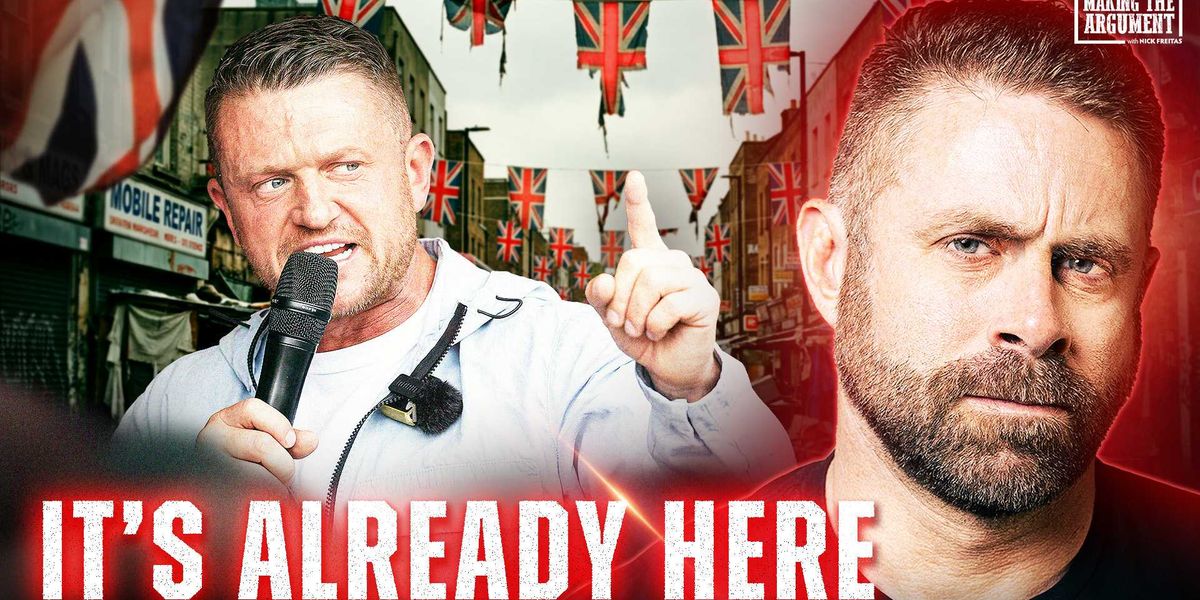
Tommy Robinson’s warning to Nick Freitas landed with a jolt because it tapped into a larger anxiety that many people across the West already feel in their bones. The conversation centered on immigration, identity, and the fear that long-standing cultural and religious norms are being pushed aside faster than citizens can process.
Robinson framed the issue as more than a policy dispute. He cast it as a civilizational struggle, arguing that Western societies are losing confidence in their own traditions while taking on changes that many voters never asked for and do not fully trust.
That kind of message resonates because it mixes raw frustration with a sense of urgency. It also pulls in the debate over whether leaders in the United States and Britain are willing to defend national identity, or whether they have become comfortable watching it erode in real time.
At the center of the discussion is immigration, but not in the dry, bureaucratic way politicians usually talk about it. The concern is about scale, speed, and whether integration can keep up when large numbers of newcomers arrive with different customs, beliefs, and loyalties.
For Robinson, the issue is not just demographics. It is the visible pressure placed on Western culture, especially when public institutions seem hesitant to draw hard lines around shared values, Christian heritage, and civic expectations.
Freitas has built much of his public appeal around plainspoken criticism of elite decision-making, so the exchange fit neatly into a broader mood of distrust. Many listeners hear these arguments and think less about talking points and more about what their neighborhoods, schools, and streets will look like in ten years.
That unease often spills into the political arena, where immigration becomes a stand-in for much bigger questions. People are not only asking who gets to come in, but also who gets to define the country once they are inside.
In Britain, this tension has been especially intense, with public debate often caught between fears of social fragmentation and accusations of intolerance. In the United States, similar worries keep surfacing as voters watch border chaos, cultural flashpoints, and a political class that seems eager to soft-pedal the consequences.
Robinson’s message also plays into a broader clash over free speech and moral authority. Supporters see him as someone willing to say what others will not, while critics view his language as deliberately inflammatory and designed to stir panic instead of solve problems.
Still, the force of the argument comes from how directly it challenges complacency. It suggests that Western societies cannot survive on slogans about diversity and tolerance alone if they no longer believe their own traditions deserve protection.
That is why the discussion keeps finding an audience well beyond one interview or one country. It speaks to a deeper cultural rupture, where ordinary people sense that the rules of the game have changed and that the people in charge are pretending not to notice.
