
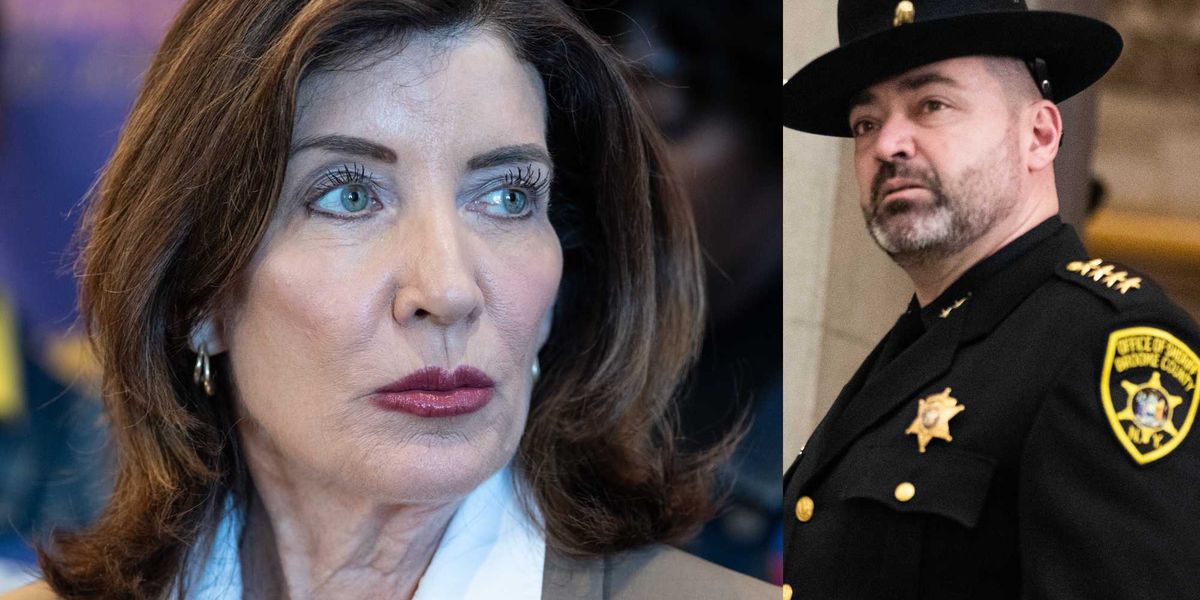
New York’s clash over immigration enforcement is getting sharper, and sheriffs are not backing down. A growing number of local law enforcement leaders say they are not interested in turning off cooperation with ICE just because Albany wants them to, and that tension is now front and center.
Governor Kathy Hochul has drawn heat for pushing an approach that would limit how much county sheriffs help federal immigration authorities. On the ground, though, sheriffs argue they are the ones dealing with the fallout when illegal immigration collides with public safety, and they do not want politics getting in the way of that job.
The pushback is coming from sheriffs who see cooperation with ICE as a basic tool, not a stunt or a slogan. They say communication between local jails and federal immigration officials can matter when someone in custody has a serious record or a history that raises red flags.
That kind of friction is not surprising in a state where immigration has become a heated political issue. Local officials often say they are expected to keep order, answer to residents, and deal with real-world threats, while state leaders talk as if the answer is simply to cut ties and hope for the best.
Sheriffs are also making a broader argument about authority. They say county law enforcement should not be treated like a branch office of the governor’s political team, especially when public safety decisions affect deputies, victims, and jail staff every single day.
For Republicans and many local conservatives, this is exactly the kind of issue where common sense should win out. If someone is in the country illegally and already in custody for a crime, they argue, local officials should not be ordered to look the other way just to satisfy progressive activists.
The standoff also highlights a familiar split in New York politics: state leaders in Albany often want sweeping directives, while local sheriffs insist they know their counties better than distant policymakers do. That divide gets even louder when immigration enforcement is involved, because the stakes are not abstract to people working in jails and patrol cars.
Supporters of continued ICE cooperation say the issue is not about hunting people down for no reason. It is about making sure dangerous individuals do not slip through cracks because officials are more worried about messaging than consequences.
At the same time, sheriffs are under pressure to keep their departments focused on core law enforcement duties. They do not want their deputies caught in a political fight that makes it harder to do the work voters expect them to do, especially when the debate is being driven from the top down.
The governor’s position has also raised questions about how far state officials can go in dictating local practice. Sheriffs are reminding everyone that they are elected too, and they answer to the people in their counties, not just to statehouse insiders.
That is why this issue keeps landing with force. Immigration may be a broad national debate, but cooperation between sheriffs and ICE turns it into something immediate, local, and very practical, with real consequences for jail operations and public safety.
The message from the sheriffs pushing back is simple enough: they are not eager to play along with an order they believe weakens enforcement and ignores the realities they face every day. And as the fight with Hochul keeps building, they are making clear they intend to keep defending that position.
