
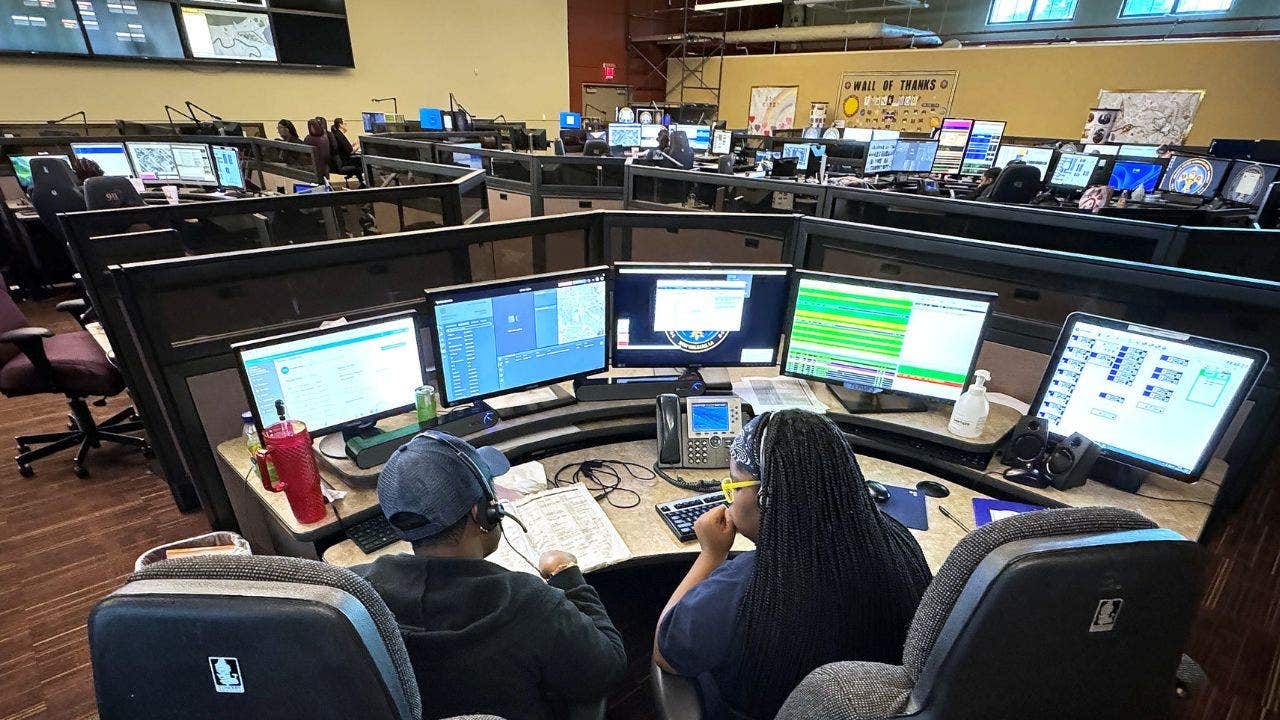
New Orleans is testing a very narrow use of artificial intelligence in its 911 system, and the setup is built around one main goal, clearing out duplicate crash reports when the lines are packed. The idea is not to replace emergency staff or hand over the whole call center to a machine, but to keep human call-takers available for the people who need them most. That makes this a small experiment with a big spotlight on it.
Calling 911 still feels like a moment that should bring a human voice right away, and that expectation has not disappeared. In Orleans Parish, though, an AI system can step in only in a limited situation tied to already reported auto accidents. The Orleans Parish Communication District says the tool is there to cut down on repeat calls and help the center move faster during surges.
The technology comes from Carbyne, which worked with the communication district on AI-assisted call triage before the live rollout in 2023. The setup is designed for a familiar problem in emergency services: one accident can trigger a flood of calls from people nearby, even after dispatchers already know what happened. Instead of forcing every one of those calls through the same crowded human queue, the AI checks whether the call appears to be a duplicate tied to a known crash.
That check is tightly limited. The system looks for calls coming from within about 200 meters, or roughly 650 feet, of a crash already logged by 911, and it only steps in when every human call-taker is busy. New Orleans says it has not used the tool for any other kind of emergency call, which keeps the scope small and the human role front and center.
When the AI answers, it does not try to sound like a full dispatcher. It identifies the call as New Orleans 911 and asks whether the person is calling about an accident at a specific location. If the answer is anything other than yes, the call goes right back into the human queue. The safeguard still works even if the caller switches languages, which matters in a city where emergency calls can come in fast and in many forms.
There is another important boundary here. The AI cannot dispatch responders, and it cannot decide how urgent a call is. Its job is much narrower than a chatbot that might chat back and improvise, because this system is not a general-purpose large language model like ChatGPT.
That narrow design also helps with privacy concerns. Calls handled by the system stay logged with the usual metadata and audio recording, and they are not uploaded to an outside large language model. If the system does not understand the caller or the situation falls outside the crash scenario it was built for, it defaults back to a human operator.
The local setup has also been tuned for the realities of New Orleans. OPCD says the system was trained with local 911 recordings so it could handle accents and street names more accurately. That kind of local training can make a real difference when a call center is dealing with names and phrasing that might trip up a generic voice system.
Testing matters a lot in a case like this, and the district says it spent months reviewing the technology before going live. During the first three months, OPCD says it reviewed 100% of the calls handled by the AI and found no false positives or false negatives. That does not make the system perfect forever, but it does show the agency was watching closely from the start.
Carbyne says the system triaged more than 3,500 events over a 90-day stretch, and it reported that redundant calls dropped by more than 30%. The company also says distressed callers were answered up to 40 seconds faster on average. Those figures are vendor-reported, so they should be read with care, but they do point to why emergency centers are interested in this kind of tool.
What the AI is not doing is just as important. New Orleans says it is not replacing call-takers, and the district is still dealing with staffing shortages like many 911 centers across the country. The pitch is simple: let the machine handle the narrow repeat-call problem so human staff can focus on the rest of the load.
The district is still looking at what else the technology might eventually do, but only in a testing environment. Nothing else has been opened up on the live system, and the agency says any expansion would have to clear a very high bar before it touched additional 911 categories.
For callers, the biggest reassurance is that the normal callback process still exists. If a call gets into the queue and then drops, the center can still reach back out, which keeps the human safety net in place. That matters in a setting where every second counts and nobody wants a dead end after dialing for help.
New Orleans is now one of the clearest examples of AI moving into public safety without taking over the entire job. The system has one lane, one purpose, and a long list of limits, which is probably why it has drawn so much attention. Even so, the real test is not whether the tech sounds clever, but whether it keeps helping when the lines get jammed and people are waiting.
