
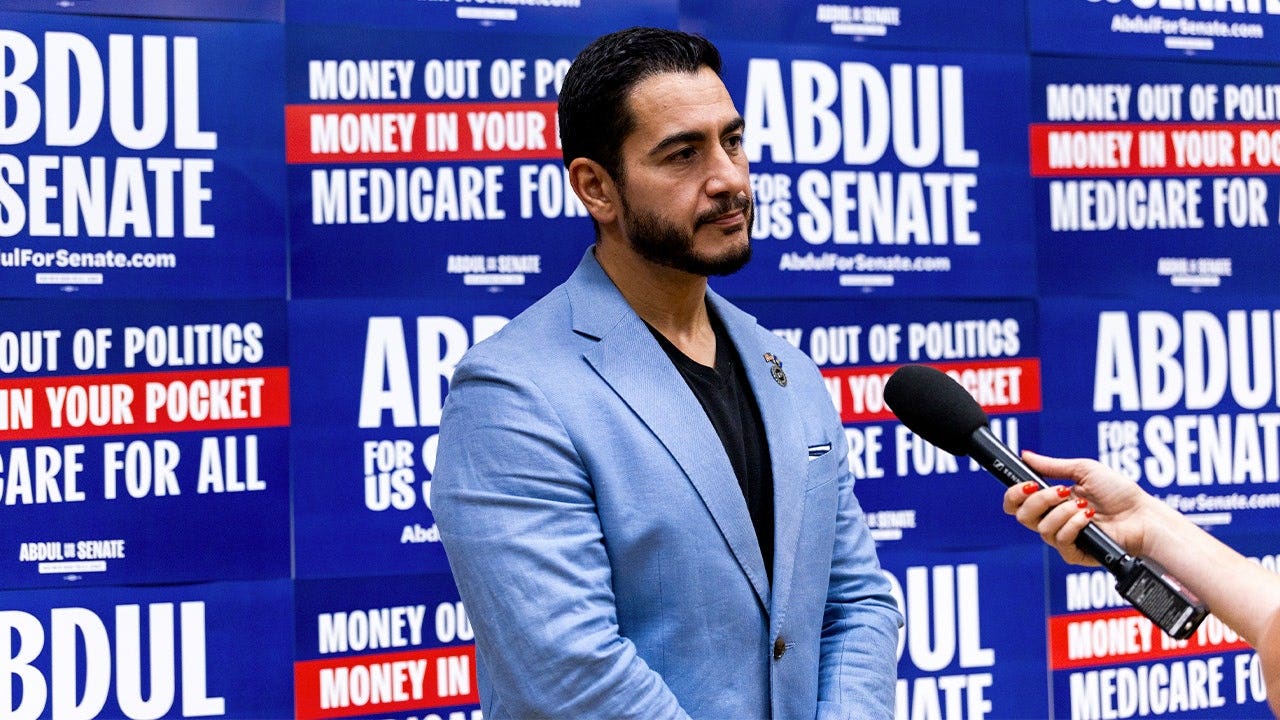
Abdul El-Sayed’s Senate campaign has stirred up a fresh fight over a little-known perk that comes with the job: access to classified information without the same clearance process many other officials must pass through. For critics, that is not a small footnote. It is the kind of power that can turn a routine election into a national security headache in a hurry.
Under Senate rules and long-standing practice, members of Congress can receive classified material tied to their duties without going through the executive branch vetting many staffers and agency officials face. That setup is exactly what has caught the attention of conservatives watching the Michigan race. Their concern is simple and blunt: if the wrong person gets elected, the system does not always put up much of a wall.
Some national security voices are especially uneasy because of the company El-Sayed has kept on the campaign trail and online. Critics have pointed to his ties to controversial figures and to appearances alongside people whose politics have drawn heavy backlash. The worry is not just bad optics, but whether those connections hint at judgment that could matter once sensitive information lands on his desk.
Daniel Samet, a Middle East policy fellow at the American Enterprise Institute, argued that El-Sayed’s associations go well beyond harmless campaign noise. He said El-Sayed should never be trusted with the Senate if he will not clearly break with people who normalize anti-American rhetoric or extremist sympathies. In that view, a senator is not just a lawmaker. A senator can become a gatekeeper to secrets that should never leak.
El-Sayed’s team has pushed back hard, insisting the campaign is about safety, costs, and Michigan families. They have also taken aim at Republican rival Mike Rogers, accusing him of having a long career tied to foreign business interests. That back-and-forth has turned the race into something bigger than a normal stump speech battle, with both sides accusing the other of putting the country at risk.
Rogers’ defenders say that line of attack ignores his history of warning about security threats, including China-related concerns in the telecom sector and issues involving foreign technology partnerships. Still, the broader argument has stuck because voters are hearing the same question from both sides in different forms. Who can actually be trusted around sensitive information, and who cannot?
The controversy has also spilled into El-Sayed’s broader political circle. Critics have raised eyebrows at endorsements, public appearances, and family connections that they say create unnecessary baggage for someone seeking a Senate seat. El-Sayed has said that relatives do not speak for him, and that he has his own views on foreign policy, but the doubts have not gone away.
That lingering suspicion is why some Republicans are widening the lens beyond one candidate. They argue that the rise of far-left and activist-backed campaigns in 2026 could create a pipeline of officeholders who view America’s institutions with open hostility. If that sounds dramatic, it is because the stakes really are that high when classified information is on the line.
Ashley Hayek of America First Works framed it as a bigger ecosystem problem, tying together several left-wing political groups that have become influential in primary politics. She pointed to activist networks and wealthy donors as part of the same picture. The concern there is not a single headline grabber, but a steady drip of influence shaping who gets power and what they do with it once they have it.
That broader unease has been fed by past cases that showed how much damage a senator can do with access to sensitive material. Bryce Poole, a senior legal fellow at Advancing American Freedom, argued that the idea of a senator mishandling information is not some fantasy scenario cooked up for campaign season. Recent history has already shown how dangerous it can get when public office and private interests collide.
What makes this race especially tense is that the Senate is not just another chamber with floor speeches and committee hearings. It is a place where access opens doors, and those doors can lead straight into matters of war, intelligence, diplomacy, and law enforcement. That is why the fight over El-Sayed has struck such a nerve with conservatives watching the race closely.
The debate is likely to keep growing as the election gets closer, because it touches a raw question voters understand immediately. Not every candidate is fit to be trusted with the nation’s secrets, and not every campaign can wave that concern away with a clever slogan. In a close race, that kind of doubt can hang over every rally, every quote, and every handshake.

1 Comment
Yes democrats will allow a known Muslim agent into our Pentagon briefings.