
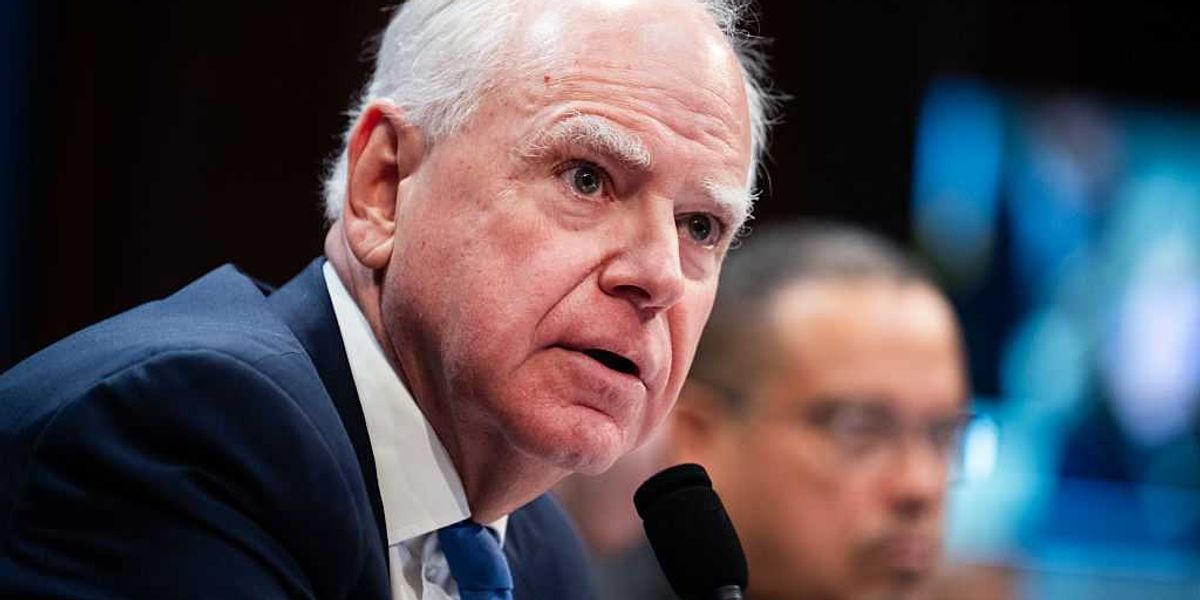
Minnesota’s welfare fraud fight has turned into a full-scale political brawl with House Republicans pointing fingers at Gov. Tim Walz and state agencies for years of missed warnings, stalled investigations, and bills blocked by Democrats while taxpayers pick up the tab.
Republicans say the story is simple: oversight failed, investigations were shut down, and potentially billions slipped through the cracks. Lawmakers on the Minnesota House Fraud Prevention and State Agency Oversight Policy Committee have spent weeks pressing for answers and demanding changes. The tone from the GOP is blunt — taxpayers deserve better and officials must be held accountable.
Estimates tied to 14 so-called high-risk Medicaid services put the potential fraud bill in the billions, and that number has put pressure on committee members to act fast. Rep. Kristin Robbins has led dozens of hearings aimed at forcing transparency and fixing the system. Those hearings grew tense when the governor declined to show up to testify, even while he was in the building for other business.
Robbins has repeatedly argued that the governor’s choices over the last seven years merit scrutiny, pointing back to a 2019 Office of the Legislative Auditor report that flagged major weaknesses. Committee members questioned administration officials, but Republicans say the answers were unsatisfying and evasive.
On the policy front, GOP lawmakers pushed for structural fixes, including an independent statewide inspector general to remove oversight from agencies that investigate themselves. That idea faced partisan resistance but did nudge toward a late-April compromise after weeks of stalemate. The push for independence stems from a simple principle: investigations work best when they are truly independent.
Legislation meant to force corrective action and stiffen consequences for fraud ran into similar roadblocks. The “Fraud Isn’t Free Act” failed to make it out of committee despite its intent to force agencies to respond when fraud is found. Another measure nicknamed the “Take It Back Act” would slap a 100% tax on anyone convicted of stealing state funds, but it remains in play and faces uphill battles in a split legislature.
Events on the ground have added urgency. On April 28, FBI agents executed search warrants at 22 day-care and autism centers, including the Quality Learing Center, after reporting tied to rampant abuse of the Child Care Assistance Program surfaced. Journalistic reporting exposed patterns of fraud connected to certain providers, and federal prosecutors moved quickly once evidence mounted.
At a committee hearing the same day, Jay Swanson, a former state trooper who ran the DHS child care provider investigation unit from 2014 to 2019, delivered blunt testimony about what he saw. He described investigations that produced federal indictments and successful prosecutions, including one case that resulted in a guilty plea, two years in prison, and $1.4 million in restitution. “The Salama Child Care Center was located at 1411 Nicollet Avenue in Minneapolis. That address might ring a bell for some of you because of a YouTube video taken last December at the Quality Learing Center, which was being operated at the same address,” Swanson told lawmakers.
https://x.com/KRobbinsMN/status/2049612040893825149?s=20
Swanson said his team encountered pushback from the top of the agency. He alleged that senior DHS officials “harassed and abused our unit for committing the sin of trying to expose a huge amount of fraud in the CCAP program.” He added that rather than supporting criminal probes, leadership shifted focus toward stopping the investigators themselves.
Those allegations are precisely why Republicans demanded tough oversight and why some pushed for impeachment resolutions earlier in the session. Robbins captured the GOP case in a social post: “Rather than INCREASING criminal investigations of childcare fraud after an OLA report came out early in his Administration, @GovTimWalz and DHS closed the unit,” Robbins wrote in a on X. That line has been a rallying cry for lawmakers who say the closure crippled accountability.
House Republicans moved to impeach both Gov. Walz and Attorney General Keith Ellison, accusing them of knowing about systemic fraud and failing to act. The measures alleged concealment and corrupt conduct, and they referenced ties between the attorney general and figures later implicated in the Feeding Our Future scandal. Ellison has said his meetings were routine and that he returned questionable donations once connections became clear.
Democrats pushed back hard, calling the GOP effort a political stunt and arguing that impeachment would distract from fixing the system. Rep. Sydney Jordan labeled the attempt a “simple, stupid distraction” and a “political circus,” while Gov. Walz dismissed the push as “a waste of time” and urged lawmakers to move on. Those sharp exchanges underscore how accountability fights have become partisan wars instead of bipartisan fixes.
With a tied House and the legislative clock ticking toward mid-May, the conflict shows no sign of cooling. Republicans say they’ll keep pressing for structural reforms and prosecutions where warranted, and Democrats say process and policy must remain the focus. Lawmakers on both sides know voters are watching as this episode plays out under national scrutiny.
