
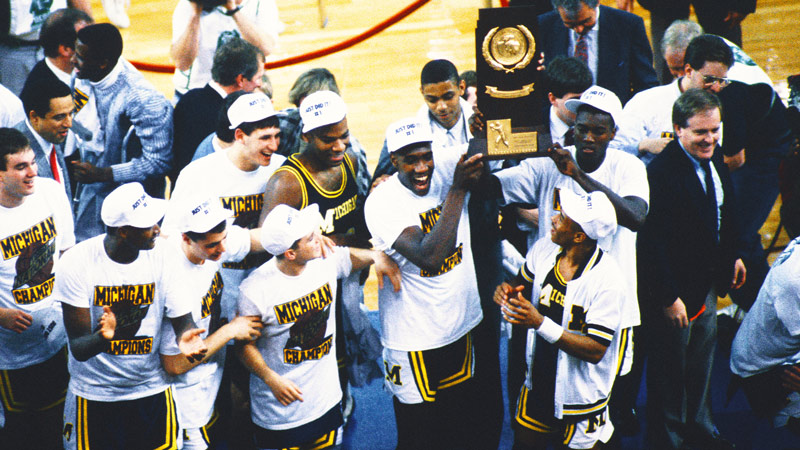
Michigan cut loose a long drought by winning the NCAA Men’s Tournament for the first time since 1989, and this piece walks through what that victory means alongside a look back at the Big Ten landscape 37 years ago. We compare the teams, the game style, recruiting habits, and the fan scene then and now to show how college basketball has evolved. It’s a snapshot that connects a modern championship to the gritty world of late-1980s Big Ten hoops.
The title itself landed like a punch of pure relief for Michigan fans who had waited generations to celebrate another national crown. That 1989 banner lingered in the rafters for decades as a reminder of glory, and winning again rewrites a long chapter of near-misses and rebuilding. This new group gave the program a different identity while still honoring the lineage of past champions.
The 1989 Wolverines remain part of the lore, a team that captured hearts with gutsy play and a clutch run. Back then the roster featured standout performers who owned that tournament, and the coach’s callouts and substitutions became part of the legend. The contrast with today is obvious, but the pride Michigan fans felt in ’89 helped build the fan base that celebrated the new title.
Thirty-seven years ago the Big Ten was a bruising conference known for tough defense and halfcourt battles, not the pace-and-space show many teams run today. Programs across the league prided themselves on physicality and veteran leadership, and games often turned into chess matches of matchups and post touches. The conference’s reputation for producing hard-nosed basketball made every win feel earned and every road trip a grind.
On the hardwood, offense lived closer to the basket and the three-point shot was a tool, not the backbone of strategy. Coaches leaned into structured sets and deliberate execution, trusting veterans to close games rather than relying on one-and-done phenoms. That approach meant teams developed different rhythms and players matured in place, season by season.
Recruiting in that era was a slower, steadier process where most top players stayed longer in college and programs built continuity across multiple seasons. There was no transfer portal frenzy and no name-image-likeness deals reshaping decisions, so roster turnover felt more predictable. Coaches could craft a culture over years and watch it translate into late-season chemistry.
Media and fan experience also looked very different. Local radio and a handful of regional TV slots were the lifelines for supporters, and many postseason memories were formed in packed arenas rather than through constant social feeds. That in-person intensity made rivalry nights feel monumental and allowed teams to build deep, generational connections with their communities.
Comparing then and now, the program that finally broke its title drought did so in an environment transformed by analytics, broader exposure, and new player pathways. Still, the core thrill of winning a national championship — the tears, the banners, the shared pride — remains unchanged. The new Michigan champions join a lineage that stretches back to that pivotal year and carries those stories forward.
For the Big Ten, this kind of national success serves as a reminder of the conference’s enduring toughness and relevance on the biggest stage. Programs that once defined the conference’s identity in 1989 now compete under different circumstances, but the competitive spirit persists. Fans who remember late-1980s feeding frenzies and those who only know modern March get to celebrate the same basic truth: wins matter and championships resonate.
From the glow of fluorescent college gyms in ’89 to the giant LED-scoreboard arenas of today, college basketball keeps evolving, and so do the rituals around it. Players past and present trade the same exhilaration after a big stop or a late-game bucket, proving some parts of the game never age. That continuity, more than anything, stitches the old Big Ten to the new champions and keeps the stories alive.
