
This piece compares Palantir (PLTR) and BigBear.ai (BBAI) by walking through their recent revenue trajectories, noting profitability snapshots, and highlighting what those trends could mean for investors watching the AI and government-contracting space.
Palantir Technologies continues to look like a company moving from startup scale to enterprise heft, with revenue climbing dramatically across the covered quarters. It reported a standout quarter ending March 31, 2026, showing roughly a 53% net income margin, evidence that some of its contracts and commercial deals are finally converting to high-margin results. The firm also landed a major defense agreement and weathered a formal investor probe, but the topline momentum is the most striking element for shareholders focused on growth and profitability.
BigBear.ai operates in the same orbit—AI and analytics for federal and commercial clients—but its financial picture is more uneven. The company announced new national security contracts and refreshed its leadership, yet it recorded about a -165% net income margin for the quarter ended March 31, 2026, reflecting persistent losses and cost pressure. That gap between contract wins and bottom-line results is central to interpreting whether BigBear.ai can scale profitably or will continue to burn through cash while chasing growth.
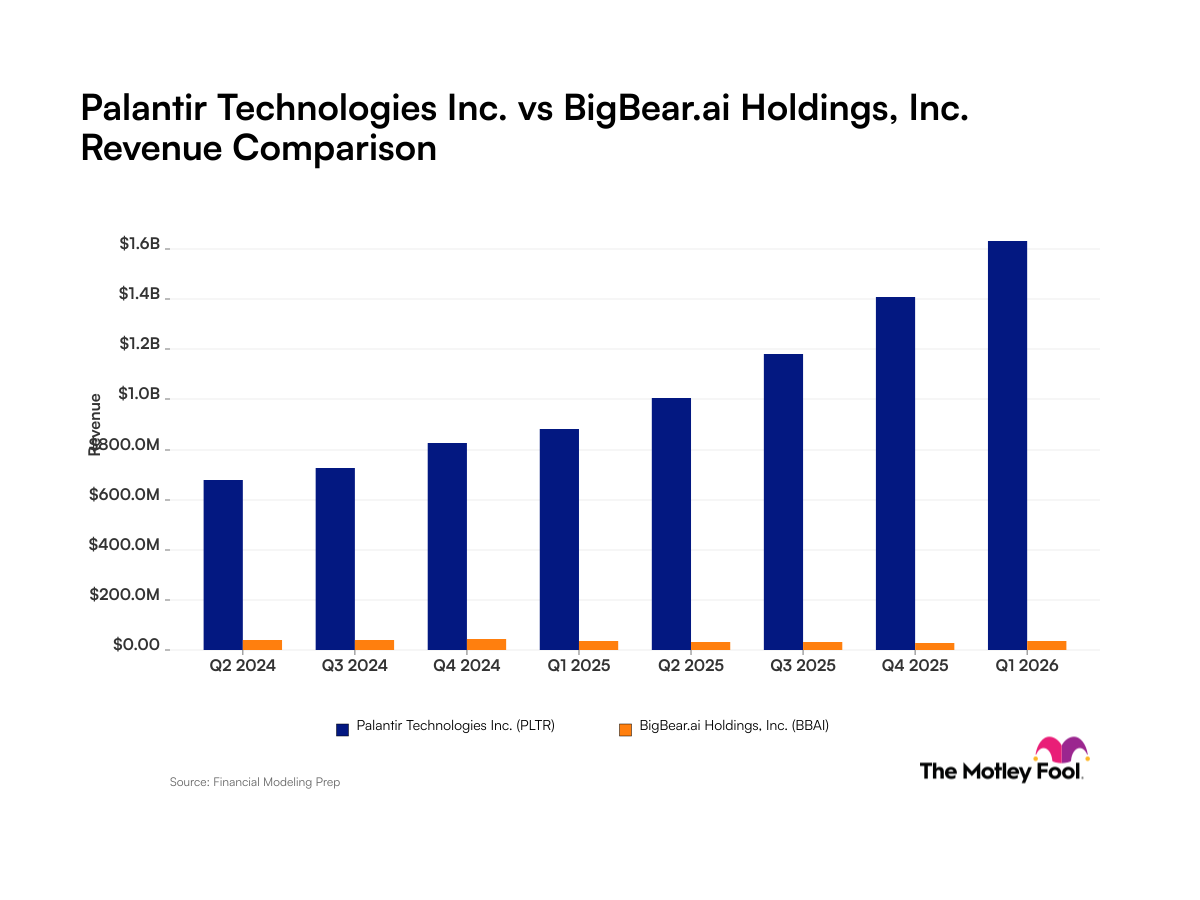
Watching revenue is the simplest way for retail investors to see whether a business is actually expanding its market footprint before costs are considered. Palantir’s top line has surged from the mid-hundreds of millions to over a billion dollars per quarter, signaling expanding customer adoption and larger deals. BigBear.ai’s revenue, by contrast, has remained in the tens of millions each quarter, which limits margin expansion and makes any large fixed-cost investments riskier for shareholders.
Across the eight-quarter span from mid-2024 to Q1 2026, Palantir moved from roughly $678.1 million in one quarter to about $1.6 billion in Q1 2026, showing steady acceleration. BigBear.ai’s revenue in the same window stayed clustered between roughly $27 million and $44 million, with the latest quarter at about $34.4 million, underscoring a far smaller scale of operations. That raw scale difference changes how investors should weigh product wins: the same contract size matters more to BigBear.ai than to Palantir because it represents a much larger percentage of total sales.
Profit margins amplify the story: Palantir’s reported ability to deliver a positive and substantial net income margin in the most recent quarter points to either higher-margin commercial deals, improved operating leverage, or both. BigBear.ai’s deep negative margin suggests restructuring, heavy R&D or integration expenses, or contract performance costs that are outpacing revenue gains. For investors, margin direction often matters more than a single quarter’s headline revenue figure because it shows whether growth is sustainable.
Risk profiles between the two names are starkly different. Palantir carries higher regulatory and political scrutiny given its government work and recent investigations, but its growing revenue base and improving profitability afford it more runway to absorb setbacks. BigBear.ai presents classic small-cap risk: the business can swing quickly with a few wins or misses, leadership changes can be disruptive, and the pathway to consistent profitability is less proven.
What should a cautious investor take away? Scale and margin are real advantages for Palantir right now, and rising quarterly sales coupled with a positive net-income print make it easier to justify a buy thesis tied to execution and expanded commercial adoption. BigBear.ai could still surprise if new national security contracts translate into larger, recurring revenue streams and the company tightens costs, but that outcome is more speculative at present given the recent revenue pattern and steep negative margins.
Ultimately, revenue trends tell a simple, powerful story: Palantir is growing into a much larger, higher-margin business, while BigBear.ai remains a smaller, more volatile operator trying to turn contract wins into lasting financial health. Investors should weigh scale, margins, and execution risk when deciding which of the two aligns with their portfolio objectives and risk tolerance.
