
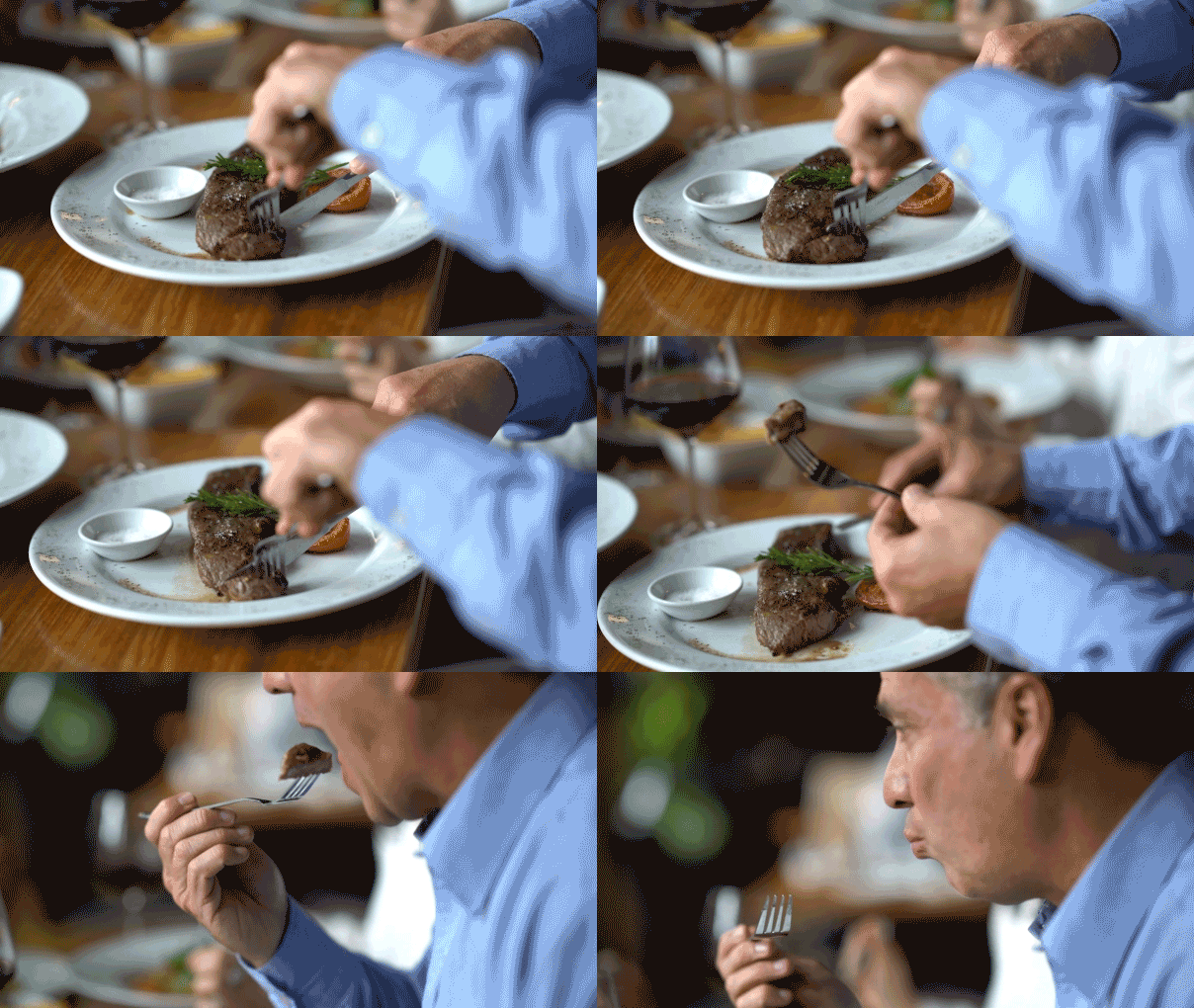
New research tracked more than 2,100 older adults for up to 15 years and found that higher unprocessed meat intake was linked to slower cognitive decline and a lower risk of dementia for people carrying certain APOE gene variants, while eating less processed meat was associated with lower dementia risk across the board.
Researchers followed participants who were dementia-free at the start and collected self-reported diet information alongside periodic, structured cognitive testing to monitor changes over time. The focus was on how meat consumption interacted with genetic risk tied to the APOE 3/4 and 4/4 genotypes, which are known to raise Alzheimer’s risk.
The study compared cognitive outcomes between those with the higher-risk APOE genotypes and those without, tracking clinical dementia diagnoses and test scores over many years. It found that people with the higher-risk genotypes who reported eating less meat faced more than double the risk of developing dementia compared with genetically lower-risk peers who ate more meat.
Those same higher-risk participants who consumed the most unprocessed meat showed notably slower cognitive decline and a reduced incidence of dementia, suggesting a possible protective link in that subgroup. At the same time, reduced intake of processed meat correlated with lower dementia risk regardless of APOE status, highlighting a consistent signal about processed foods.
“When standardized to a 2,000 calorie-per-day diet, median weekly consumption ranged from approximately 250 grams in the lowest quintile to 870 grams in the highest,” first author Jakob Norgren, a researcher at the Department of Neurobiology, Care Sciences and Society at the Karolinska Institutet, told Fox News Digital. The participants who ate the most meat still included cereals and dairy in their diets, so this was not an extreme meat-only pattern.
Experts who were not part of the study urged caution about overinterpreting the findings, noting the observational design cannot prove cause and effect. “When you translate that, it comes out to about 30 grams of protein per day from meat, something many people already eat,” Escobar, who was not involved in the study, told Fox News Digital.
The authors emphasized that while the results point to an association between unprocessed meat intake and better outcomes for certain genotypes, larger bodies of research still favor broader eating patterns for brain health. “While this study suggests a specific benefit for certain genotypes, a larger body of evidence points to the MIND diet for long-term brain health,” Jamie Mok, registered dietitian nutritionist and national media spokesperson for the Academy of Nutrition and Dietetics, told Fox News Digital.
Practical guidance from nutrition experts still centers on nutrient-dense choices, including vegetables, fruits, nuts, legumes and lean proteins as reliable strategies to support cognitive aging. “By emphasizing leafy greens, berries, nuts, legumes and lean proteins, this eating pattern has been shown to reduce Alzheimer’s risk by half and slow brain aging by several years,” Mok added, reinforcing an eating pattern approach rather than a single-food prescription.
Public health context matters because dementia is already common among older adults and the demographic shift means cases will rise in the coming decades. Current estimates show a notable portion of seniors live with dementia or cognitive impairment, and projected increases in Alzheimer’s cases and related costs make any modifiable risk factor an important research target.
The study appears in a peer-reviewed journal and adds nuance to the debate about animal protein, processed foods and brain health, particularly for people with genetic vulnerability. Still, the observational nature of the findings means randomized trials would be needed to confirm whether increasing unprocessed meat intake truly alters dementia risk for carriers of the APOE variants.
For clinicians and individuals weighing dietary choices, the message is measured: consider overall dietary patterns that favor minimally processed foods and adequate protein while recognizing genetic risk differences may call for more personalized recommendations. The research opens a path for further investigation into how specific nutrients and food types interact with genetic factors to influence long-term cognitive outcomes.
