
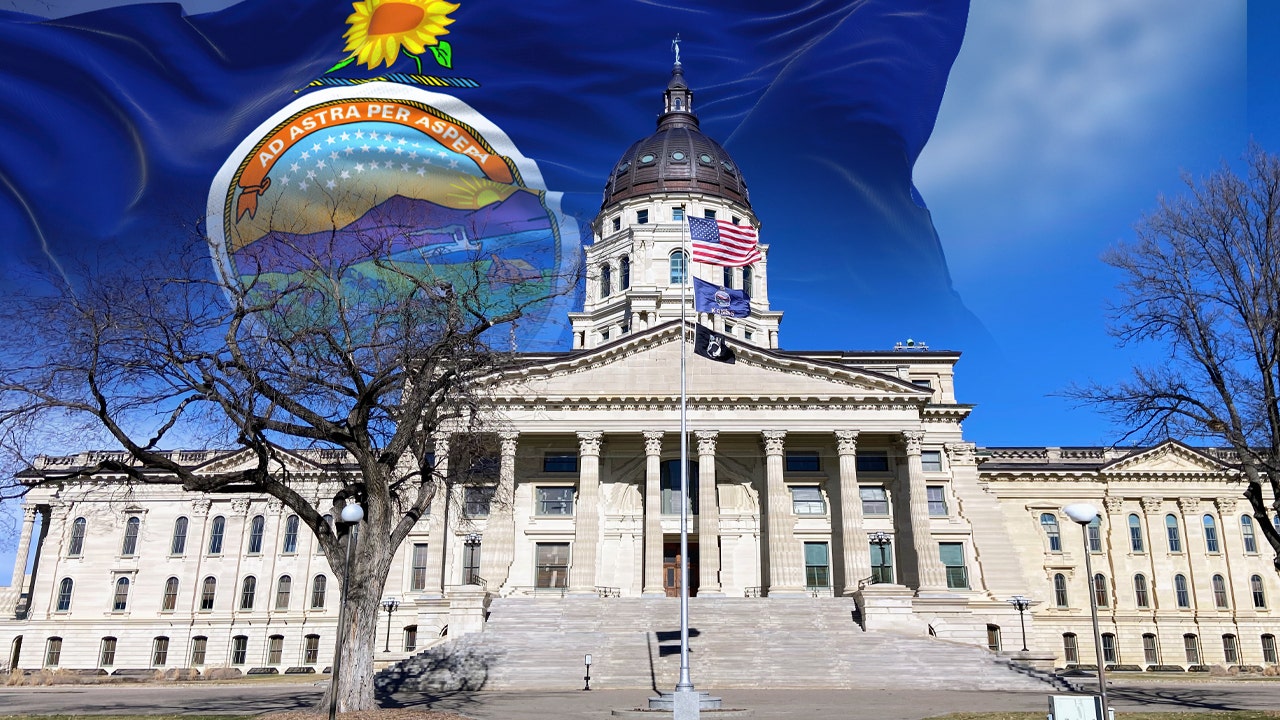
Kansas is headed into one of those races that tells you a lot about the mood of the state. Democrats are trying to hang onto the governor’s office without Laura Kelly on the ballot, while Republicans see a clean shot at taking it back in a place that usually votes red.
The matchup is set between Democrat Cindy Holscher and Republican Ty Masterson after a busy primary season on both sides. Kelly is term-limited, which leaves the seat open and gives both parties a reason to push hard in a state where the governor’s mansion has bounced around more than the voting map would suggest.
Democrats narrowed their field down to Holscher after state Sen. Ethan Corson and Overland Park Mayor Curt Skoog also competed for the nomination. The party is betting that Holscher can tap into suburban and moderate voters enough to keep the office in Democratic hands for one more cycle.
Republicans, meanwhile, had no shortage of choices. Secretary of State Scott Schwab, Masterson, Insurance Commissioner Vicki Schmidt, former Johnson County Commissioner Charlotte O’Hara, businessman Nick Reinecker, businessman Philip Sarnecki, and former Johnson County Sheriff Stacy Rogers all entered the mix, showing just how much the GOP wanted this opening.
Masterson comes into the general election with a familiar pitch: Kansas should be governed by Republicans, plain and simple. As Senate president, he has become one of the state party’s best-known figures, and the GOP is treating this race as a chance to restore unified control in Topeka.
The contest is not happening in a vacuum. Kansas voters are also looking at a constitutional amendment that would scrap the current system for selecting state Supreme Court justices and replace it with direct elections. Supporters of the change, especially Republicans, have hammered the court selection process for years, arguing that judges should answer to voters instead of a commission.
That judicial fight adds another layer to a race that already has plenty of edge. For conservatives, it is not just about one office, but about whether state government starts moving in a more accountable direction after years of frustration with how power is distributed in the courts and the Capitol.
Kansas has a habit of surprising people in statewide races. Even with its deep Republican lean and a 57 percent vote for Donald Trump in 2024, the state has still chosen governors from both parties over time, which is part of what makes this race so tense and so interesting.
Kelly’s departure also matters because she leaves after two terms that gave Democrats a real foothold in a state many still consider reliably red. That makes the November race feel less like a routine contest and more like a test of whether the GOP can turn favorable terrain into an actual win.
The open seat has also sharpened the stakes inside the statehouse, where control of the governor’s office can shape everything from budgets to education fights to the tone of state politics. With Masterson carrying the Republican banner and Holscher trying to defend Democratic ground, Kansas voters are about to decide whether the next chapter looks more like continuity or a hard reset.
