
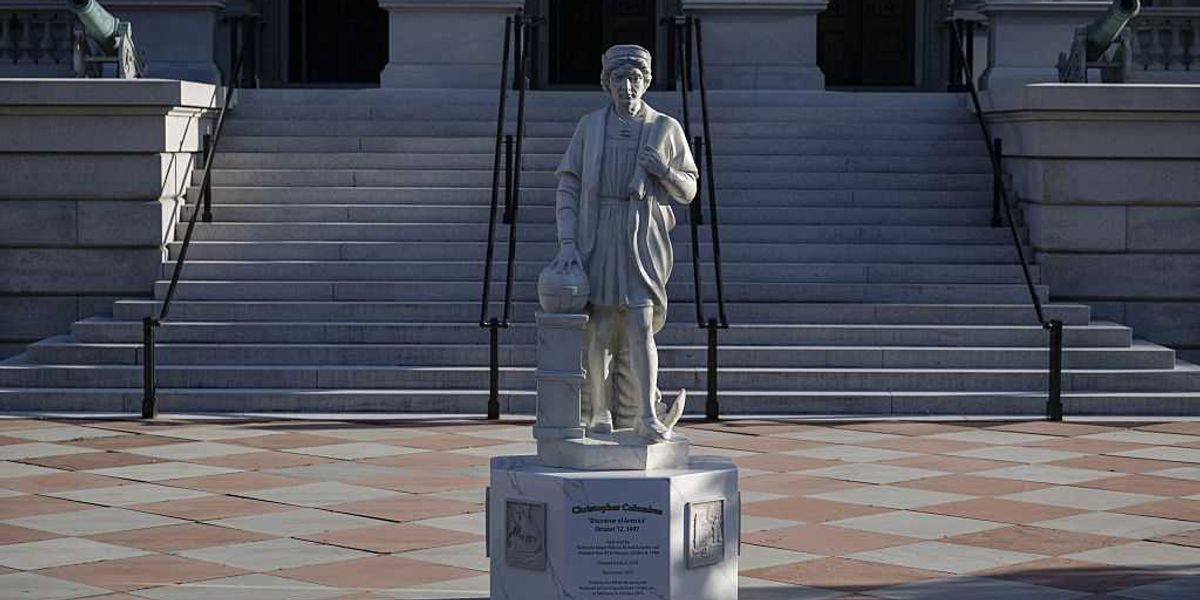
Christopher Columbus has become a lightning rod in modern politics, with his legacy treated less like history and more like a cultural punchline. The bigger issue hanging over the debate is the way modern activists and political movements apply outrage selectively, condemning some figures while giving others a pass. That double standard sits at the center of the whole fight.
There is no shortage of harsh language aimed at Columbus, whose voyages opened the door to conquest, exploitation, and violence in the Americas. But the criticism often gets stripped of context and turned into a simple morality play, as if the human story of expansion and empire began and ended with one Italian explorer. The result is a conversation that can feel less like reflection and more like an ideological mugging.
That matters because the same crowd eager to tear down Columbus often shows far less interest in the long record of conquest across other parts of the world. Empires in Europe, Africa, Asia, and the Middle East all built power through bloodshed, slavery, and domination, yet only certain symbols get dragged into the town square for public punishment. The pattern is hard to miss, and it raises a fair question about why some historical sins get treated like unforgivable crimes while others get wallpapered over.
The selective memory is especially loud in New York, where activist politics and identity theater often collide. In that environment, Columbus becomes an easy target because attacking him feels safe, fashionable, and morally cheap. The deeper message is not really about history at all, but about who gets to define the moral hierarchy of the present.
That is where the debate starts to look less like scholarship and more like performance. Columbus is used as a symbol of colonial brutality, yet modern activists rarely show the same energy when dealing with other traditions of violence, repression, or ethnic cleansing. When the outrage is aimed in only one direction, it stops sounding like principle and starts sounding like propaganda.
There is also a real cultural tension underneath the noise. For many Italian Americans, Columbus Day was never just about one man’s sins, but about recognition in a country that once treated their communities as outsiders. Taking that away while replacing it with moral lectures does not feel like progress to a lot of people, especially when the replacement feels designed to shame rather than include.
The whole argument gets even messier when activists try to connect historical grievances to today’s political crusades. Columbus gets folded into broader attacks on America, capitalism, borders, and national identity, as though every modern problem can be pinned to the same ancient villain. That kind of ideological mashup may be emotionally satisfying, but it does little to explain the world as it actually is.
What gets lost is the simple fact that history is full of ugly people and brutal systems. Picking one explorer to symbolize all human cruelty is convenient, but it is also lazy. A serious culture would be able to admit Columbus was no hero without pretending the rest of human civilization somehow played by cleaner rules.
That distinction matters because public memory shapes public values. When the loudest voices reward selective condemnation, they do not just rewrite the past, they train people to think in slogans instead of judgment. And once that habit sets in, the line between honest reckoning and ideological theater gets very hard to see.
