
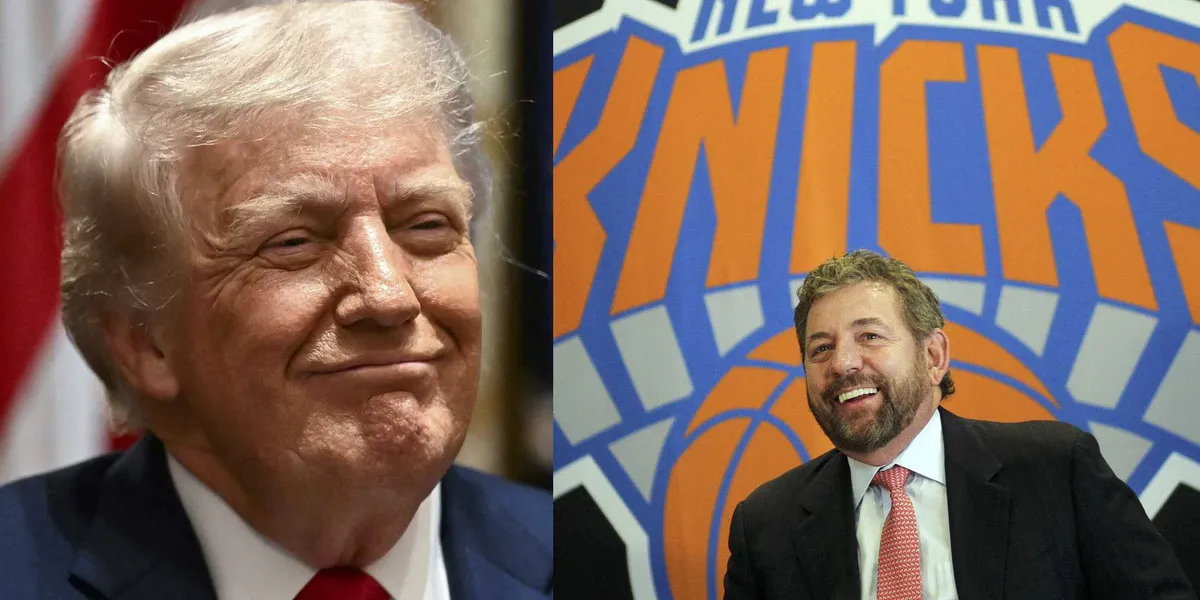
The New York Knicks have agreed to visit the White House after their title run, their owner confirmed, and the decision breaks a recent trend of champions skipping presidential honors. James Dolan framed the trip as a proud moment tied to tradition and personal ties, and President Trump has been vocal in his long-standing fandom of the team. This piece walks through the announcement, the history of past refusals, and the tone around a city and franchise that finally decided to show up.
Knicks owner James Dolan told WFAN radio that the team accepted an invitation to the White House. “Thank you for asking me that. We just did receive an invitation from the White House, which we accepted,” he said, making the choice public before the parade in New York. His comments make clear the visit will happen, pending scheduling details.
“We still have to figure out the details, et cetera, but yes, of course,” he added. “Look, I invited the president to come down for the game. He is a friend. I’ve known him for 30 years, and I’m very proud to bring the team to the White House.” That exact sentiment was shared on the air and underscores a personal connection between Dolan and the president.
The short, quoted line that ran as a pull-quote captured the moment cleanly: ‘Look, I invited the president to come down for the game. He is a friend. I’ve known him for 30 years.’ Those words land differently in a sports world where gestures toward the presidency have become political statements. For Dolan, this was framed as an honor and a tradition to be embraced rather than rejected.
This visit stands out because it reverses a pattern. Since 2017 many NBA champions declined White House invitations, starting with a famous refusal that created headlines and political back-and-forth. Teams turning down a presidential meet-and-greet turned a simple ceremony into a political stance, and the Knicks’ decision signals a different posture: respect for the office and for ceremony.
“Going to the White House is considered a great honor for a championship team,” the president replied in Sept. 2017. “Stephen Curry is hesitating, therefore invitation is withdrawn!” That exchange from years past became emblematic of the tit-for-tat that replaced the old tradition of champions visiting the president. The Knicks are stepping back into the older script of honoring the office.
President Trump has been visible and vocal about his ties to New York sports, and he even attended a game in Madison Square Garden during the Finals. “Well, I’ve been a Knicks fan for a long time, and I’m also a Jim Dolan fan,” the president said. “He’s a nice guy, OK? He spent a long time wanting to win, and he’s a competitive guy. He’s got a team that’s amazing.”
The team’s title is the first in over half a century, and the decision to accept the White House invitation gives the championship a traditional capstone. Fans in the city cheered through a parade route that turned a long wait for a banner into a real celebration. Bringing the team to the White House will be another public moment that ties civic pride to the team’s achievement.
For conservatives who value ceremony and respect for institutions, the Knicks’ answer is a welcome change. It restores a handshake moment between sports and the presidency that once felt routine. Instead of weaponizing a visit for culture war points, this choice treats the honor as what it is: a symbolic recognition of excellence on the court.
This is also a local story about connections and loyalty. Dolan’s long friendship with the president and his pride in the team drove the announcement. When ownership leans into tradition, it sends a signal to players, fans, and the city that championship rituals still matter and that a photo at the White House is, for many, an important closing chapter.
Teams that chose differently in prior years made a political statement; the Knicks chose to keep the focus on the team and the city. They embraced the ceremonial role that champions have historically accepted, and the White House visit will be that rare moment when sports and civic ceremony intersect without headline-grabbing refusal. Editor’s note: This article has been edited after publication to correct the day of the parade, which is Thursday.
