
“`html
Kia has gone from a bargain-brand afterthought to a serious player with cars people actually want to keep. That shift shows up clearly in resale value, where a few Kia nameplates manage to hang on to a lot more of their original price than you might expect.
The strongest performers tend to be the models that blended smart pricing, solid efficiency, and real-world usefulness. Some are gone from the U.S. market now, but their staying power on the used-car market says plenty about how they were built and how buyers viewed them.
The Kia Rio leads the pack on resale strength, even though it no longer sells in the United States. According to iSeeCars, it keeps 68.4% of its value after five years, with the five-door version close behind at 67.5%.
That kind of result makes sense for a car that once filled a shrinking space in the market. Before it was discontinued in 2023, the Rio was one of the few new cars that still came in under $20,000, which made it a lifeline for budget-minded drivers.
Its disappearance may have helped its used-car appeal too. When affordable small cars become harder to find, buyers who want simple transportation with decent fuel economy start paying more attention to the remaining options.
The Kia Forte followed a similar path and still posts a strong 65.2% resale value after five years. Like the Rio, it has been discontinued in the U.S., which has only sharpened interest in clean used examples.
For a compact sedan, the Forte had a lot going for it. It stayed reasonably priced, looked sharper than a lot of economy cars, and the GT version added a turbocharged 1.6-liter engine with a six-speed manual that gave the lineup some real personality.
That mix of sensible and fun helped the Forte carve out a loyal audience. Buyers who wanted room, tech, and a car that did not feel dull got a lot for the money, and that kind of reputation tends to stick even after production ends.
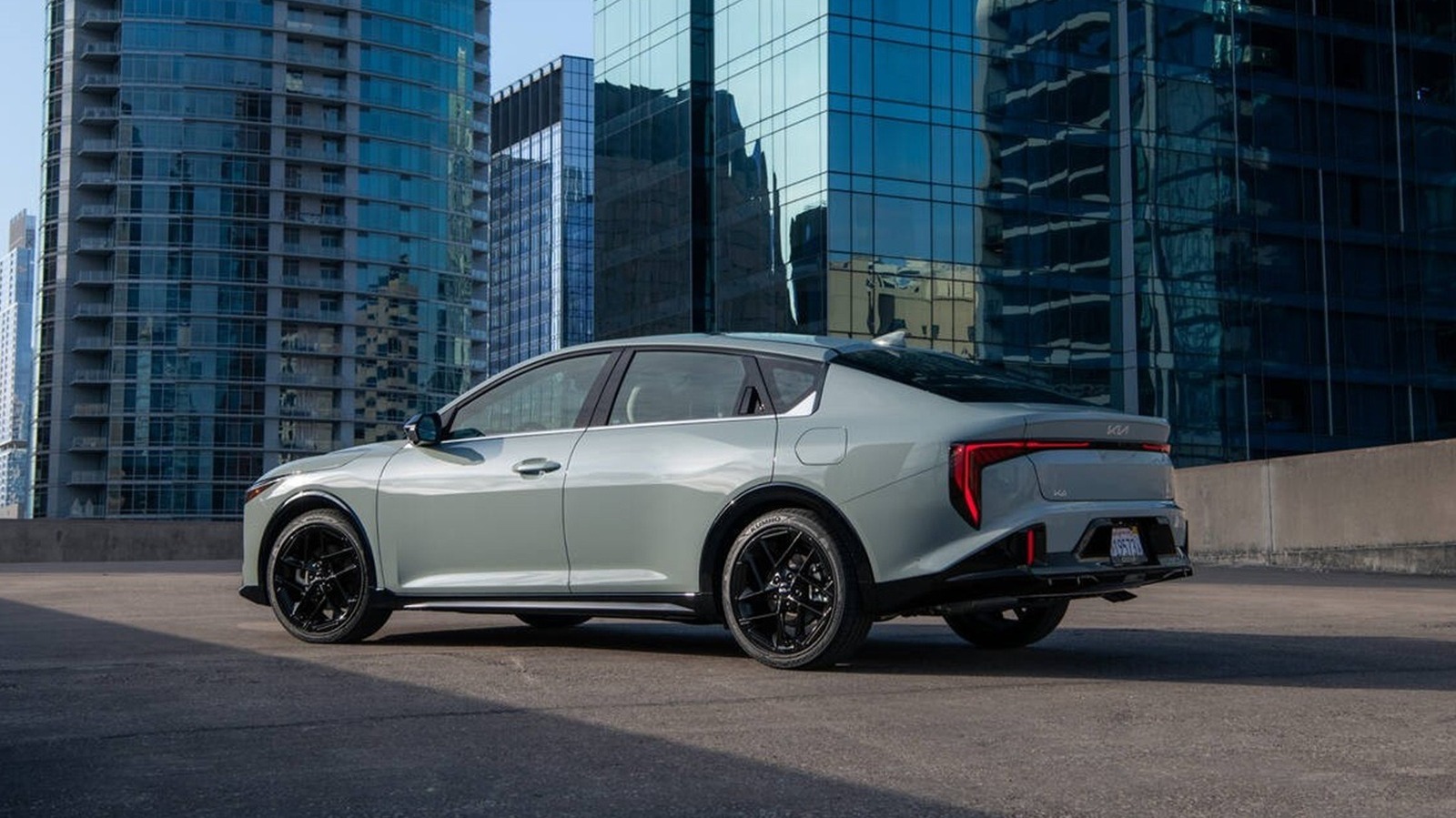
The Kia K4 is the newer face in the story, and it has already built a strong case for itself. iSeeCars lists its resale value at 64.5% after five years for the sedan, while the hatchback comes in at 63.9%.
It also starts at a relatively approachable price, which matters in a market where car payments can get ugly fast. With a smooth 2.0-liter engine, available turbo power, and a more aggressive look than most compact sedans, the K4 gives buyers something that feels a little more premium without jumping into luxury territory.
Sales have backed that up too, especially as the Rio and Forte faded away. More than 107,000 units sold in 2025 is a strong sign that shoppers are responding to the formula, and strong demand often helps used values stay healthier over time.
The Kia Soul still stands out as one of the most recognizable boxes on the road, and that has helped it retain 62.5% of its value after five years. It wrapped up a 16-year U.S. run in 2025, but its personality never really faded.
That quirky shape was always part of the charm. It gave the Soul a roomy cabin, easy city manners, and a look that people either loved or remembered anyway, which is not a bad thing in the resale game.
Its long run also built a strong identity, from the bright color choices to those hamster ads that made it impossible to ignore. Even as sales dropped in later years, the Soul stayed practical, different, and easy to spot, and those qualities have a way of keeping used-car buyers interested.
What ties these Kia models together is pretty simple. They offered a lot of value when new, and that value carried over when the cars entered the used market, where affordability, efficiency, and personality often matter just as much as fresh features.
Depreciation never plays fair, but it does reward cars that hit the right balance. In Kia’s case, the models that held up best were the ones that gave drivers something useful, something distinct, and something worth seeking out again after the new-car smell was long gone.
“`
