
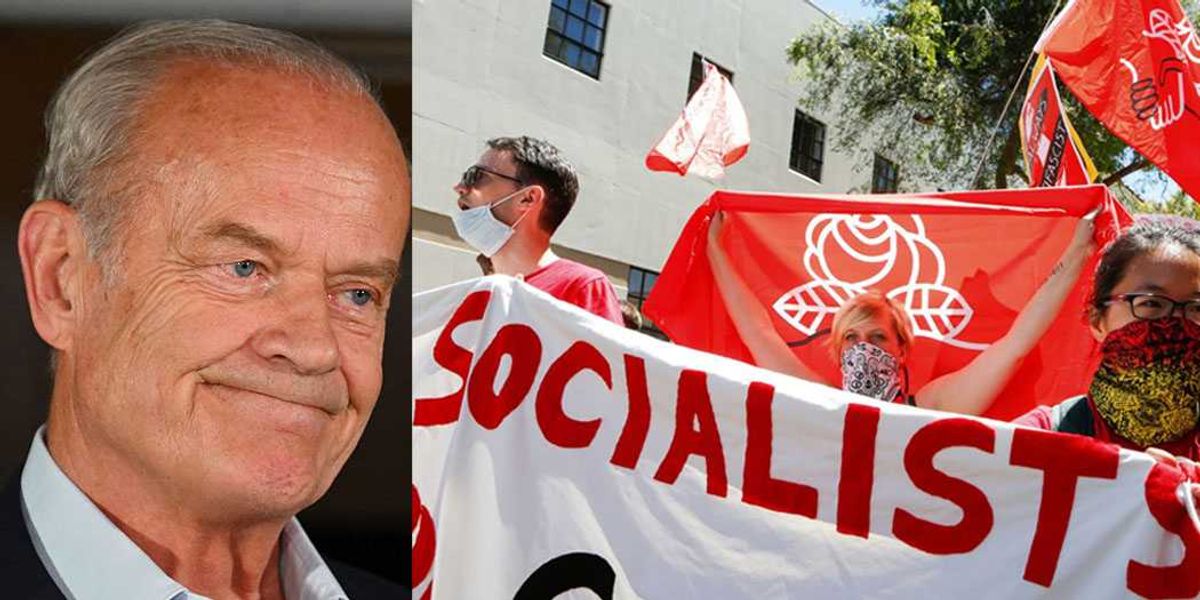
Kelsey Grammer’s latest comments cut straight through the noise, mixing personal history with a blunt warning about where the Democratic Party appears to be headed. His remarks landed with extra force because they were not just political chatter, but the kind of perspective that comes from someone who has seen real loss and still has strong views about the country’s direction.
Grammer pointed back to tragedy in his own life as the lens through which he now views politics, saying that painful experience has shaped the way he thinks about power, safety, and public responsibility. That background gave his warning a sharper edge, especially when he turned to what he sees as a growing embrace of socialism inside the Democratic fold.
The core of his concern was simple enough: he believes the party has drifted too far left, and that voices aligned with democratic socialism are gaining too much influence. In his view, that shift is not just a branding issue or a talking point for cable news, but a real threat to the practical values that hold communities together.
That kind of critique has become more common as the Democratic Party keeps trying to balance its old guard with a louder activist wing. For many Americans, the tension is obvious, and Grammer’s warning taps into a broader unease about whether the party is still listening to regular voters or chasing louder ideological extremes.
He also tied those concerns to a tougher conversation about crime and public order, suggesting that the political left often seems more comfortable with slogans than with the hard work of keeping people safe. That message tends to hit home with voters who are tired of seeing serious problems dressed up as moral posturing.
What makes his comments stand out is that they came from a familiar face, not a professional politician trying to score points. When someone with a long public career speaks this directly, it tends to sound less like a scripted jab and more like an unfiltered reaction to the country’s mood.
Grammer’s warning also reflects a wider cultural split that keeps surfacing in American politics. One side sees socialism as a fresh answer to inequality, while the other sees it as a fast track to weak leadership, bigger government, and less freedom for ordinary people.
That divide is why his remarks resonated so quickly. They speak to a frustration many voters already feel, especially those who think the Democratic Party has been captured by activists who care more about ideology than about results.
He did not frame the issue like a campaign strategist or a pollster. Instead, the message came across as personal, sharp, and rooted in a belief that bad ideas can spread fast when people stop challenging them.
For conservatives and for plenty of independents, that warning will sound familiar. The fear is not just that socialism is unpopular, but that it brings with it a whole mindset that excuses disorder, weakens standards, and leaves citizens paying the price.
Grammer’s comments kept that idea front and center, and they did so in a way that felt more emotional than academic. It was the kind of blunt political moment that tends to linger, because it mixes memory, fear, and a very clear sense of where the line should be drawn.
