
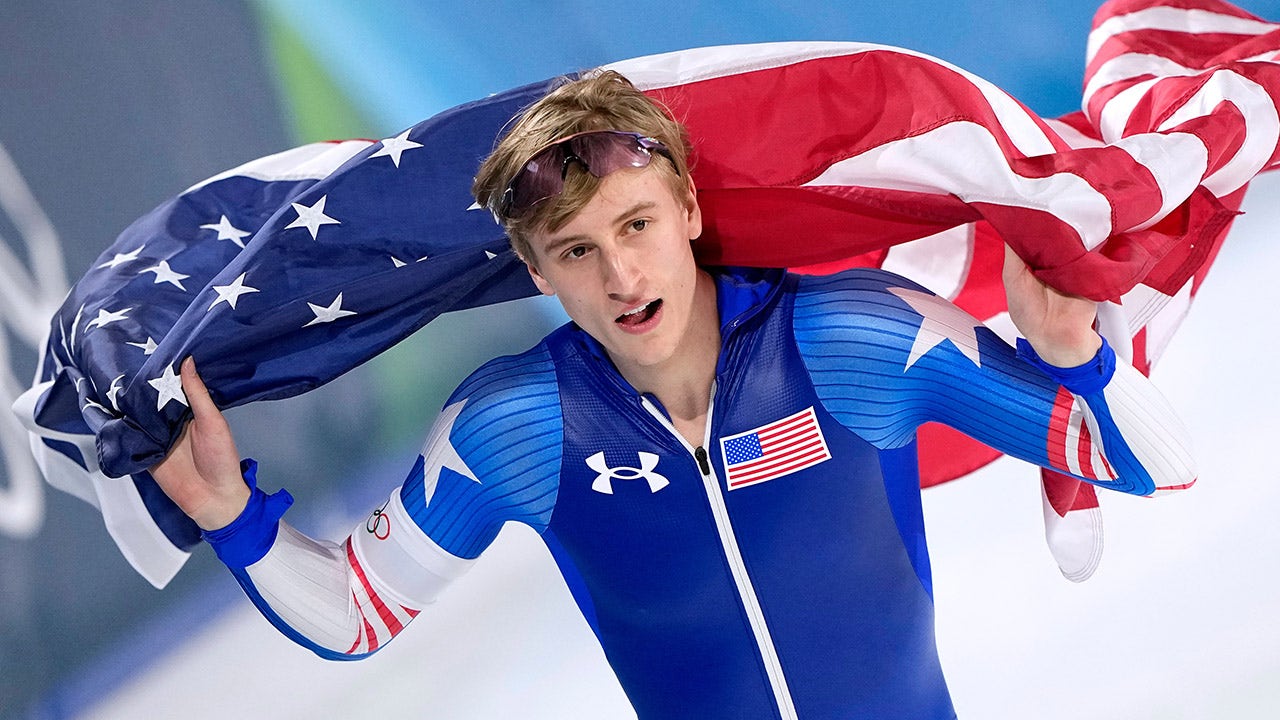
Jordan Stolz, fresh off winning two Olympic gold medals in Milan, shrugged off chatter about athletes who feel conflicted about representing the United States and kept his focus on the ice and the team. Draped in the American flag, he made it clear that his attention was on performance and the honor of competing. This piece follows his reaction, the surrounding conversation about patriotism in sports, and what it reveals about how different athletes approach the same moment.
Stolz burst onto the international scene with powerful, composed races that earned him top hardware and plenty of headlines. He has been lauded for an old-school work ethic mixed with modern technique, a combination that translated into two wins at a major global meet. People noticed not just the medals but how he carried himself afterward, wrapped in the stars and stripes.
When reporters asked about teammates and rivals who have expressed mixed feelings about representing the United States, Stolz was direct and unbothered. He said he paid no mind to those mixed emotions and instead stayed rooted in his own reasons for competing. That kind of blunt clarity cut through the debate without getting defensive or dismissive.
The broader conversation includes athletes who balance personal beliefs, political stances, or identity questions with national representation, and those conversations are valid and complex. Some competitors discuss systemic issues or make nuanced statements about where they stand, while others prefer to keep politics out of sport. Stolz’s stance reflects a different approach: he treats the Olympic moment as primarily athletic and symbolic of team unity rather than a platform for broader statements.
On the ice and in the athlete zone he projected calm and singular focus, a trait that often separates medalists from the rest of the field. Coaches and teammates tend to rally around consistent performers, and Stolz’s results fed that trust. Fans responded with enthusiasm, celebrating both the wins and the image of an athlete proudly displaying his nation’s colors after a hard-fought competition.
The atmosphere around elite sport frequently mixes pride, protest, and personal conviction, and that mix can be noisy in the days after an Olympic field crosses the finish line. For some athletes, the Games are a stage to highlight issues; for others, it is a moment to honor tradition and personal sacrifice. Stolz chose the latter route, emphasizing the honor he felt and the preparation that led him there.
What comes next for Stolz includes more international meets and the routine grind of training, video review, and recovery that keeps top athletes at their peak. He’ll carry both the medals and the spotlight forward, and his attitude toward representing his country will likely keep shaping how fans and media talk about him. Observers will be watching his next season to see if that steady focus translates into continued success on the ice.
