
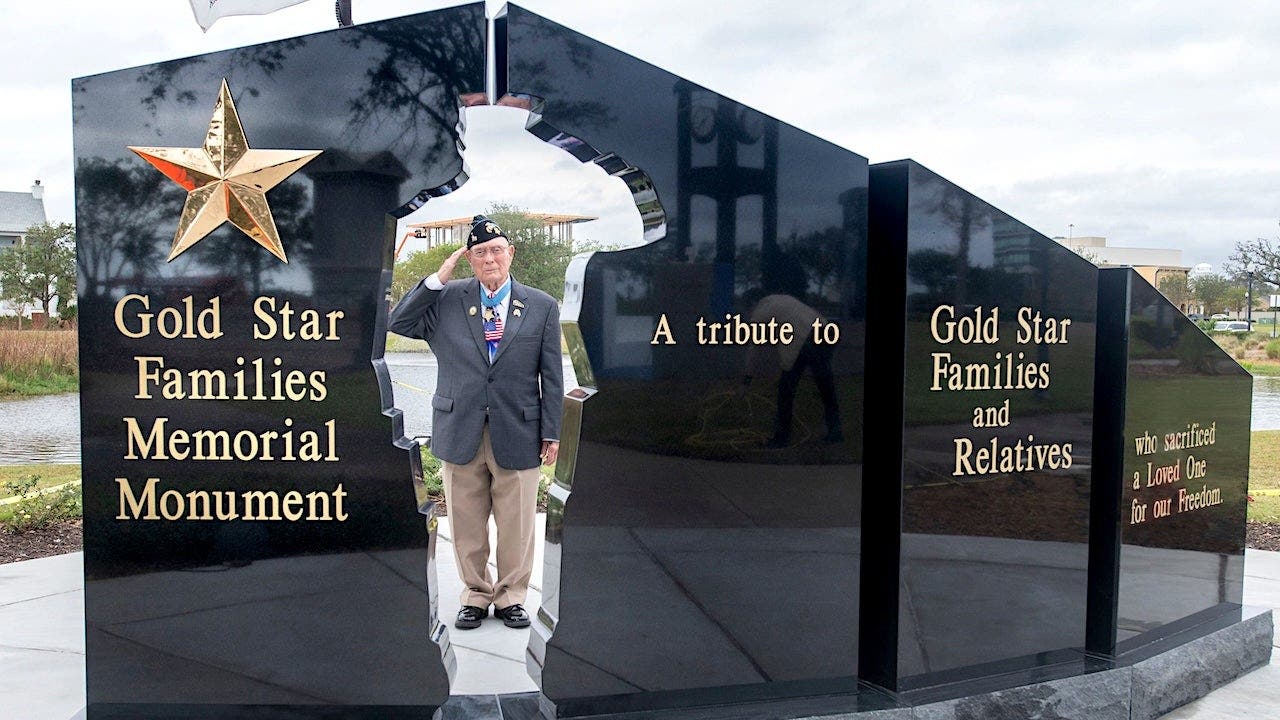
Sen. Jim Justice broke through a thick layer of Senate dysfunction to push a monument bill honoring Hershel “Woody” Williams, the last surviving World War II Medal of Honor recipient, toward a landmark place on the National Mall. What should have been a simple tribute got tangled in partisan glare, but a quiet conversation and a little stubbornness helped clear the path. The result says a lot about both the man being honored and the broken place that had nearly stalled it.
Justice, a West Virginia Republican, did not mince words about the mood in Washington. He said the Senate can slide into “romper-room behavior,” where basic cooperation gets buried under ego, resentment, and reflexive opposition.
The bill at the center of the fight, the Williams National Medal of Honor Monument Location Act, directs the monument to a prominent location within the Reserve on the National Mall. It passed the Senate unanimously in March and later cleared the House, putting it on track to reach the White House for final approval.
Justice called it his first Senate bill, which gave the whole effort a personal edge. For him, this was not just another vote or symbolic gesture, but a chance to make sure a hometown hero got the public recognition he had earned the hard way.
Williams, a West Virginia native, earned the Medal of Honor for extraordinary heroism during the Battle of Iwo Jima. He died in 2022 at 98, after becoming the last living World War II Medal of Honor recipient, and the monument is meant to honor him by name while also standing for every recipient who wore that medal.
The story behind the vote is where things get interesting. Justice said the measure hit a wall because the Senate often turns even reverence into a partisan skirmish, and he refused to let the fight end there.
He described a last-minute moment just before he planned to go to the floor with four Medal of Honor recipients present. Instead of charging ahead, he sat down and talked with Sen. Martin Heinrich, a Democrat from New Mexico, and the two worked through the problem face to face.
That conversation mattered because the senators already knew each other from serving together on the Energy and Natural Resources Committee. Justice also said his well-known bulldog, Babydog, had helped build a warmer relationship over time, which sounds quirky but fits the kind of personal politics that still cuts through the noise now and then.
Heinrich’s response was direct, and in a place built on grand speeches, that bluntness helped. Justice said Heinrich recognized the bigger problem, that people in Washington simply do not talk enough, and chose not to object.
From there, the bill moved fast. Justice said it went from near collapse to completion in about three minutes, a rare moment when common sense outran the usual theatrics.
The senator used the episode to sharpen his criticism of the broader Senate culture. In his telling, too many lawmakers treat everything like a political food fight, even when a tribute to war heroes should be beyond the usual back-and-forth.
He also pointed to the 60-vote hurdle and the filibuster as part of the larger stall. The rules may be procedural, but the attitude behind them is political, and Justice made clear he thinks too many lawmakers prefer the comfort of gridlock to the work of actually solving anything.
That frustration came through in plain language. Justice argued that some people in Washington have spent so long in the building that they no longer think like the Americans they represent, especially the ones who have to meet payroll and keep real-world responsibilities moving.
Still, the monument effort stood out because it was about service, sacrifice, and memory rather than status. Williams’ legacy came from action under fire on Iwo Jima, where he used a flamethrower against enemy positions and helped clear a path for advancing Marines.
Justice said Williams was never about himself, which may be why the tribute feels bigger than a single name on a marker. It carries the weight of every family member, every veteran, and every future visitor who will stop, look, and understand that the country still has room to honor courage when it wants to.
For Justice, the end goal is not just a bill signed and filed away. It is the kind of public place where future generations can stand, take in the history, and feel the kind of pride that politics usually works so hard to bury.

2 Comments
Merge with estd WW2 Memorial area right
This is what a leader does. Too bad there is no leadership under pansy Mike and TDS Thune.