
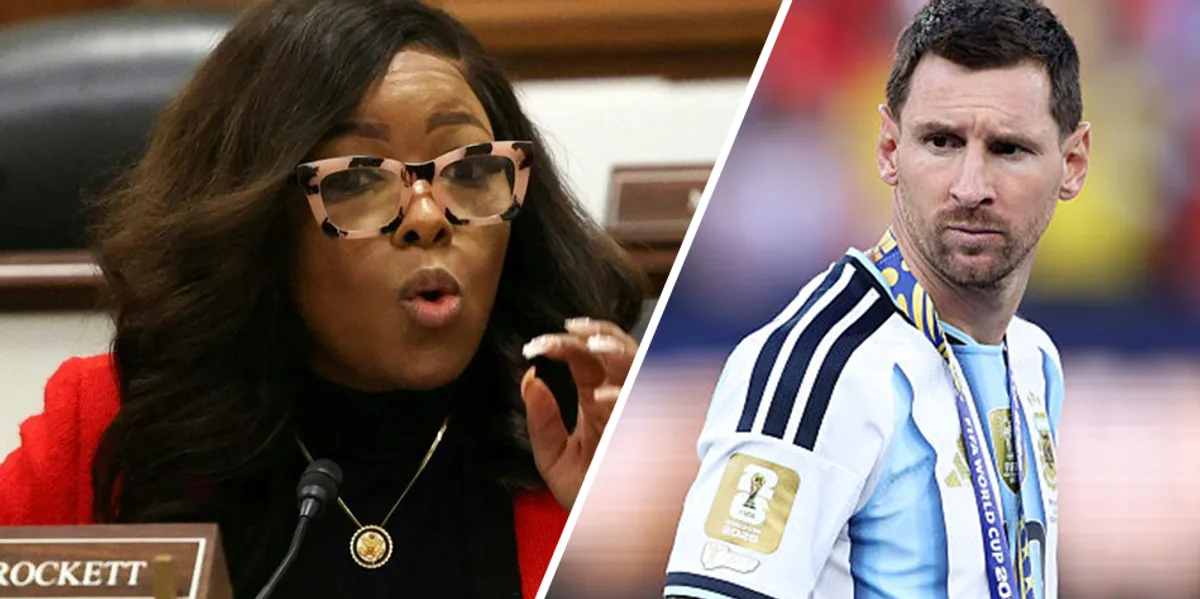
Jasmine Crockett sparked fresh backlash after making a sweeping claim about World Cup fandom and race, and the reaction was immediate. The comment landed in the middle of an already heated political climate, where every word gets picked apart and every stretch gets called out fast.
The issue centers on Crockett’s suggestion that people who were pulling for Argentina at the World Cup were somehow racist. That kind of accusation does not float by quietly, especially when it drags a global sporting event into a political argument nobody asked for.
Her remark also pulled in Brandon Gill and added another layer to the public fight. Once the discussion shifted from soccer to identity politics, it stopped being about a game and turned into another example of politicians turning ordinary behavior into a moral test.
That is part of why the comment hit so hard. Sports are one of the last places where people still expect a little breathing room, and when a public figure starts assigning racial motives to cheering for a team, people notice.
Argentina’s World Cup run already had plenty of fans around the world, and those supporters came from all kinds of backgrounds. That is exactly why the claim felt so flimsy to a lot of listeners, because it treated a simple sports preference like a political confession.
Crockett’s remark also fed a broader pattern that voters have seen again and again. Too many Democrats reach for identity-based accusations first, then act surprised when people push back and say the argument is weak, smug, and disconnected from everyday life.
The comparison to Spain in the surrounding discussion only made the whole thing feel even more tangled. When politicians start tossing around national teams and racial assumptions like they are interchangeable talking points, the message gets messy fast and the public gets tired of it.
What stood out most was how quickly one offhand statement became a bigger story than the event itself. That happens when a politician chooses provocation over common sense, because people are far more interested in whether the claim holds up than in the applause it might get from a narrow audience.
There is also a real frustration behind the response. Most people know the difference between rooting for a team and making some grand statement about race, and they do not like being told that a normal sports opinion needs to be explained away as prejudice.
The whole episode shows how fast political theater can swallow something simple. A World Cup conversation should stay a World Cup conversation, but when lawmakers turn it into a lecture, it tells you more about their instincts than about the fans they are trying to criticize.
