
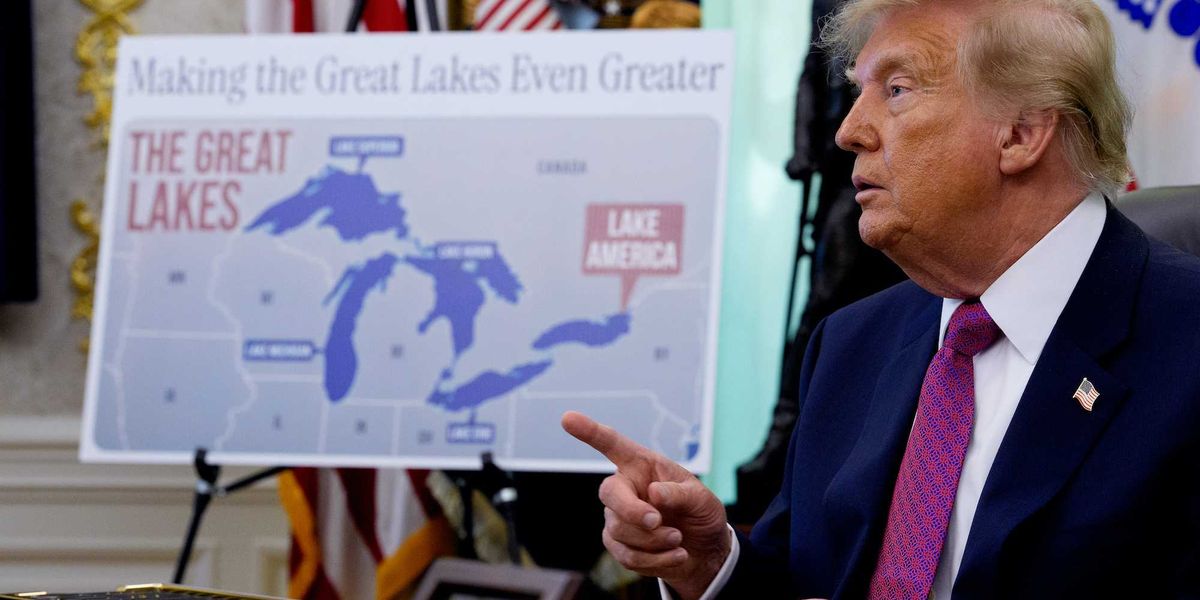
President Donald Trump has a knack for turning a trade fight into a headline-grabber, and this time the joke landed on one of North America’s biggest landmarks. The move was aimed straight at Canada as tariff tensions keep the pressure high, with the name change serving as a sharp political jab rather than a serious geographic proposal. It also fit neatly into Trump’s long-running habit of using branding, mockery, and spectacle to keep the fight on his terms.
The Lake Ontario quip, framed as “Lake America,” played like classic Trump theater: blunt, pointed, and impossible to ignore. For supporters, that kind of trolling hits the same nerve as his broader trade message, which argues that the United States should stop being played for a sucker and start flexing harder against foreign partners. For critics, it is another example of how he can turn a policy dispute into a public insult in a matter of seconds.
The timing matters just as much as the punchline. Trade friction with Canada has been simmering, and tariffs have become the kind of issue that can quickly spill from policy meetings into public feuds, especially when both sides are feeling the heat. In that kind of environment, even a joke about a lake becomes part of the larger fight over leverage, borders, and who gets to set the tone.
Trump’s approach has always mixed economics with attitude, and that mix tends to frustrate traditional diplomats while energizing voters who like a leader willing to say the quiet part out loud. He rarely treats these clashes like dry spreadsheets and polite statements, because for him, the conflict itself is the message. A name like “Lake America” is not about cartography, it is about dominance, mockery, and sending a signal that the United States is done being passive.
Canada has its own stake in the back-and-forth, especially as trade barriers and tariff threats can hit industries, jobs, and cross-border supply chains on both sides. That makes these standoffs bigger than the jokes that float across social media or cable news. Still, the jokes matter because they shape how the public sees the fight, and Trump has never been shy about using that to his advantage.
Mark Carney’s role in the broader trade conversation keeps the pressure on as well, since any serious negotiation with Canada runs through leadership that has to balance economics with national pride. That balance gets harder when Trump keeps the discussion loud, personal, and deliberately provocative. The result is a political atmosphere where every phrase feels loaded and every gesture gets read like a challenge.
What stands out most is how quickly a simple jab can cut through the noise and reset the conversation. A lake does not really need a new name, but in Trump’s hands, the point is never the literal claim. The point is to make the other side react, keep supporters entertained, and remind everyone that in a trade war, symbolism can be almost as sharp as the tariffs themselves.

1 Comment
Canada took advantage of trade with us for a long time it’s time they start giving us a fair trade deal.