
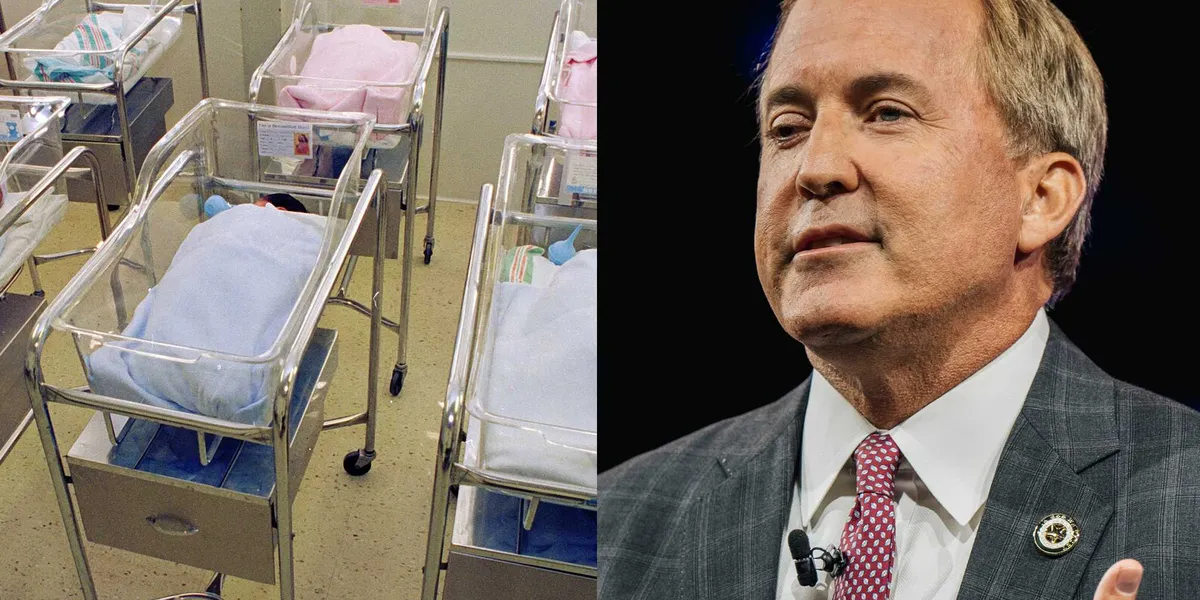
Ken Paxton has stepped into a tense and deeply personal abortion fight involving a surrogate pregnancy, and the case is already drawing big attention in Texas politics. At the center is a baby whose future has become tangled up in a bitter clash over life, law, and responsibility.
The dispute has put a spotlight on the uneasy space surrogacy can occupy when adults disagree after a pregnancy is already underway. It also has Republicans leaning hard into the idea that unborn children deserve protection, even when the situation is messy and emotionally charged.
Paxton’s move lands in a state where abortion battles are never far from the surface. Texas has become one of the most aggressive battlegrounds in the country on the issue, and any case touching abortion rights tends to ignite fast.
This one is different because it involves a surrogate, which adds another layer of conflict. There are contracts, expectations, and competing claims, but beneath all of that is a child who cannot speak for himself or herself.
That reality is what makes the case resonate so strongly with pro-life advocates. To them, the argument is simple and hard to ignore: a baby in the womb is not just a line item in a dispute, but a living human being whose life should not be ended because adults are at odds.
Paxton has built much of his political identity around that kind of message. He has repeatedly shown a willingness to push abortion restrictions and back legal fights that test the boundaries of Texas law in order to keep the state firmly on the pro-life side.
Supporters see that as exactly the kind of backbone voters asked for. They want officials who do more than talk tough, and Paxton’s intervention gives them another example of a Republican willing to step directly into the fight instead of sidestepping it.
The case also raises uncomfortable questions about surrogacy itself. When a pregnancy is carried for someone else, the relationship between biology, contracts, and moral duty can get complicated fast, especially when a dispute turns into a life-or-death standoff.
For many conservatives, though, the complication does not change the core principle. A child is still a child, and no amount of paperwork should erase the basic moral truth that human life has value before birth.
That view has become increasingly central in Republican politics since the fall of Roe. Across the country, GOP leaders have tried to draw sharper lines around unborn life, and Texas remains one of the clearest examples of that approach in action.
James Talarico and other Democrats are likely to frame cases like this very differently. Their side often argues about privacy, autonomy, and the legal limits of state intervention, while Republicans keep pressing the message that the state should not stand by while a baby’s life is on the line.
The fight over this surrogate pregnancy shows how abortion disputes rarely stay abstract for long. They quickly become about real families, real emotions, and hard choices that leave little room for easy slogans.
That is why Paxton’s intervention matters beyond the court fight itself. It signals that Texas conservatives are still ready to use every tool available to protect unborn children, even when the case comes wrapped in a painful and unusual set of facts.
For Republicans, that approach is not just about politics. It is about drawing a bright moral line and refusing to retreat when the other side tries to turn every unborn child into a debate point.
The broader message is clear enough. In Texas, the pro-life movement is not fading into the background, and leaders like Paxton are making sure that message stays front and center when the stakes are most personal.
