
A series of buried relics in Turkey is nudging historians to rethink just how fast Christianity spread, and how deeply ordinary believers embraced it. What once looked like a stray collection of charms is now being read as a window into a world where faith, fear, and daily life collided in surprising ways.
The discovery centers on amulets found in an area tied to the ancient city of Laodicea, a place that sits at the crossroads of early Christian and pagan worlds. These objects were not flashy treasures or royal artifacts. They were small, practical things, worn close to the body, meant to guard against danger and bring a sense of protection in a rough and uncertain age.
That is what makes them so revealing. They suggest that the first generations of Christians were not always living inside neat, fully separated categories where belief systems stayed in their own lanes. Instead, the evidence points to a messy transition, with some people adopting Christian language and symbols while still carrying habits shaped by older pagan traditions.
Scholars say this matters because it challenges the tidy version of early church history that often makes the faith look more uniform than it really was. The new reading of these amulets shows a population trying to navigate spiritual life with whatever tools felt powerful enough to help. In other words, the rise of Christianity did not erase older fears overnight, and it did not instantly replace every other form of belief.
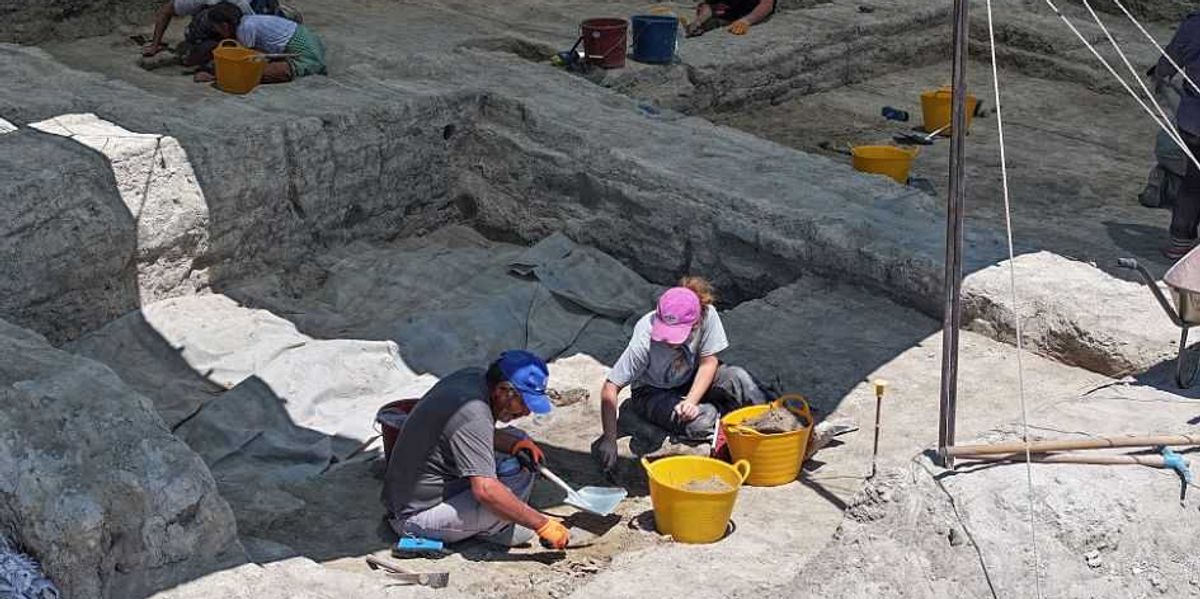
The archaeological context is important too. Finds like these do not just sit there as objects on their own. They become meaningful when studied alongside inscriptions, burial customs, local religious habits, and the broader culture of the eastern Roman world. That wider lens is what allows historians to place these amulets inside a living, breathing society rather than treating them like isolated curiosities.
Laodicea itself has long drawn attention because it sits in territory steeped in New Testament history. The region was part of a network of cities where Christian communities were forming, debating, and growing while still surrounded by long-established pagan practices. That overlap created tension, but it also created the kind of hybrid environment where artifacts can tell a much richer story than written records alone.
The findings also help explain why early Christian leaders spent so much energy warning believers away from magical objects and competing spiritual practices. Those warnings make more sense when placed beside the real habits of everyday people, who often wanted security more than theological purity. When danger felt immediate, the appeal of an amulet could be hard to ignore, even for someone hearing Christian teaching.
That is where voices like St. John Chrysostom and St. Paul come into the picture. Their writings show a faith that was constantly pushing against rival influences, trying to draw clear lines between Christian devotion and the lingering pull of pagan customs. The pressure they described now looks less abstract and more like a direct response to the kind of world these artifacts reveal.
It is also a reminder that archaeology has a way of making old debates feel immediate again. A small object, tucked away for centuries, can unsettle a familiar story and force a fresh look at what people actually believed, feared, and carried with them. In that sense, these amulets are doing more than surviving history, they are actively reshaping it.
The bigger picture is not just about a few pieces of metal or stone. It is about the human instinct to seek protection, meaning, and identity in times of uncertainty. And in the ancient world of Turkey, that instinct left behind clues that are still speaking loudly now.
