
- Jaguar’s bold move into a new electric era
- The CX-75 and the brand’s unfinished supercar dreams
- The E-Type, XK120, and the classic Jaguar look
- Track-focused icons like Project 7 and the XE SV Project 8
- Racing legends, road cars, and the designs that still turn heads
Jaguar is in the middle of a dramatic reset, and that has people looking back at the cars that built its reputation instead of just arguing about what comes next. The brand has always had a flair for the stylish, the fast, and the slightly rebellious, which is exactly why its best designs still hit hard decades later. From sleek grand tourers to wild concepts that never quite made it to showrooms, Jaguar has a long list of machines that feel special the second you see them.
The modern debate around Jaguar’s new direction only makes the old highlights look sharper. If the Type 00 is meant to drag the brand into a future that feels expensive and electric, then the classics show where that confidence came from in the first place. Jaguar has never been shy about making a statement, and its most memorable cars usually combined elegance with a little menace.
Few examples capture that better than the E-Type Series I. It is one of those cars people recognize instantly, even if they cannot name a single spec, because the shape just lands perfectly from every angle. The XK120 deserves the same kind of respect, too, since it helped define the idea of a fast, beautiful British sports car before most rivals had even figured out the formula.
Jaguar’s racing history also bleeds straight into its design language, especially with the C-Type and D-Type. These cars were built to win at Le Mans, but they were handsome in that purposeful way that only race cars can pull off. Malcolm Sayer’s aerodynamic thinking gave them a clean, almost aircraft-like feel, and that same engineering-first attitude later shaped some of Jaguar’s road cars as well.
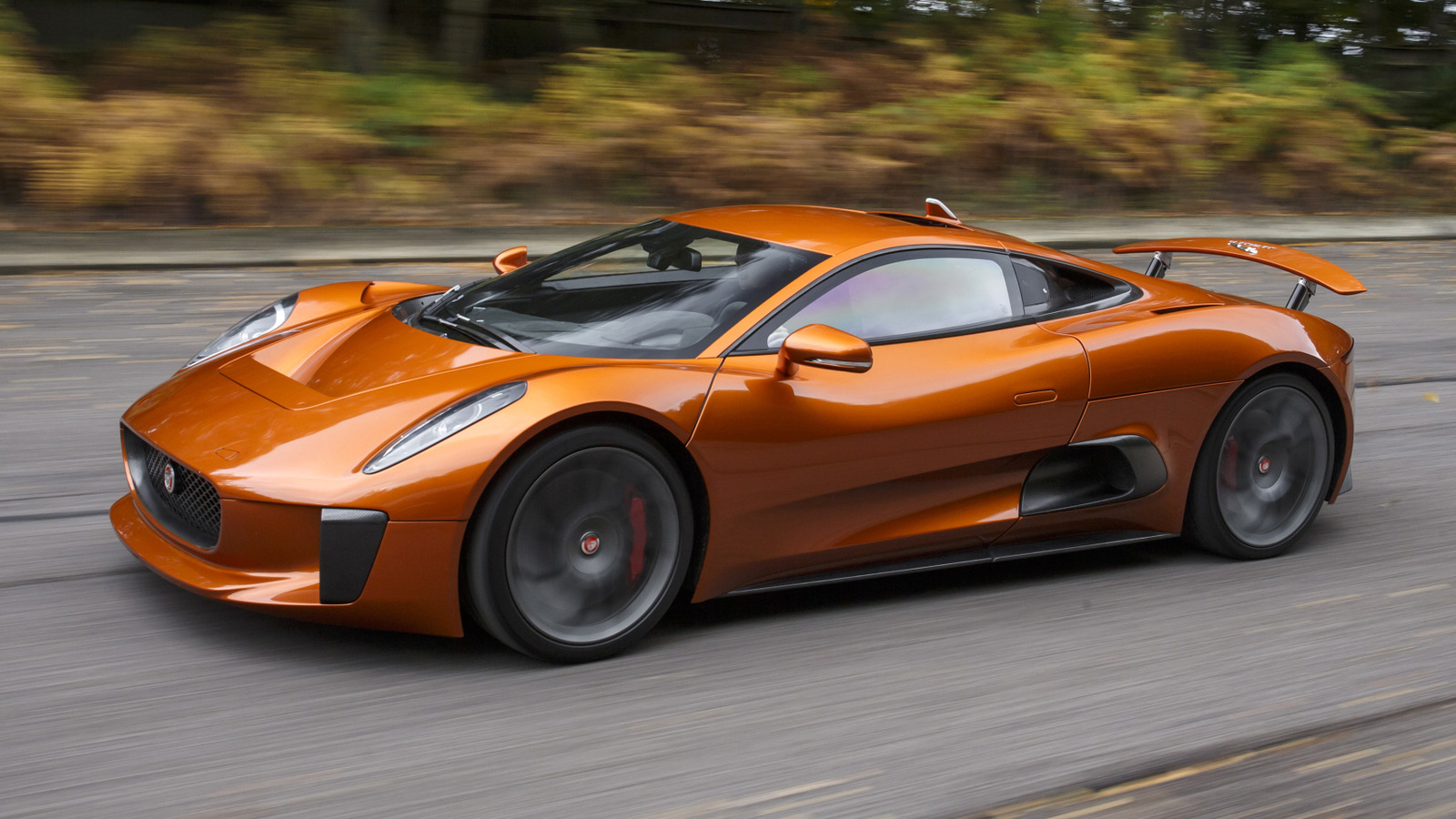
Then there is the CX-75, one of the great “what if” cars in Jaguar history. It had the sort of futuristic, high-strung personality that makes enthusiasts daydream for years, especially since it was tied to a hybrid F1-style setup and a carbon monocoque chassis. It never made production, but its long shadow still hangs over every modern conversation about where Jaguar could have gone if timing and money had lined up differently.
Jaguar also knew how to go loud when it wanted to, and the F-Type Project 7 is proof. It took the already attractive F-Type and gave it a race-bred edge with open-top drama, D-Type references, and just enough aggression to make it feel like a toy for people who already had everything else. That same attitude showed up again with the XE SV Project 8, which turned a fairly ordinary sedan into a fire-breathing track weapon with a huge wing and a serious appetite for speed.
The XJS and XKR lines show a different side of the brand, one built around long-legged style and V12 or supercharged V8 muscle. They were not always easy cars to live with, and their reputation for maintenance drama is part of the story, but their looks aged far better than a lot of their rivals. That matters because Jaguar at its best has always made cars that feel a little glamorous even when they are being difficult.
The same goes for the XJ220 and the XJR-15, both of which carry that rare mix of ambition and cool that makes Jaguar such an easy brand to obsess over. One became a record-holder that did not quite match early promises, while the other felt like a barely domesticated race car wearing a license plate. Even the Mark II, a classic sedan with old-school charm, proves that Jaguar could make a four-door look elegant without trying too hard.
Looking across the whole lineup, the pattern is obvious. Jaguar’s best designs do more than look fast or expensive, because they seem to carry a little story in the metal itself. That is why people keep coming back to them, whether they are hunting for auction stars, admiring concours legends, or just staring at old photos and wishing brands still took this many risks.

1 Comment
Revise the E Type Jag
4 door sedan
Gullwing coupe
Convertable coupe with aero rollbar ( Ford Shelby GT 1971)
Use car in 007 feature?