
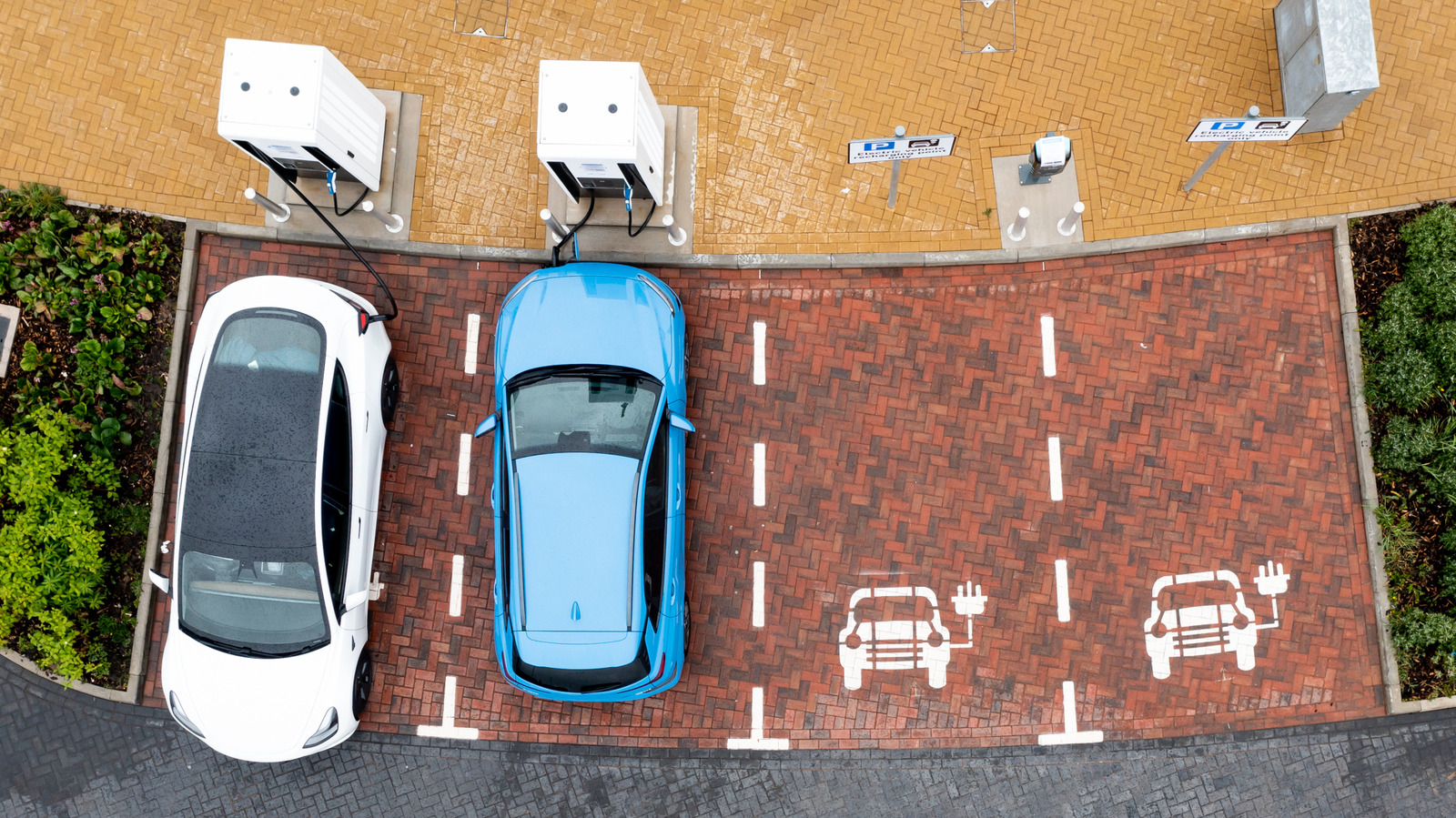
Parking rules around EV charging spots are not as simple as the signs make them look. Some states treat a gas car in an EV stall as a ticketable offense, some leave the issue to local rules, and hybrids can fall into a gray area too.
Electric vehicles keep spreading across American roads, and the charging network is scrambling to keep up. There are already tens of thousands of charging stations and hundreds of thousands of plugs in service, but forecasts still point to a huge need for more ports in the years ahead. That pressure is part of why an EV charger blocked by the wrong car sparks such a fast reaction.
The term most often used for this kind of parking is ICEing, which refers to a gas-powered vehicle sitting in a spot reserved for EV charging. In a number of states, that can lead to a fine, and California can go a step further with towing in certain cases. The exact rules depend on where the car is parked, which means the sign alone does not tell the whole story.
Several states have clear anti-ICEing laws on the books, including Rhode Island, Maryland, Virginia, North Dakota, Colorado, Massachusetts, Arizona, Illinois, Oregon, Washington, Hawaii, and Florida. Those rules usually exist to keep chargers available for drivers who actually need them. In practice, that means a gas car in the wrong stall can turn a busy charging lot into a mess in a hurry.
Still, the legal picture gets murkier once local ordinances enter the mix. Connecticut has restrictions written into official rulings, but the situation is not always treated as a direct punishment under state law. Some places skip state-level rules altogether and leave enforcement to cities, so a driver can be fine in one town and ticketed in another.
Seattle is a good example of that patchwork approach. Even without a broad state ban, parking in an EV charging spot there can still bring a ticket. That is why the safest move is not to assume anything from the parking lot alone and to check the local rules before pulling in.
Hybrids make the issue even more tangled because they are not always treated the same way as full gas cars. In some states, the law specifically includes hybrids in the same conversation as electric vehicles, while others barely mention them at all. Nevada, New Hampshire, Massachusetts, Connecticut, and Illinois are among the places where hybrids show up more clearly in the legal language.
The biggest practical rule is pretty simple: if a vehicle is in an EV charging space, it is usually expected to be plugged in and actively charging. That keeps the spot tied to its purpose instead of becoming free parking with a charger nearby. When a driver takes that space without using the charger, it can leave an EV owner stranded with a low battery and nowhere to go.
That is where common sense matters just as much as the law. Even in places where ICEing is not spelled out as a punishable offense, blocking a charger can still create real frustration for EV drivers who rely on those spots to get through the day. It is the kind of move that turns a simple parking choice into a problem for everyone else in the lot.
