
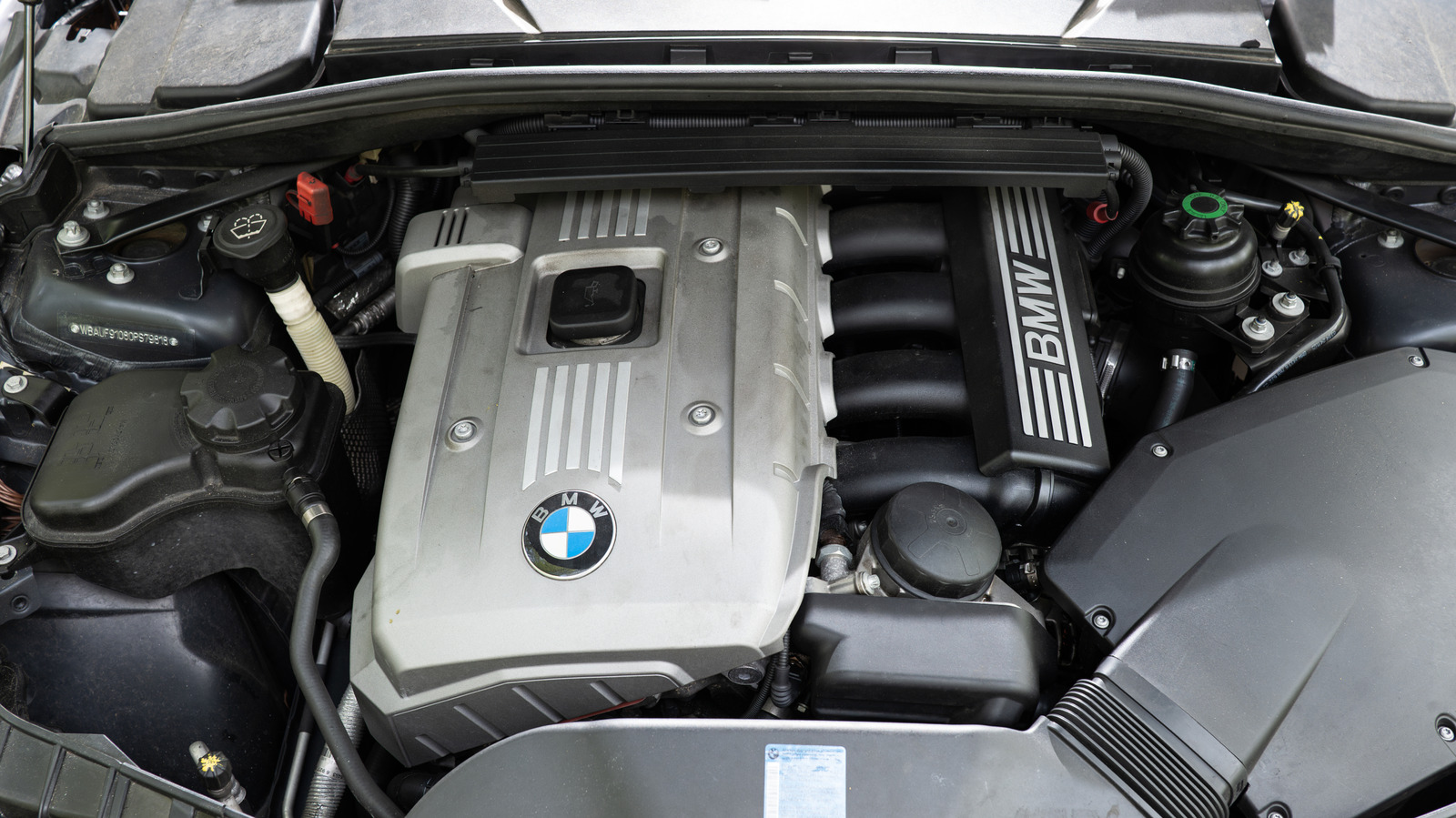
There’s a clear personality to every engine layout, and the inline-six is no exception: it’s smooth, predictable, and has a character all its own. This piece looks at why engineers still choose straight-sixes over V configurations, and what tradeoffs come with that choice. Expect a straightforward, technical take that stays practical and easy to follow.
The inline-six’s biggest strength is inherent balance. With its firing intervals and crank geometry it cancels out primary and secondary forces better than many V-block designs, so you get a silky-smooth idle and less vibration without elaborate countermeasures. That natural refinement explains why manufacturers often pair straight-sixes with luxury sedans and refined performance cars.
Packaging is where the inline-six shows its limits. It’s longer front-to-back, which makes it awkward in tight engine bays designed for transverse mounting or compact front-wheel-drive platforms. Car designers therefore face tradeoffs: either reshape the chassis, move ancillaries, or accept packaging compromises that can impact crash structure or cabin layout.
Weight distribution benefits can cut both ways. A long inline-six can push mass forward, helping traction under heavy throttle but potentially making steering feel heavier. By contrast, many V engines allow for a more compact, lower center of gravity placement, which improves nimbleness in smaller or sportier cars.
Simplicity versus complexity is another theme. The straight-six often needs fewer balance shafts, simpler exhaust and intake routing, and a single cylinder head, which eases manufacturing and can improve serviceability. Yet its length may increase material use for the block and crankshaft, affecting cost and rigidity unless engineers compensate with stronger, heavier components.
When it comes to tuning and forced induction, the inline-six can be a dream. Even boost distribution across cylinders is easier with a single, central intake plenum and uniform exhaust header lengths, which helps with throttle response and consistent cylinder temperatures. V blocks can match this with clever plumbing, but they often require more complex manifolds and turbo arrangements to achieve the same uniformity.
Noise, vibration and harshness challenges hang to the tradeoff list as well. While the straight-six’s balance makes it naturally refined, packaging constraints sometimes force compromises in mount design or accessory layout that introduce NVH in other ways. V engines can be tuned spatially to keep ancillary items away from the passenger compartment, which can simplify quieting strategies in certain car layouts.
Reliability considerations vary by design and execution rather than layout alone. The inline-six’s long crank and block geometry must be well-supported to avoid flex, but in many designs that results in durable low-maintenance powerplants. V engines may distribute structural stress differently, and modern manufacturing standards and materials have narrowed the practical differences between the two.
Manufacturers also weigh market expectations when picking layouts. Buyers who prize smoothness and linear torque often expect straight-sixes in luxury and grand touring cars, while those seeking compact packaging or a distinct V-engine rumble may prefer V configurations. That expectation shapes engineering priorities, production costs, and even aftermarket support.
In sum, choosing an inline-six is about valuing natural balance and linear power delivery over packaging convenience and compactness. Each layout solves different problems and introduces new ones, so the decision is ultimately a question of what the vehicle needs to deliver and how engineers want to allocate space, weight, and cost. Practical realities and brand identity both steer the final answer more than any single technical advantage.
