
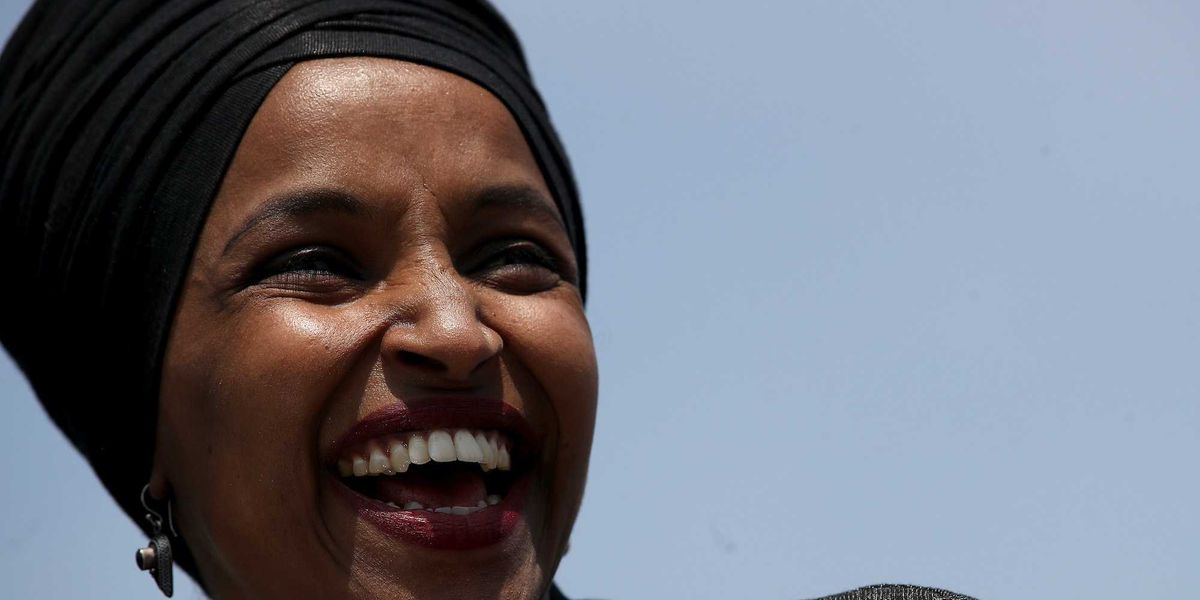
Rep. Ilhan Omar recently changed a federal financial disclosure that once suggested a jump from roughly $51,000 to millions, then dramatically shrank the reported totals to under six figures; the reversal has Republicans demanding answers, raising questions about bookkeeping, oversight, and accountability for members of Congress.
The original filings showed a startling spike that read like a financial plot twist, with the wealth range moving from about $51,000 to figures reported as high as $6 million to $30 million in the space of a year. Those kinds of ranges are supposed to be estimates, but the size of this swing forced scrutiny from political opponents and watchdogs. In the Capitol, big gaps like that don’t just raise eyebrows, they demand explanations.
Republicans pushed for records and documentation after the discrepancy surfaced, arguing that such a huge correction cannot be treated as a casual clerical error. Party officials and oversight-minded lawmakers treated the case as one that needs transparency and swift review. The pressure was framed not as partisan grandstanding but as a matter of public trust and proper disclosure rules.
“The amended disclosure confirms what we’ve said all along: The congresswoman is not a millionaire,” said Jacklyn Rogers, a spokesperson for Omar.
Rogers added that the form was amended “as soon as the discrepancy was identified.”
The newly filed numbers put Rep. Omar and her husband in a much narrower range, listing assets between $18,004 and $95,000. That reversal is stark and stretches credibility for many observers who think such a change merits more than an apology. For Republicans, the only acceptable next step is a full, documented accounting of how the original figures arose and who signed off on them.
Economic commentator Carol Roth weighed in with pointed skepticism that echoed GOP concerns: “Who among us hasn’t made a $6 million to $30 million error in estimating our net worth for disclosure documents?”
‘While anyone can make a mistake on any type of form, the scope and scale of the mistake does not pass the smell test.’
Republican Rep. Tom Emmer of Minnesota sharply criticized Omar after the financial revision. “Not only should her accountant be fired, but that girl should be fired and she does not deserve to be in Congress,” Emmer said.
“Quite frankly, if she is discovered to be involved in any of this fraud personally, that she benefited from it, even by her actions of promoting it and trying to resist investigations, she should be held accountable to the fullest extent,” he added.
Those are strong words, and they reflect a broader Republican demand for accountability. Lawmakers on the right argue that the ethics committee, the Office of Congressional Ethics, and any appropriate oversight panels should have priority access to bank records, transaction histories, and any third-party financial relationships that might explain such an anomaly. Democrats will defend their member, but that does not remove the obligation to produce clear, verifiable paperwork.
The situation also highlights a systemic weak spot: disclosure rules that allow wide ranges can be gamed or misreported in ways that hide uncomfortable truths. Conservatives pushing for tighter rules see this as another example where the system favors obfuscation over clarity. If the public is to trust elected officials, those officials must submit disclosures that stand up to straightforward scrutiny.
Beyond committees and procedural pushes, voters and activists are watching to see whether this gets treated as a simple administrative fix or an issue that triggers real consequences. Republicans will press for public hearings, document disclosures, and, if necessary, criminal referrals where discrepancies suggest deliberate wrongdoing. The central question those calls aim to answer is simple: how did a potential multi-million-dollar discrepancy turn into a six-figure reality overnight?
Transparency advocates on the right insist that the next move should be documentation, not spin; release the records, explain the math, and let investigators determine whether mistakes were innocent or part of a larger pattern. That’s the message being delivered plainly and without apology: public office comes with public accountability, and anything less shortchanges voters who demand honesty from their representatives.

1 Comment
Send that evil enemy within to GITMO; Nuff said!