
Naked Bike Protest Outside ICE in Portland Draws GOP Critique
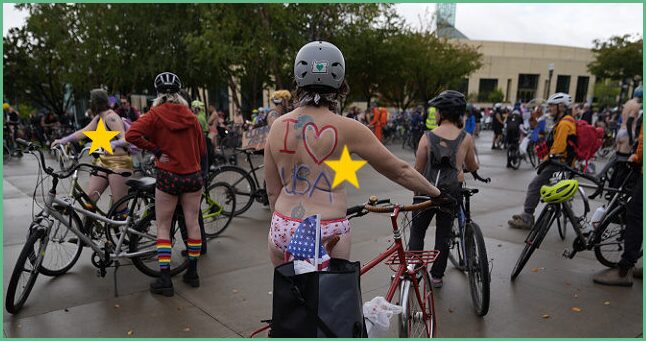
On Sunday in Portland, hundreds of naked cyclists formed a procession outside an Immigration and Customs Enforcement facility to stage a provocative protest. The visual was meant to shock and to draw attention, and it succeeded in getting national eyes on a local dispute about immigration enforcement.
From a Republican viewpoint, seeing federal officers at work met by naked demonstrators is unsettling because Republicans put a premium on the rule of law and orderly enforcement. ICE carries out duties set by Congress and the president, and those duties deserve to be carried out without intimidation or theatrical disruption. Protest is a right, but method matters, and spectacle often replaces substance.
A stunt like this redirects coverage away from hard policy questions: border security, asylum procedures, detention capacity, and judicial backlogs that frustrate both sides of the debate. Citizens deserve straight talk about tradeoffs, costs, and practical reforms that actually change outcomes rather than performances designed for social media. When the conversation focuses on costumes or the absence of them, working through real solutions becomes harder.
City officials and police are left juggling public decency laws, permits, crowd management, and taxpayer costs for overtime and cleanup that follow such mass demonstrations. Republicans favor rules that are clear and enforced evenly so neighborhoods and businesses are not repeatedly disrupted by headline-chasing events.
Republican critics can acknowledge the anger that drives protesters toward dramatic acts while still arguing that those acts alienate moderates and hurt long term organizing. Elected conservatives often point to the need for secure borders and efficient immigration systems, and they favor reforms that streamline legal pathways while cracking down on unlawful entries. That mix, they say, treats migration humanely while upholding national sovereignty.
Organizers defend naked bike rides as a form of nonviolent civil disobedience intended to spotlight perceived injustices, and courts have long protected controversial protest methods under the First Amendment. Still, Republicans ask whether tactics that repel the persuadable public are smart political strategy for achieving actual policy change.
Leaders in Portland should enforce laws evenly and give citizens clarity about what behavior crosses the line into public indecency or disorder, and Republicans press for predictable standards so enforcement does not appear selective. Activists who want lasting reform should channel energy into campaigns, voter registration, and legislative pressure that creates durable policy differences. Viral stunts win attention but translating that attention into laws requires votes, organization, and sustained pressure.
The optics of nudity in protests feed into larger debates about Portland’s identity as a testing ground for activism, and that reputation has consequences for local commerce, tourism, and daily life. Republicans argue leadership should prioritize restoring predictability and protecting the quiet majority who want to work, shop, and raise families without constant upheaval.
National immigration policy is complicated and messy and deserves serious debate about logistics, budgets, and constitutional limits instead of being reduced to viral moments. Republicans continue to push for stronger enforcement at the border, smarter case processing, and reforms that shrink backlogs and return control to lawful processes. Critiquing the theatrics does not mean ignoring the underlying concerns about how and who enters the country.
If conservatives and moderates want durable, enforceable change, the Republican playbook emphasizes building coalitions, sponsoring pragmatic bills, and winning elections so policy can be implemented rather than merely spotlighted. Turning outrage into legislation is harder than grabbing headlines, but it produces long term change rather than a brief online shock.
