
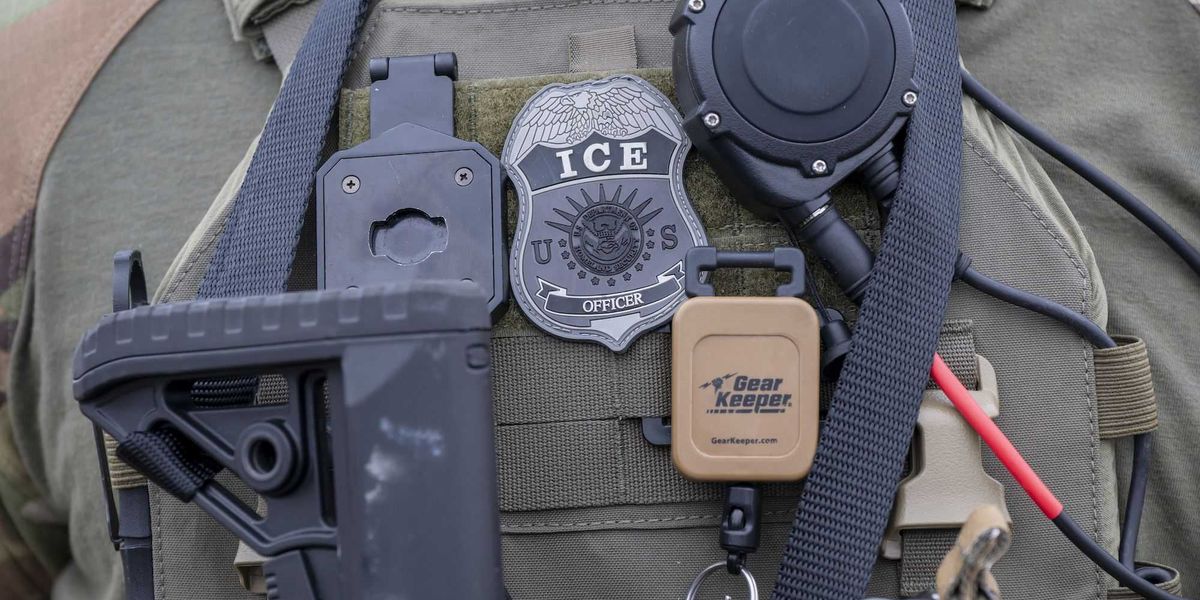
An ICE operation in Houston ended with an agent firing during a traffic stop that left a Mexican national dead after authorities say he tried to use his vehicle as a weapon. Local leaders have demanded transparency, the FBI has opened an inquiry focused on the alleged assault of a federal officer, and video and social posts tied to the event are circulating. This piece lays out the known facts, the response from officials, and the immediate questions that remain.
The incident happened early one morning at a busy intersection in Houston while officers were conducting a targeted enforcement effort to arrest an undocumented individual. Officials say the driver refused to stop, attempted to flee, and collided with an ICE vehicle. When officers say the car was then used to try to strike a colleague, an agent fired in what they describe as clearly defensive circumstances.
Authorities transported the man to a hospital after he was struck in the abdomen, and he later died there. ICE has described the suspect as a Mexican national and framed the action as part of a planned arrest operation. The department has emphasized that the immediate focus is safety for agents and the public while the scene is secured and evidence collected.
Federal authorities have stepped in: the FBI says it is investigating the potential assault on a federal officer connected to the traffic-stop shooting. ICE officials stressed that the bureau’s probe centers on the alleged attack, though local leaders want a full accounting of the deadly force decision. That split in jurisdiction is now part of the story as multiple agencies sort through the timelines and footage.
Video reportedly from the incident Araujo groaning on the ground near a white van while officers attend to him. The clip that surfaced online has raised questions about timing, distance, and whether nonlethal options were possible. People watching are demanding clearer footage and a full chain-of-custody on every recording that captured the event.
Democratic Rep. Sylvia Garcia of Texas issued a about the incident on social media and called for a thorough review. She wrote, ‘All available footage, communications, and other evidence should be preserved and reviewed as part of a full and impartial investigation.’ That exact call for preservation of evidence has echoed through local statements and community posts since the shooting.
Houston City Council Member Alejandra Salinas also urged an independent examination of the facts and the use of lethal force in the encounter. Residents and activists have demanded transparency, while law enforcement supporters argue that agents faced a sudden life-or-death threat. The clash between calls for accountability and backing for officers is playing out in public statements and protest posts.
ICE maintains the officer fired after the vehicle was allegedly used as a weapon, describing the moment as an immediate threat to the safety of federal agents. From a Republican viewpoint, the emphasis is straightforward: officers must be able to protect themselves and complete lawful arrests without being treated as targets. But that stance also comes with an insistence that all footage and communications be preserved so facts are clear for everyone.
‘All available footage, communications, and other evidence should be preserved and reviewed as part of a full and impartial investigation.’ That sentence has been repeated by officials demanding the records, and it underlines the shared goal across politics — clarity. Until every camera angle, dispatch log, and officer statement is collected, the scene will remain contested in the public eye.
https://x.com/theblaze/status/2074603596931268626
There are practical implications for policy and practice beyond this case: how enforcement teams approach traffic stops, the protective steps used when transporting suspects, and the coordination between federal and local investigators all matter. The shooting will ripple into training discussions and political debate about border enforcement and public safety. For now, investigators and community leaders both say they want the same thing — preserved evidence and a clear, impartial review of what happened.
