
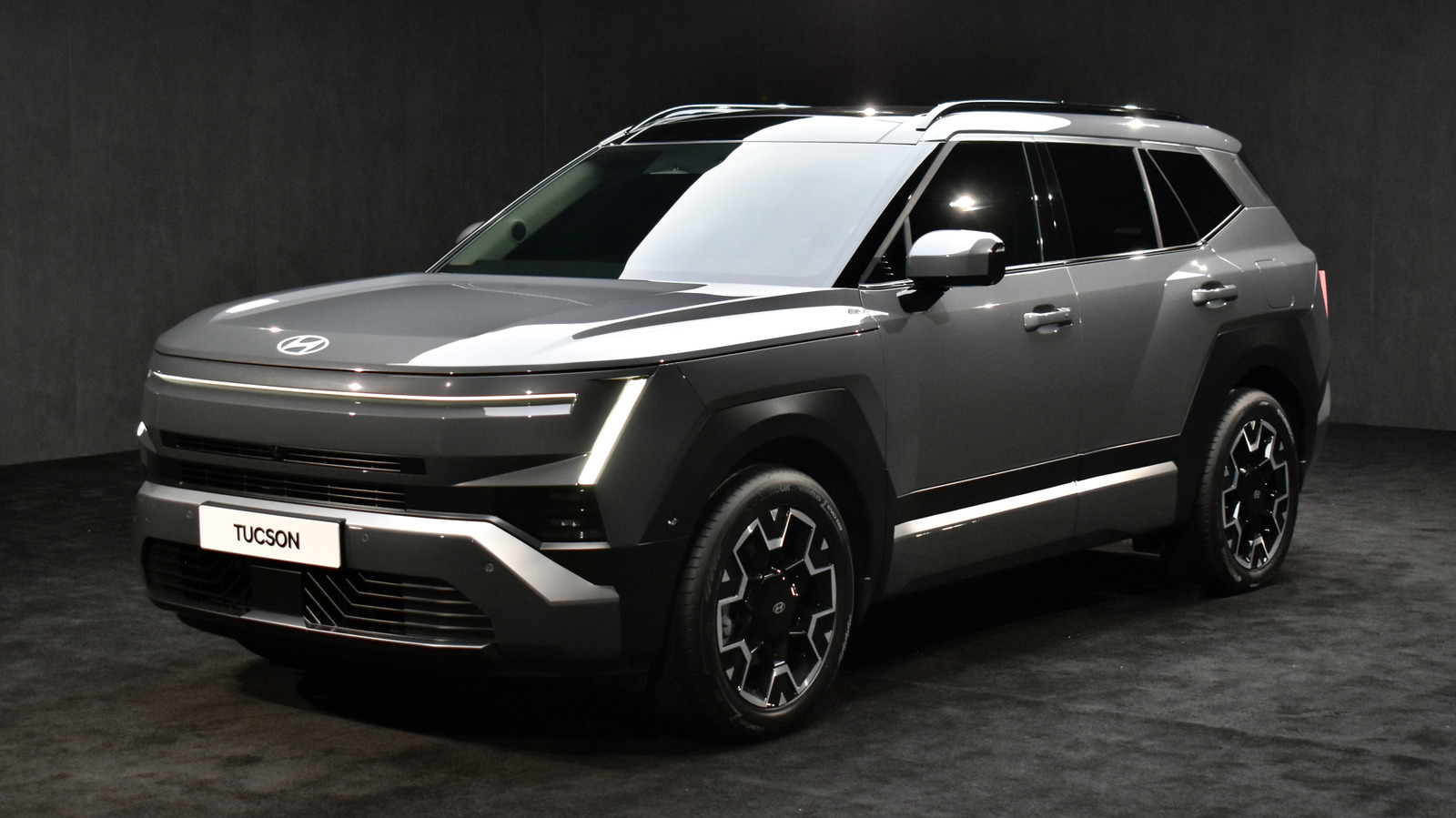
Hyundai’s redesigned 2027 Tucson arrives with real attitude, sharper design, a more polished cabin, and enough practical upgrades to keep it near the top of the compact crossover pack. It leans hard into futuristic styling, adds a more capable-looking XRT Pro model, and updates the tech without throwing out every physical control. The result is a vehicle that feels more ambitious than necessary, even if some of its biggest mechanical choices stay safely conventional.
Hyundai Motor Group has built a reputation for punching above its weight, and the Tucson is a good example of that streak. The brand has long moved far beyond the bargain-basement image it once had, and now it tends to show up with better design, stronger value, and a little more confidence than rivals expect.
That matters even more in a segment as crowded as compact crossovers, where the Tucson is Hyundai’s best-selling nameplate and one of its most important vehicles. This class has become the default for a lot of drivers who used to buy midsize sedans, so standing out takes more than just being useful.
On the outside, Hyundai made a smart move by not copying the same boxy, truckish formula everyone else keeps nudging toward. The new Tucson still looks unmistakably like an SUV, but it does it with crisp creases, flat surfaces, and lighting that gives the front and rear ends a distinctive identity.
The front lighting forms a clean horizontal bar with vertical elements that create an H-shaped signature, which feels clever without turning gimmicky. Out back, the taillights have a sharply sculpted look that gives the whole vehicle a more high-end, concept-car vibe than a typical volume seller usually gets.
The XRT Pro version pushes that rugged look harder, and for once the styling does not feel like an afterthought. It gets its own bumpers, extra cladding, all-terrain tires, and a bit more ground clearance, all wrapped in a package that looks ready for dirt even if most buyers will never leave pavement.
That extra off-road flavor still has competition from models like the Honda CR-V TrailSport, Kia Sportage X-Pro, and Mazda CX-50 Meridian Edition. But Hyundai gave the Tucson XRT Pro enough visual grit to make it feel like more than a trim level with a sporty badge slapped on it.
Inside, the Tucson takes a very different approach. The cabin swaps the exterior’s sharp angles for smooth curves, which makes the transition from outside to inside feel almost like two different design languages colliding in the same vehicle.
That mismatch aside, the interior seems thoughtful and easy to live with. Hyundai kept the dashboard clean, made good use of space, and added dual wireless chargers in a way that feels smart instead of flashy.
The dimensions are only modestly larger than before, but they bring a little more breathing room for passengers and cargo. Small gains matter in this segment, especially when the rear seat and load area are central to the whole pitch.
Technology is where Hyundai looks like it is trying to change course, but only partially. The new Pleos Connect setup still centers around a large touchscreen, yet it is joined by physical controls for climate and audio, which should make day-to-day use less annoying than a fully touch-heavy setup.
The instrument cluster also moves up high on the dashboard, closer to the driver’s line of sight, and Hyundai has added an AI voice assistant called Gleo. It is a clear nod toward a more modern interface, though the system still sounds more like an evolution than a clean break from today’s screen-first trend.
Under the hood, Hyundai plays it safer than the styling suggests. The Tucson launches with a turbocharged 1.6-liter four-cylinder and an available hybrid setup that carries over much of the previous formula, including the familiar 231-horsepower output.
The hybrid should be the one to watch, especially if Hyundai’s fuel economy estimates hold up well in the real world. The plug-in hybrid is gone, though, and any future expansion would likely involve more complex electrified hardware rather than a simple return to the old playbook.
That makes the 2027 Tucson feel like a polished remix rather than a revolution. Hyundai clearly wants the vehicle to look fresh, feel smart, and fit the way a lot of buyers actually shop, even if it stops short of taking real risks where it would count most.
